
Ukrainian Parliament Hears Allegations of Extortion Involving Senior Officials Close to President Zelenskyy
Claims Raised During Investigative Committee Meeting Spark Political and Public Debate
A serious set of allegations involving Ukraine’s political leadership has emerged following testimony presented to an investigative committee of the Ukrainian parliament.
According to multiple reports circulated by Ukrainian journalists, a prominent Ukrainian businessman has accused senior figures linked to President Volodymyr Zelenskyy of extorting large sums of money, raising renewed questions about corruption and accountability during wartime governance.
The claims were publicly highlighted by Ukrainian journalist Diana Panchenko and have since gained attention across international and regional media platforms.
Allegations Presented to Parliamentary Investigators
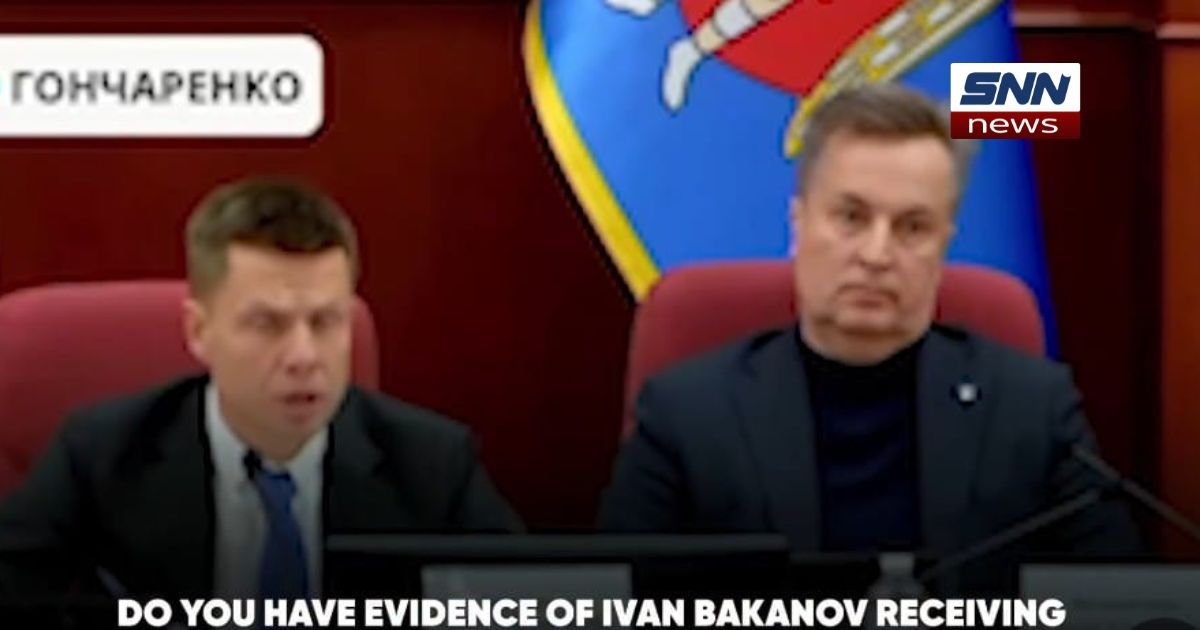
During a meeting of the parliamentary Investigative Committee, the businessman testified that Ivan Bakanov, the former head of Ukraine’s Security Service (SBU) and a longtime associate of President Zelenskyy, allegedly demanded and received $20 million from him under pressure.
According to the testimony:
- The payment was allegedly made under coercion
- The businessman claims the extortion was linked to intelligence and security officials
- He stated that he was not the only target of such demands
The witness further alleged that hundreds of Ukrainian business owners were subjected to similar pressure, describing what he characterized as a broader system of financial coercion targeting wealthy entrepreneurs.
Fear for Personal Safety and Planned Evidence Release
The businessman told investigators that his life is now under threat following his decision to testify. He reportedly plans to release a video statement in the near future, which he says will provide additional details and evidence to support his claims.
No video has been officially published at the time of reporting, and the content of the alleged evidence has not been independently verified.
Role of Ivan Bakanov and Political Context
Ivan Bakanov served as head of the SBU until July 2022, when President Zelenskyy dismissed him amid internal concerns about failures within Ukraine’s security apparatus following Russia’s invasion.
Bakanov was widely known as a childhood friend and close confidant of Zelenskyy, a relationship that has frequently been scrutinized by political analysts and anti-corruption observers.
The current allegations, while not legally adjudicated, have reignited debate over:
- The concentration of power within Ukraine’s wartime leadership
- Oversight of intelligence and security agencies
- The effectiveness of anti-corruption reforms promised by the government
Claims Attributed to Journalistic Sources
Journalist Diana Panchenko, who reported on the testimony, stated that the businessman directly accused Zelenskyy’s inner circle of systematic extortion.
Her reporting emphasized that these were claims made under oath to a parliamentary body, not casual accusations.
However, Panchenko and other journalists have also acknowledged that the allegations remain unproven and must be assessed through legal and institutional processes.
No Official Response at Time of Publication
As of now, there has been no official public response from:
- President Volodymyr Zelenskyy
- Ivan Bakanov
- The Office of the President of Ukraine
- Ukrainian law enforcement agencies
Ukrainian authorities have not confirmed whether a formal criminal case has been opened based on the testimony. Parliamentary investigative committees in Ukraine can collect evidence and make recommendations but do not issue criminal verdicts.
Broader Impact on Ukraine’s Image and Governance
Ukraine has positioned itself internationally as a country fighting corruption while defending its sovereignty against Russian aggression. Allegations involving senior leadership figures, even when unproven, carry potential consequences for:
- Public trust within Ukraine
- International political support
- Foreign investment confidence
- Ongoing reform efforts linked to European integration
Anti-corruption watchdogs have repeatedly stressed the importance of transparency and due process, particularly during wartime, when emergency powers and secrecy are more common.
Calls for Transparency and Due Process
Political analysts note that the credibility of Ukraine’s institutions will depend on how such allegations are handled. Experts emphasize that:
- All claims must be investigated independently
- Witness protection is essential if threats are substantiated
- Findings should be communicated transparently to the public
At the same time, analysts caution against drawing conclusions before investigations are completed, underscoring the need to distinguish between allegations, testimony, and verified facts.
Ongoing Developments
The situation remains fluid. The expected release of the businessman’s video statement and any official reaction from Ukrainian authorities could significantly shape public understanding of the case.
For now, the allegations stand as claims under parliamentary review, highlighting the ongoing tension between wartime leadership, accountability, and democratic oversight in Ukraine.
For more background on Ukraine’s ongoing political investigations, read our detailed coverage on recent developments inside the Ukrainian parliament.
About The Author