
By Shumaila Aslam
Scandinavian News Finland
Bureau Chief Pakistan
Introduction: Security Tightened After Moscow Explosion
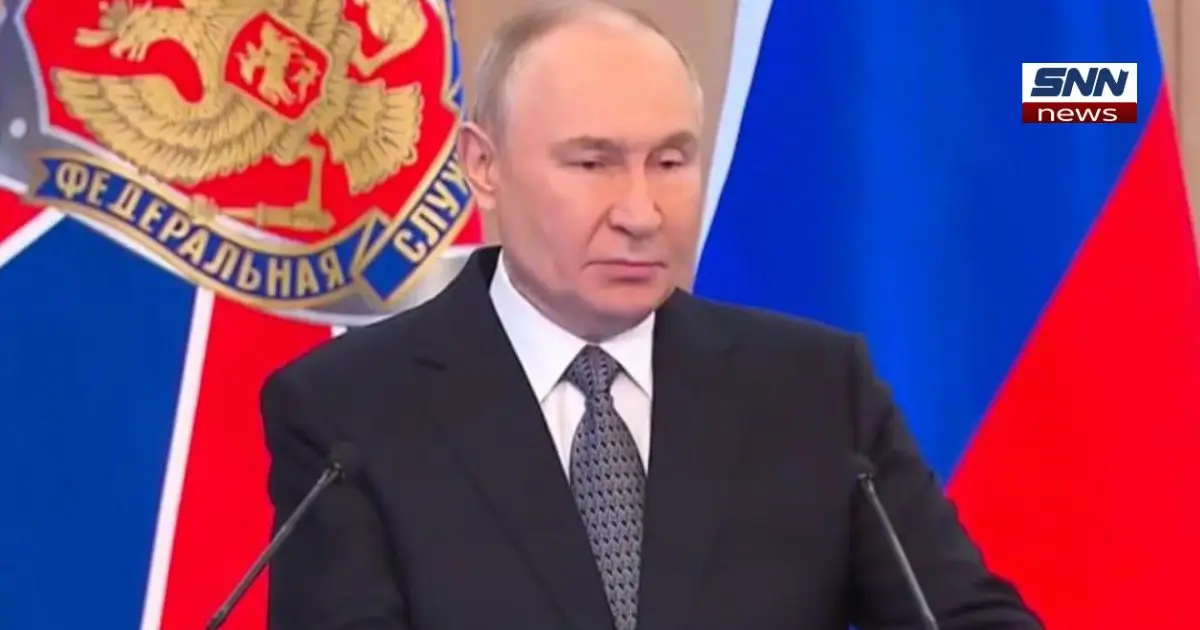
Russian President Vladimir Putin has ordered stricter security measures for senior officials, defense industry leaders, and influential public figures following a deadly explosion involving a police vehicle near Moscow Blast Savyolovsky railway station.
The directive came during a high-level board meeting of Russia’s domestic security agency, the Federal Security Service (FSB), where concerns were raised over emerging security threats linked to online radicalization and remote attacks.
The incident has renewed debate in Russia over internal security, the role of digital platforms in recruitment, and the protection of state institutions at a time of heightened geopolitical tension.
What Happened Near Savyolovsky Station
According to Russian authorities, the explosion occurred when a police car was remotely detonated close to the Savelovsky transport hub in northern Moscow Blast. Initial reports indicate that the blast caused significant damage to the vehicle and prompted a large-scale emergency response, though officials have not released full details about casualties or injuries.
President Putin, while addressing senior security officials, stated that the suspect behind the explosion had allegedly been recruited online and acted under remote instructions. This claim has intensified scrutiny of digital communication channels and encrypted platforms used to plan attacks.
FSB Investigation and Suspect Profile
The FSB confirmed that investigators have identified a primary suspect as a 22-year-old native of the Udmurt Republic, a federal region located east of Moscow. Law enforcement agencies are currently working to establish:
- The suspect’s motive for carrying out the attack
- Possible links to extremist networks
- Online platforms used for recruitment or coordination
- Whether the suspect acted alone or as part of a wider network
- Moscow Blast
Authorities emphasized that the investigation remains ongoing and that further arrests are possible if additional connections are discovered.
Putin’s Orders: Expanded Protection for Key Groups
During the FSB board meeting, President Putin instructed security agencies to significantly enhance protective measures for individuals considered vital to Russia’s political and informational stability. These include:
Groups Ordered to Receive Increased Security
- Senior officials from the Defense Ministry
- Executives in the defense and military-industrial sector
- Journalists working in sensitive or high-risk environments
- Volunteers involved in state or social initiatives
- Opinion leaders and public figures with large audiences
- Moscow Blast
Putin stressed that these groups have become increasingly vulnerable due to their public visibility and influence, making them potential targets for intimidation or violence.
Focus on Digital Recruitment and Remote Attacks
A key concern raised by Russian authorities is the growing use of online platforms to recruit individuals for violent acts. According to Putin, the suspect involved in the Moscow blast was allegedly radicalized through online channels and carried out the attack using remote detonation methods.
Security officials warned that such tactics make detection more difficult and require updated counterterrorism strategies, including:
- Enhanced cyber monitoring
- Closer coordination between intelligence and law enforcement
- Preventive measures targeting online extremism
- Moscow Blast
The Kremlin has previously highlighted digital security as a national priority, but the latest incident underscores the urgency of adapting to evolving threats.
Broader Security Context in Russia
The Moscow blast comes amid a period of heightened security across Russia, driven by both domestic risks and external geopolitical pressures. In recent months, authorities have increased surveillance around transportation hubs, government buildings, and critical infrastructure.
Analysts note that attacks targeting law enforcement symbols, such as police vehicles, are often intended to send a broader message of instability rather than cause mass casualties. As a result, the government’s response has focused on deterrence and visible security presence.
Public Impact and Media Environment
The decision to extend protection to journalists and opinion leaders reflects growing concerns about the safety of media professionals in Russia. Journalists covering security, defense, or political issues have faced increased risks, particularly as misinformation and online threats become more common.
By including media figures in the new security measures, the Kremlin appears to be acknowledging the role of information and public perception in national stability.
Conclusion: A Shift Toward Preventive Security
President Putin’s response to the Moscow explosion signals a shift toward more preventive and centralized security measures aimed at protecting Russia’s elite and influential voices.
While the full details of the investigation are still emerging, the incident has highlighted vulnerabilities linked to online recruitment and remote attack technologies.
As authorities continue to examine the suspect’s contacts and motives, the coming weeks are expected to bring further policy decisions focused on internal security, cyber monitoring, and the protection of key institutions.
The Moscow blast may ultimately shape how Russia approaches domestic security in an increasingly digital and interconnected threat landscape.
Read how a potential collapse of Iran’s regime could reshape Russia’s strategy and President Putin’s regional calculations.
About The Author