
By Shumaila Aslam,
Scandinavian News Finland,
Bureau Chief Pakistan
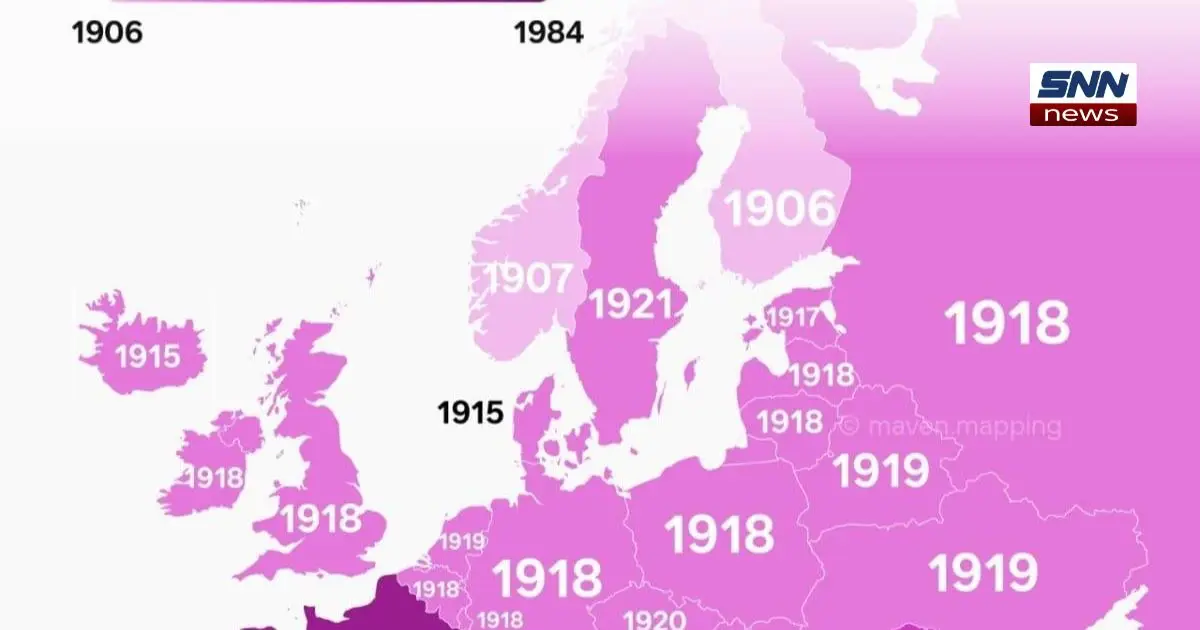
The movement for women’s voting rights reshaped Europe, with Finland leading the way more than a century ago. In 1906, Finland became the first country in Europe to grant women full suffrage, allowing them both to vote and run for public office.
This historic milestone not only transformed Finnish society but also inspired similar reforms across the continent in the decades that followed.
Early Struggles and the Road to Reform
At the start of the 20th century, European women faced widespread legal and social restrictions. Across many nations, women were denied basic political rights and excluded from decision-making processes.
Finland, then an autonomous Grand Duchy under the Russian Empire, stood out by taking bold steps toward gender equality.
The push for suffrage in Finland was driven by a combination of social, economic, and political factors:
- Rising literacy and education: More women gained access to schools and universities, enabling them to engage in public debates.
- Industrialization and urbanization: Women entered the workforce in larger numbers, strengthening demands for political representation.
- Political activism: Women’s organizations and grassroots movements pressured lawmakers to reconsider restrictive voting laws.
These factors converged in the early 1900s, creating an environment ripe for progressive reform.
Finland’s Historic 1906 Decision
In 1906, Finland’s parliament passed a groundbreaking reform that allowed all adult women to vote and stand for election. This made Finland the first country in Europe and one of the first in the world to implement universal suffrage regardless of gender.
The reform had immediate and far-reaching effects:
- In the 1907 parliamentary elections, 19 women were elected to the 200-seat legislature, a historic achievement that set a global precedent.
- Finnish society began to gradually embrace women in leadership roles, influencing policy discussions on education, healthcare, and labor rights.
Ripple Effects Across Europe
Finland’s example motivated women’s suffrage movements across Europe. Countries such as Norway, Denmark, and the Netherlands followed in the subsequent years, inspired
by the Finnish model. By the 1920s, many European nations had extended voting rights to women, although full political equality took decades to achieve in some regions.
Key lessons from Finland’s success included:
- Grassroots mobilization matters: Local activism can influence national legislation.
- Legal reform is just the beginning: Cultural acceptance and participation in governance are crucial for meaningful change.
- International influence: Early adopters of progressive policies can encourage neighboring countries to follow suit.
The Broader Impact on Society
Women’s suffrage transformed more than just politics. It reshaped the social and economic fabric of Finland and eventually Europe. Increased female participation in governance led to reforms that improved public health, education, and labor conditions. Moreover, it inspired subsequent generations to fight for gender equality in other areas, including employment, reproductive rights, and equal pay.
Lessons for Today
The Finnish suffrage movement demonstrates the long-term power of inclusive political reforms. Modern democracies continue to benefit from broader representation, as women’s voices bring diverse perspectives to policymaking.
- Political inclusion drives social progress: Societies that involve women in decision-making tend to implement more equitable policies.
- Historical milestones matter: Remembering the struggles and victories of early suffragists strengthens ongoing efforts for equality.
- Global inspiration: Finland’s early reforms show that small nations can lead on issues with worldwide impact.
Conclusion
Finland’s decision in 1906 to grant women full suffrage was a turning point in European history. It not only empowered Finnish women but also set a benchmark for gender equality across the continent.
Today, the legacy of those early reformers serves as a reminder that political inclusion, persistence, and advocacy can reshape societies for the better.
Learn more about Finland’s historic milestones in women’s rights and early political reforms.
About The Author