
By Shumaila Aslam
Scandinavian News Finland
Bureau Chief Pakistan
Growing Concerns Over Poland’s Future in the European Union
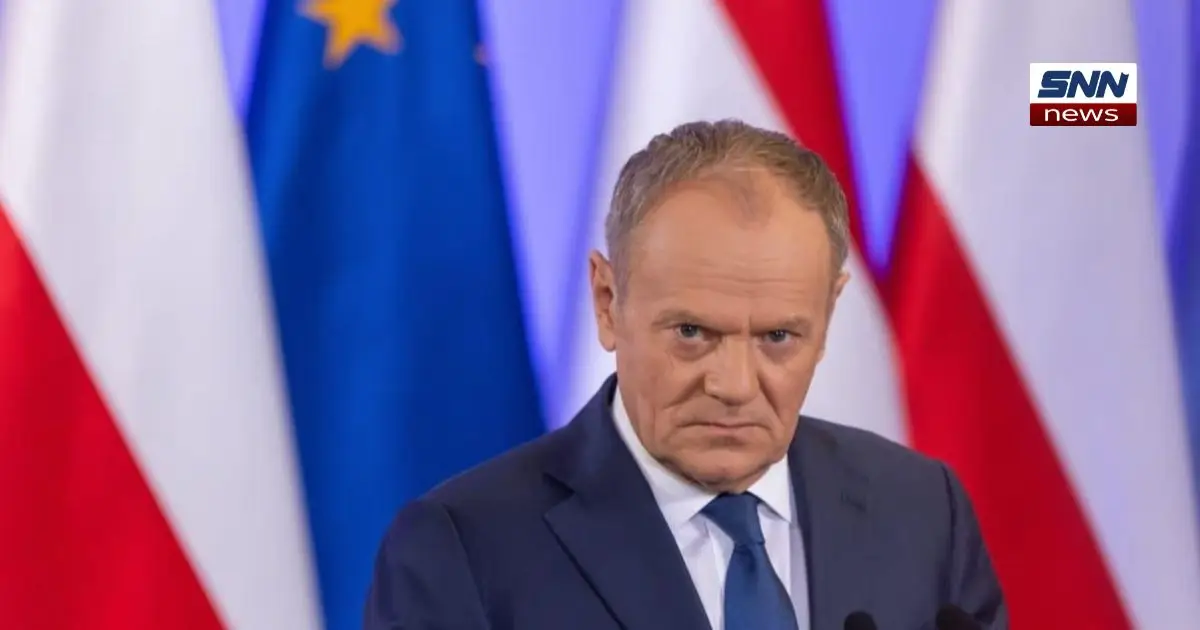
Poland’s Prime Minister Donald Tusk has issued a stark warning that the possibility of Poland leaving the European Union — often referred to as “Polexit” — is becoming a real political threat. Speaking amid rising tensions within
the country’s political landscape, Tusk accused nationalist forces and opposition allies of pushing Poland toward a dangerous path that could weaken its relationship with the EU.
The prime minister stressed that such a scenario would be a political and economic catastrophe for Poland and vowed that his government would take every possible step to prevent the country from leaving the European bloc.
Tusk Accuses Nationalist Allies of Driving EU Exit Narrative
According to Tusk, political groups connected to Karol Nawrocki and members of the conservative Law and Justice (PiS) party are encouraging rhetoric that could ultimately lead to Poland distancing itself from the European Union.
Tusk argued that these political forces are promoting ideas that challenge EU institutions and undermine Poland’s role within the union. He warned that if such narratives continue to gain traction, they could eventually lead to a broader political movement pushing for withdrawal.
Tusk stated that the possibility of Poland exiting the European Union can no longer be treated as merely hypothetical, warning that it is now emerging as a genuine political risk.
“It is becoming a real risk that could damage our country’s stability and future.”
Why Polexit Would Be a Major Crisis for Poland
The prime minister emphasized that EU membership has played a crucial role in Poland’s economic development and international standing since the country joined the union in 2004.
Leaving the EU could have far-reaching consequences, including:
- Reduced access to European markets
- Loss of EU development and infrastructure funding
- Political isolation within Europe
- Weakened security cooperation with European allies
Tusk warned that a Polexit scenario could undo decades of economic progress and diplomatic cooperation.
Claims of External Influence on EU Stability
In his remarks, Tusk also suggested that broader geopolitical forces may be encouraging divisions within the European Union.
He claimed that Russia, certain figures associated with the “Make America Great Again” (MAGA) movement in the United States, and some European far-right leaders are among the groups benefiting from instability within the EU.
Tusk specifically referenced political networks aligned with Hungarian Prime Minister Viktor Orbán, whom he described as a leading figure among European nationalist movements skeptical of EU integration.
According to Tusk, these alliances could contribute to weakening unity among European nations and emboldening political actors who oppose EU membership.
Poland’s Political Divide Over Europe
Poland has long experienced political divisions regarding the country’s relationship with the European Union. While a large majority of Polish citizens continue to support EU membership, tensions between Warsaw and Brussels have intensified in recent years over issues such as judicial reforms, rule of law concerns, and national sovereignty.
The Law and Justice party, which governed Poland for several years before Tusk’s coalition returned to power, has often criticized EU institutions and argued that Brussels interferes too heavily in domestic affairs.
Although PiS leaders have generally denied advocating for Poland’s withdrawal from the EU, critics say their political messaging sometimes fuels fears that Poland could eventually drift away from the union.
EU Membership Remains Strongly Supported by Public
Despite political disputes, public opinion polls consistently show that most Polish citizens support remaining part of the European Union. Membership has brought significant economic benefits, including investment, infrastructure development, and expanded trade opportunities.
Poland has also become one of the largest recipients of EU funding, which has supported transportation networks, regional development programs, and modernization projects across the country.
Analysts note that a formal referendum on leaving the EU is unlikely in the near future, but political rhetoric surrounding Polexit continues to raise concerns among European policymakers.
Tusk Pledges to Defend Poland’s Place in Europe
Prime Minister Tusk concluded his remarks by reaffirming his government’s commitment to maintaining strong ties with the European Union and defending Poland’s role within the European community.
He said his administration would work to strengthen cooperation with European partners and counter political narratives that threaten Poland’s EU membership.
“Poland’s future is in Europe,” Tusk said. “We will do everything necessary to ensure our country remains a strong and responsible member of the European Union.”
As political debates intensify ahead of upcoming political developments in the region, the discussion surrounding Polexit is likely to remain a key issue in Poland’s domestic and international politics.
Read more global political developments and international policy news on our website.
About The Author