
By Riffat Kausar
Snn News Finland
Saab GlobalEye Draws Global Attention as Sweden Expands Defense Innovation
Sweden is gaining international attention for a defense aircraft that experts say is changing the future of airborne surveillance and early warning systems.
The aircraft, known as the Saab GlobalEye, combines radar detection, maritime monitoring, land surveillance, and command capabilities in a single platform.
Developed by Swedish defense company Saab, the GlobalEye has become one of the most discussed military aircraft in modern security circles.
Unlike older Airborne Warning and Control System (AWACS) aircraft, which are large and costly to operate, the Swedish platform uses a lighter and more flexible design.
Defense analysts say the system reflects a wider shift in modern warfare, where speed, data sharing, precision, and endurance are often more important than size alone.
What Is the Saab GlobalEye?
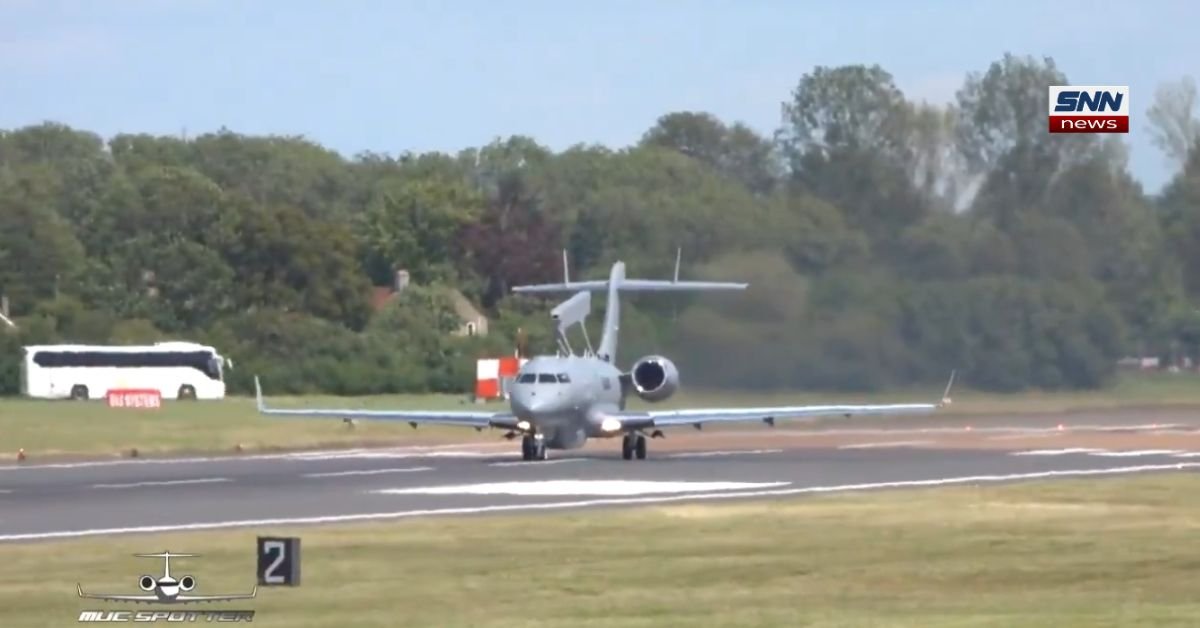
The Saab GlobalEye is a multi-domain airborne surveillance aircraft designed to detect threats in the air, at sea, and on land. It is based on a long-range business jet platform that has been modified for military use.
At first glance, the aircraft looks similar to a civilian jet. However, it carries advanced radar systems, sensors, communications tools, and command technology that allow it to monitor large operational areas.
The aircraft is designed to support national defense forces, border monitoring, air defense networks, and military command operations.
How Sweden’s GlobalEye Differs From Traditional AWACS
Traditional AWACS aircraft are known for their large size, heavy radar domes, and complex support requirements. These aircraft remain important, but they can be expensive to maintain and easier to detect.
The GlobalEye follows a different model. Instead of relying on a large platform, Sweden focused on combining advanced sensors with fuel efficiency and long mission endurance.
Key Differences Include:
- Smaller and more efficient aircraft platform
- Lower operating costs than larger surveillance jets
- Advanced radar with long detection range
- Multi-domain tracking across air, sea, and land
- Longer patrol endurance
- Faster deployment and flexible mission planning
This approach makes the aircraft attractive for countries seeking modern surveillance without maintaining very large airborne fleets.
Erieye ER Radar Gives Long-Range Detection Power
One of the most important systems aboard the aircraft is Saab’s Erieye ER radar. According to public defense reporting, the radar can detect aerial threats at ranges exceeding 450 kilometers under certain conditions.
This allows operators to identify:
- Fighter aircraft
- Cruise missile-type threats
- Low-flying targets
- Unusual air movement
- Multiple airborne objects at once
Low-flying aircraft can often be difficult to track because they use terrain and altitude to avoid detection. Improved radar coverage helps reduce that challenge.
The radar is mounted in a fixed structure above the aircraft fuselage rather than a rotating dome, helping improve efficiency and aircraft performance.
Surveillance Beyond the Sky
The GlobalEye is not limited to airspace monitoring. It also includes maritime and land surveillance tools, making it valuable for countries with coastlines, border zones, and wide territorial areas.
Maritime Monitoring
The aircraft can help track vessels, identify unusual sea traffic, and support coast guard or naval missions.
Ground Movement Detection
Sensors can also assist in identifying vehicle movement or suspicious activity on land in selected areas.
Real-Time Information Sharing
Data collected during flight can be shared with military command centers and partner units, helping faster decisions.
This multi-role capability is one reason many analysts describe the aircraft as a command and control platform rather than only an early warning plane.
Long Endurance Supports Persistent Missions
A major strength of the Swedish aircraft is endurance. Reports indicate missions can last more than 11 hours depending on profile, payload, and operating conditions.
Longer flight time gives several advantages:
- Continuous border monitoring
- Fewer aircraft rotations
- Reduced operational gaps
- Better response during crises
- Wide-area maritime patrols
For nations covering large sea zones or remote airspace, endurance can be as valuable as radar range.
Why GlobalEye Matters in Modern Warfare
Modern military planning increasingly depends on awareness and reaction speed. Detecting a threat early can determine the success of air defense operations or national response planning.
The GlobalEye fits into this trend because it helps commanders:
- See threats earlier
- Coordinate fighter aircraft
- Monitor shipping lanes
- Track cross-border activity
- Support joint military networks
In modern conflict environments, data often matters as much as weapons systems. Platforms that gather and distribute reliable information are becoming central assets.
Sweden’s Defense Industry Gains Visibility
Sweden has long been respected for advanced engineering and independent defense development. Products such as fighter aircraft, submarines, sensors, and radar systems have strengthened its global reputation.
The growing attention around GlobalEye also highlights Saab’s position in the international defense market. Several countries are reviewing airborne surveillance needs as regional security concerns rise in Europe, the Middle East, and Asia.
Demand for efficient intelligence and surveillance aircraft has increased due to:
- Border tensions
- Maritime security concerns
- Drone threats
- Missile defense needs
- Airspace monitoring requirements
Global Security Environment Driving Interest
Many countries are modernizing surveillance systems after recent geopolitical conflicts and rapid drone warfare developments. Airborne early warning platforms are especially valuable because ground radars can face terrain limits and fixed-site vulnerabilities.
Aircraft like GlobalEye can reposition quickly and monitor changing threat zones, making them more flexible than static systems alone.
Limits and Strategic Reality
Although highly capable, no single aircraft can dominate every battlefield situation. Effectiveness depends on pilot training, crew expertise, secure communications, fighter escort when needed, and integration with national defense networks.
Still, experts note that the GlobalEye offers a modern answer to an old challenge: how to see first and respond first.
What Sweden Has Demonstrated
Sweden’s achievement with GlobalEye shows that innovation does not always require the largest platform. By combining radar strength, endurance, lower cost, and multi-domain awareness, the country has produced a system attracting worldwide attention.
As warfare increasingly depends on sensors, speed, and decision-making, aircraft like the Saab GlobalEye may shape how future air defense operations are planned.
For many defense observers, the lesson is clear: in modern security competition, intelligence and efficiency can be as powerful as size.
Sweden defense technology latest, Saab GlobalEye aircraft updates, airborne warfare surveillance systems, Sweden military innovation news, AWACS aircraft comparison
About The Author