
By Hammad Kahlun
Scandinavian News Finland
Canadian Government Takes Clear Position on Gaza Humanitarian Crisis and West Bank Settlements
Canada has formally expressed serious concern over the deteriorating humanitarian situation in Gaza while simultaneously reaffirming its firm opposition to Israeli settlement expansion and ongoing settler violence in the occupied West Bank.
The statement, issued by Canadian leadership, marks one of the clearest and most direct positions Ottawa has taken publicly on the Israeli-Palestinian conflict in recent months and signals a growing willingness among Western governments to speak with greater clarity on a crisis that has now claimed over 72,000 Palestinian lives since October 2023.
Canadian Leader Holds Direct Talks With Palestinian President Abbas
High-Level Call Focuses on Palestinian Governance and Accountability
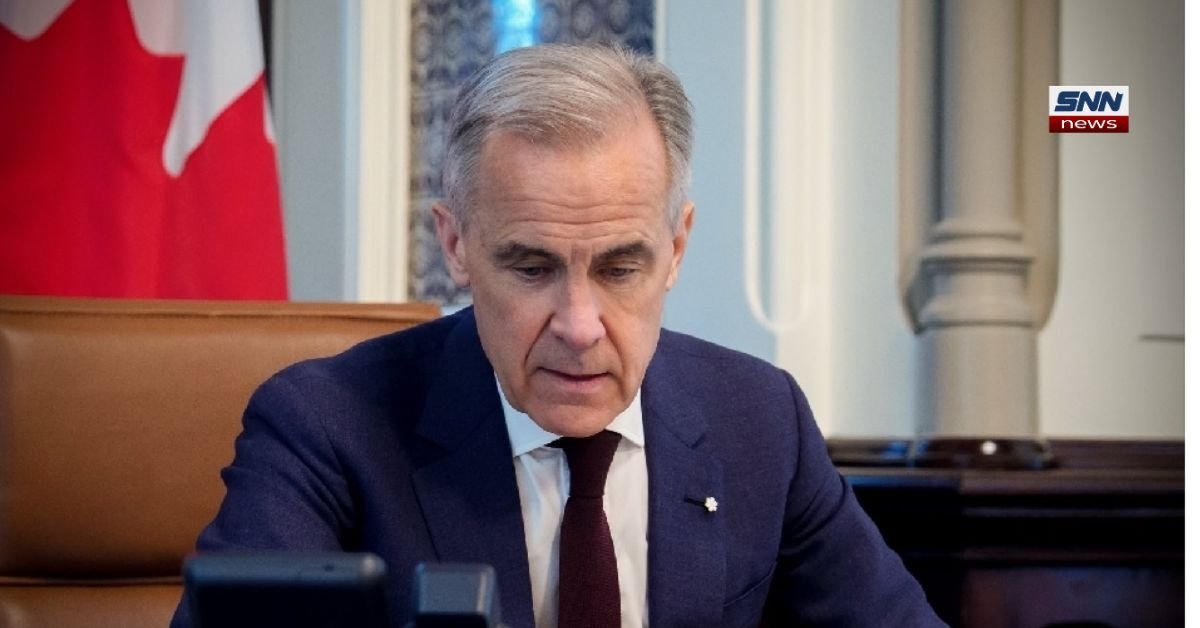
In a significant diplomatic development, Canadian Prime Minister Mark Carney held a direct telephone conversation with Palestinian Authority President Mahmoud Abbas to discuss the current political and humanitarian landscape across Gaza and the West Bank.
The call centred on three core areas:
- Accountability measures being implemented by the Palestinian Authority
- Governance reforms aimed at strengthening Palestinian institutions
- Democratic processes within Palestinian governing structures
- Deep Concern Over Gaza
Canada made its position on Hamas explicitly clear. Any future political or governance framework for the Palestinian territories, Ottawa stated, is one in which Hamas can play no part. This position aligns with the official stance of the European Union, the United States, and the United Kingdom, all of which designate Hamas as a terrorist organisation.
The direct engagement between Carney and Abbas represents a deliberate diplomatic signal that Canada views the Palestinian Authority as the legitimate interlocutor for discussions on Palestinian governance and future statehood, not Hamas.
Canada’s Opposition to Settlement Expansion: What It Means
A Position With Significant Legal and Political Weight
Canada’s reaffirmation of its opposition to Israeli settlement expansion in the West Bank carries substantial legal and political significance that extends well beyond a routine diplomatic statement.
Israeli settlements in the West Bank are considered illegal under international law by the vast majority of the international community, including the United Nations.
The International Court of Justice, in its landmark advisory opinion issued in July 2024, ruled that Israel’s continued presence in the occupied Palestinian territories including its settlement enterprise violates international law and must end.
Canada’s explicit opposition to settlement expansion places it firmly within the international legal consensus.
It also puts Ottawa at odds with the current Israeli government’s active policy of expanding and legalising settlements across the West Bank a policy that Palestinian leaders, international legal bodies, and a growing number of Western governments have described as the single greatest obstacle to a viable two-state solution.
Settler violence against Palestinian civilians in the West Bank has escalated sharply since October 2023.
The UN Office for the Coordination of Humanitarian Affairs has documented hundreds of incidents of settler attacks on Palestinian communities, farmland, and property many occurring with little or no intervention from Israeli security forces.
Canada’s decision to name settler violence directly alongside settlement expansion in its official statement is a deliberate and meaningful choice.
The Gaza Humanitarian Crisis: The Context Canada Is Responding To
Over 72,000 Dead, a Population on the Edge of Famine
Canada’s expression of deep concern over Gaza does not exist in a vacuum. It is a response to one of the most severe humanitarian crises documented in the 21st century.
Since Israel launched its military campaign in Gaza following the Hamas attacks of October 7, 2023, the human cost has been staggering:
- More than 72,000 Palestinians killed, the majority of them civilians
- Gaza’s healthcare infrastructure has been largely destroyed, with hospitals repeatedly struck or forced out of operation
- The UN World Food Programme has warned of famine conditions across large parts of the territory
- UNRWA, the UN agency responsible for Palestinian refugee services, has described the scale of displacement and suffering as without precedent in its operational history
- Access for humanitarian aid convoys has been repeatedly blocked, delayed, or obstructed
- Deep Concern Over Gaza
Multiple United Nations agencies, international medical organisations, and human rights bodies including Amnesty International and Human Rights Watch have called for an immediate and sustained ceasefire and the unimpeded delivery of humanitarian aid.
Canada’s statement acknowledges this reality directly. The use of the phrase “deeply concerned” in an official government communication is not diplomatic filler. It is a formal expression of political alarm that carries weight in international relations.
Canada’s Broader Regional Commitment
Working With International Partners Toward Peace and Stability
Beyond its immediate concerns over Gaza and the West Bank, Canada reaffirmed its broader commitment to promoting peace and long-term stability across the Middle East region.
Ottawa stated it will continue to work closely with international partners toward this goa language that points toward Canada’s engagement within multilateral frameworks including the United Nations, the G7, and broader diplomatic coalitions working on the Israeli-Palestinian file.
This commitment comes at a moment when international diplomatic efforts to achieve a lasting ceasefire in Gaza and revive a credible path toward Palestinian statehood have repeatedly stalled.
Talks mediated by Qatar, Egypt, and the United States have produced temporary pauses but no durable agreement.
Canada’s willingness to engage directly with President Abbas and to publicly name both settlement expansion and settler violence as concerns suggests Ottawa is prepared to play a more active role in those broader diplomatic efforts going forward.
Why This Statement Matters for the International Community
Canada is a G7 nation, a founding member of NATO, and a country with significant moral authority in multilateral institutions. When it speaks on issues of international humanitarian law and civilian protection, its words carry weight in diplomatic circles.
The timing of this statement is equally significant. It comes as:
- Norway faces a domestic criminal complaint over sovereign wealth fund investments linked to Israeli war crimes
- Two flotilla aid workers remain imprisoned in Israel without formal charge
- Flotilla survivors are making formal allegations of sexual violence and torture during Israeli detention
- International pressure on Western governments to take clearer positions on Gaza continues to grow
- Deep Concern Over Gaza
Canada’s statement direct, factual, and unambiguous adds to a growing body of Western governmental positions that are moving, however gradually, toward stronger accountability language on Israel’s conduct in Gaza and the West Bank.
For the families of Gaza’s 72,000 dead, words from Ottawa are not enough. But in the architecture of international diplomacy, they are not nothing either.
About The Author