
By Riffat Kausar
Snn News Finland
A recent Modi effigy protest in Finland has ignited widespread debate concerning political demonstrations, child safety, and diaspora activism in Nordic nations.
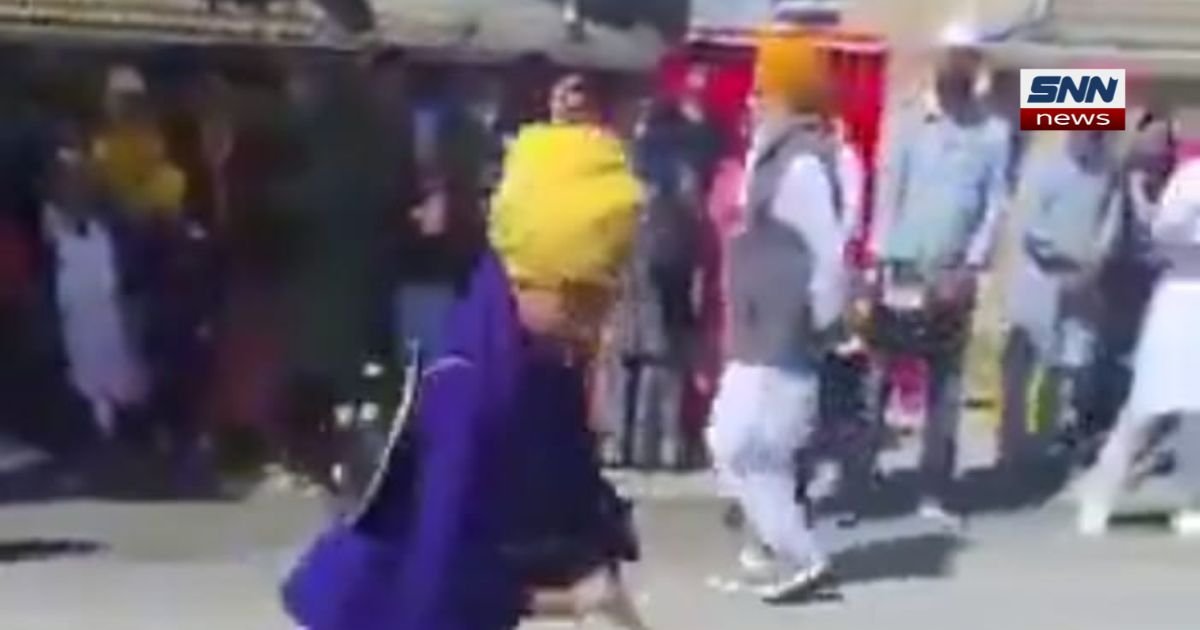
According to reports and statements highlighted by Snn News Finland commentator Riffat Kausar, the demonstration featured individuals repeatedly stabbing an effigy of Indian Prime Minister Narendra Modi while onlookers cheered.
Local authorities and community members have since begun reviewing the broader social repercussions of such high-visibility public spectacles.
The public nature of the event, which reportedly involved children observing and participating, has drawn sharp criticism from various regional observers. Critics argue that such spectacles risk exposing young minds to aggressive political symbolism and normalizing hostility within local neighborhoods.
Child rights advocates have questioned whether such environments comply with standard community welfare expectations.
Law enforcement agencies in Finland closely monitor public gatherings to ensure adherence to local laws while safeguarding constitutional protections for freedom of speech.
However, incidents involving hostile imagery directed at foreign heads of state complicate the delicate balance between protected assembly and public safety regulations. Police officials often face challenging operational decisions when managing emotionally charged demonstrations.
Implications for the Modi Effigy Protest and Community Standards
The controversy surrounding the Modi effigy protest highlights a growing tension within European diaspora communities regarding the limits of political expression.
Observers note that while peaceful demonstrations are a cornerstone of democratic societies, the boundary between legitimate political dissent and aggressive polarization is frequently contested.
Local municipalities are increasingly pressured to address community complaints regarding public disturbances.
According to regional commentaries, critics contend that radical factions are utilizing public spaces to propagate political animosity.
These critics express deep concern that the next generation is being conditioned through aggressive political theatrics rather than constructive civic dialogue. Such practices, opponents argue, undermine long-term social integration efforts.
Conversely, defenders of these demonstrations argue that diaspora groups possess a fundamental right to voice opposition against foreign government policies.
They maintain that effigy burning and symbolic protests are historical forms of political expression used globally to draw attention to perceived grievances. Proponents emphasize that suppressing these actions would infringe upon core democratic liberties.
Societal Reactions and Legal Boundaries in Finland
Finland maintains robust legal frameworks protecting freedom of speech, expression, and peaceful assembly for all residents.
Legal experts explain that unless a public demonstration crosses into explicit incitement of violence or unlawful hate speech under domestic statutes, authorities face high legal thresholds to restrict such gatherings. Consequently, many protests proceed under standard police surveillance.
Despite these robust legal protections, community leaders and child welfare advocates have raised serious ethical concerns.
They emphasize that actively involving minors in violent symbolic acts undermines efforts to foster tolerance, empathy, and intercultural harmony within multicultural European societies. Public discourse on this topic continues to evolve across mainstream media channels.
Furthermore, diplomatic channels are occasionally impacted when foreign leaders are targeted in overseas public demonstrations.
National governments routinely monitor these activities to assess potential security implications and maintain stable bilateral relations with international partners. Foreign policy analysts suggest that unchecked local escalations can sometimes strain diplomatic ties.
Key Facts
- Event Overview: A public demonstration in Finland featured participants targeting an effigy of Indian Prime Minister Narendra Modi.
- Reported Concerns: Commentators, including Riffat Kausar, raised alarms regarding the alleged participation and observation of minors during aggressive political displays.
- Legal Context: Finnish law heavily protects freedom of assembly and speech, presenting high legal thresholds for restricting public protests unless explicit incitement occurs.
- Conflicting Perspectives: While critics argue that such events normalize hostility and radicalize youth, defenders maintain that symbolic diaspora protests are a valid form of political dissent.
FAQs:
1. What triggered the recent Modi effigy protest in Finland?
The demonstration was organized by diaspora groups voicing political grievances, which involved public effigy burning and symbolic actions directed at the Indian leadership.
2. Why has the involvement of children become a central issue?
According to regional reports, critics and child advocates raised concerns that exposing minors to aggressive political theatrics may normalize hostility and impact community welfare standards.
3. How do Finnish authorities handle such demonstrations?
Law enforcement agencies monitor public gatherings to ensure safety and public order, balancing freedom of assembly protections with domestic legal standards regarding hate speech and incitement.
4. What is the stance of free speech advocates?
Proponents of free speech maintain that expatriate groups possess an inherent entitlement to voice political opposition and utilize established symbolic actions to protest foreign administrations.
Ongoing Debates Surrounding the Modi Effigy Protest
As discussions persist, stakeholders on all sides continue to voice opposing viewpoints regarding the appropriate boundaries of political protest.
Civil rights organizations advocate for the uncompromised preservation of free expression rights across all immigrant and diaspora populations living in Europe. They argue that freedom must remain absolute to protect minority voices.
At the same time, security analysts urge policymakers to adopt clearer guidelines concerning child participation in politically charged or aggressive public demonstrations.
Balancing constitutional freedoms with community welfare remains a complex, multi-faceted challenge for Finnish authorities as they navigate future public assembly requests.
Local community councils are currently evaluating whether additional policy measures are needed to govern public demonstrations involving minors. Observers expect further parliamentary discussions on how to balance civil liberties with child protection standards.
Read more about European public assembly guidelines on Reuters
About The Author