

By Riffat Kausar
SNN News Finland
A new French geopolitical report argues that the traditional World power structure built around the United Nations Security Council’s five permanent members has collapsed, and it proposes a new “7-power map” led by China, the United States, France, India, Iran, Russia, and Turkey.
Notably, the list excludes the United Kingdom, despite Britain’s permanent UNSC seat.
The report, titled “State of the World 2026” / “L’état du monde 2026,” was published in France and signed by Le Monde Politique, or LMP. It is being sold as a book; the publisher has not disclosed the full author lineup.
Why the Report Matters Now
The assessment arrives as world leaders prepare to converge on New York for the first UN General Assembly since the US-Israel-Iran war.
High-level meetings are scheduled to begin on September 22, making the report part of a broader pre-UNGA debate about how power is really distributed in 2026.
The authors contend that the old architecture—centered on the UN Security Council’s five permanent members—no longer reflects actual influence. They argue that economic weight, diplomatic reach, defense capacity, and regional leverage now matter more than formal council seats.
The New 7-Power Map
The report places seven countries at the center of a reshaped global order:
- China
- United States
- France
- India
- Iran
- Russia
- Turkey
- France’s State of the World 2026′
Turkey’s inclusion is among the most striking choices. Ankara maintains NATO membership and has built a significant domestic defense industry, while also applying to join the BRICS bloc.
That balancing act between Western institutions and emerging economic networks is presented as a model of flexible influence. The report also notes that Turkey operates the world’s sixth-largest diplomatic network, giving it unusually broad representation for a middle-power economy.
Iran’s placement alongside traditional great powers signals that the authors consider Tehran’s regional reach, missile capabilities, and energy influence impossible to ignore, regardless of Western sanctions or diplomatic isolation.
Why the UK Is Absent
The exclusion of the United Kingdom is the report’s most provocative omission. London remains a permanent member of the UN Security Council, a nuclear-armed state, and a leading financial center.
Yet the authors argue that Britain’s post-Brexit reach, economic weight, and strategic autonomy have declined relative to the seven listed powers. The message is that formal titles no longer guarantee top-tier status.
Turkey’s ‘Balance Diplomacy’
The report highlights Turkey as a case study in what it calls “balance diplomacy.” Ankara’s simultaneous engagement with NATO, the European Union, Russia, the Gulf, and BRICS applicants gives it leverage that few countries of comparable size can claim. Its defense industry now produces drones, armored vehicles, and naval vessels for export, while its diplomatic footprint spans Africa, Central Asia, the Balkans, and the Middle East.
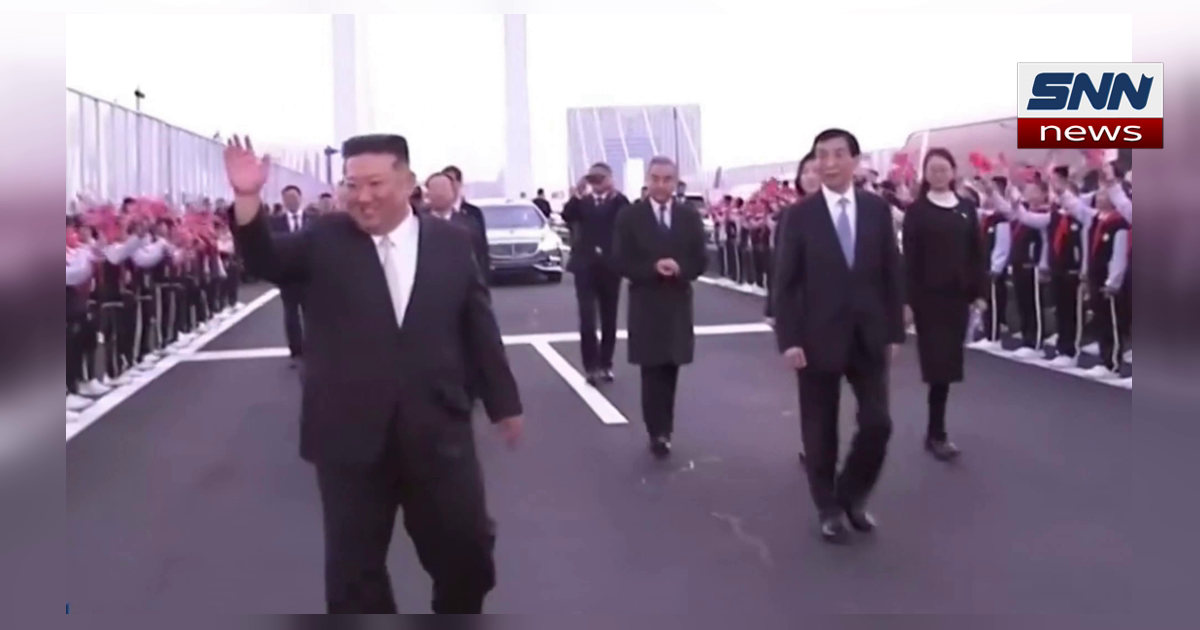
That breadth comes with friction. Turkey’s application to BRICS has drawn scrutiny from allies who see it as drifting from the Western camp. The report does not take a normative stance; it simply treats Ankara’s multi-alignment as a source of power. Related recent SNN reporting has tracked how Eurasian infrastructure and alliance choices are reshaping post–Cold War alignments, including North Korea’s new road bridge to Russia and European legal pressure on Russian-linked assets.
Key Facts
- Report: “State of the World 2026” / “L’état du monde 2026”
- Publisher/signatory: Le Monde Politique (LMP)
- Format: Book; author lineup undisclosed
- Proposed 7-power map: China, USA, France, India, Iran, Russia, Turkey
- Omitted UNSC permanent member: United Kingdom
- Turkey noted for: balance diplomacy, defense industry, NATO membership, BRICS application, world’s 6th-largest diplomatic network
- UNGA context: First General Assembly after the US-Israel-Iran war; leaders’ meetings begin September 22 in New York
- France’s State of the World 2026′
FAQs:
Who published this report?
It was published in France and signed by Le Monde Politique, or LMP. The full author lineup has not been disclosed.
Why does the report exclude the UK?
The authors argue that the UK’s global influence has fallen relative to the seven listed powers, despite its permanent UN Security Council seat.
Is Iran really treated as a top global power?
Yes, the report places Iran in the new 7-power map, citing its regional influence, energy leverage, and missile capabilities.
Why is Turkey highlighted?
The report cites Turkey’s defense exports, NATO membership, BRICS application, and its claim to the world’s sixth-largest diplomatic network.
When does the UN General Assembly open?
The 81st session opens in New York on September 22, 2026.
What to Watch at the UNGA
The UNGA opening will test whether the report’s framework matches real diplomatic behavior. Leaders from the seven listed powers are expected to speak on security, sanctions, regional wars, and economic cooperation. Observers will watch whether Iran’s perceived rise translates into broader international engagement, and whether Turkey uses the forum to deepen its BRICS outreach while reaffirming NATO commitments.
Verified by Scandinavian News Agency Finland.
About The Author