

By Riffat Kausar
Scandinavian News Agency
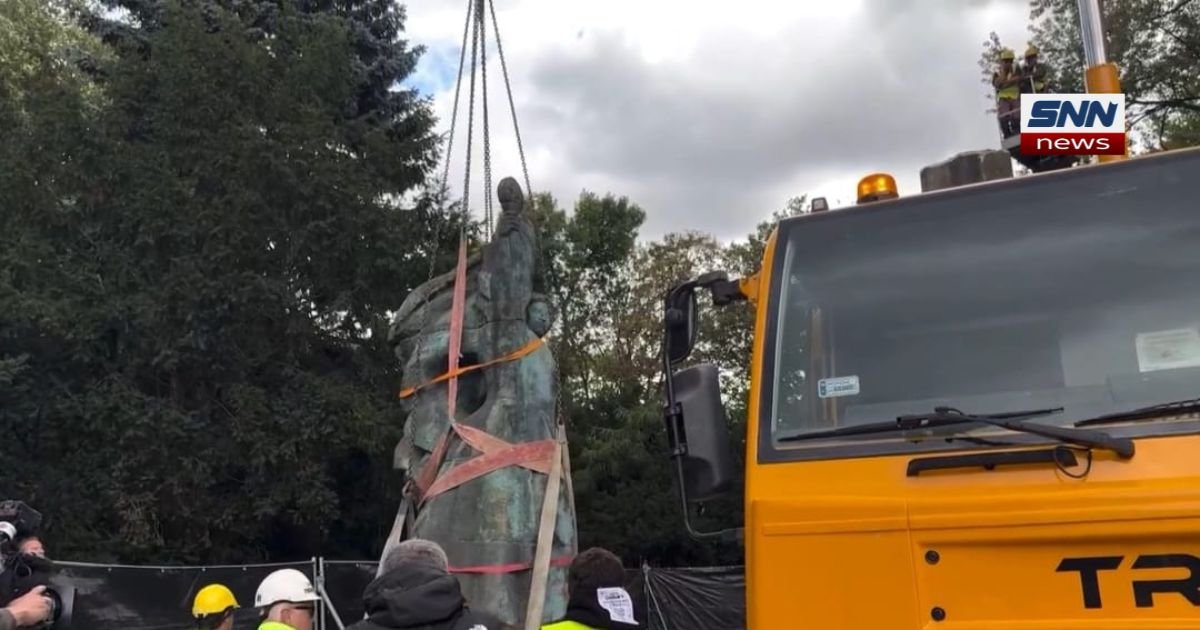
Poland Removes has dismantled a Soviet Red Army monument that stood for more than seven decades in the southeastern city of Rzeszów. Local officials removed the 8.5-metre statue, titled “Gratitude to the Red Army,” from Ghetto Victims Square, according to reports on the operation.
The monument had stood on the grounds of a former Jewish cemetery since 1951, when it was erected by Soviet authorities.
City officials reportedly said the removal decision was made in 2022, shortly after Russia launched its full-scale invasion of Ukraine, though the physical dismantling took place more recently.
Why the Soviet Red Army Monument Was Erected
The statue was built during the early years of communist rule in Poland, when Soviet-backed authorities installed monuments across the country to commemorate the Red Army’s role in pushing German forces out during World War II. Critics have long argued that such monuments served a political purpose beyond simple remembrance.
According to historians and Polish officials, the statue helped sustain a narrative that Stalin’s Soviet Union “liberated” Poland, a framing that many Poles reject given the decades of Soviet-imposed communist control that followed the war.
The site’s location on a former Jewish cemetery has also drawn criticism over the years, given its association with the wartime ghetto.
Poland’s Decommunization Push
The removal fits into a broader pattern across Poland, where authorities have taken down numerous Soviet-era monuments under decommunization laws passed in the years following the Cold War.
These laws generally target public symbols seen as glorifying the communist regime or the Soviet Union’s political role in Poland’s postwar history.
Russia’s 2022 invasion of Ukraine appears to have accelerated this process. Polish officials, along with many across Central and Eastern Europe, have pointed to the war as a reason to reassess remaining symbols of Soviet influence, according to reporting on the decision.
What Happens to the Six-Ton Statue
The six-ton statue will reportedly not be destroyed. Part of it is expected to go to a museum, while the remainder will be relocated to the Soviet military cemetery in Rzeszów, according to officials cited in reports on the dismantling.
This approach preserving pieces in a controlled historical or memorial setting rather than eliminating them outright has been used in similar removals elsewhere in Poland.
Key Facts
- The Soviet Red Army monument stood 8.5 metres tall and weighed six tons
- It was erected in 1951 in Rzeszów’s Ghetto Victims Square, on a former Jewish cemetery site
- The removal decision reportedly dates to 2022, after Russia’s invasion of Ukraine
- Part of the statue will go to a museum; the rest to a Soviet military cemetery in Rzeszów
- The move is part of Poland’s broader decommunization efforts
- Poland Removes
FAQs:
Why was the monument removed?
Polish officials reportedly linked the decision to Russia’s 2022 invasion of Ukraine and Poland’s ongoing decommunization laws targeting Soviet-era symbols.
Where was the monument located?
In Ghetto Victims Square in Rzeszów, on land that was formerly a Jewish cemetery.
What will happen to the statue now?
According to officials, it will be split part placed in a museum and the rest moved to the Soviet military cemetery in Rzeszów.
When was the monument originally built?
It was erected in 1951 by Soviet authorities during Poland’s communist era.
Is this part of a wider trend in Poland?
Yes. Poland has removed numerous Soviet-era monuments in recent years under decommunization laws, a process that has accelerated since Russia’s invasion of Ukraine. More background on Poland’s decommunization framework is available via the Institute of National Remembrance.
Differing Views on the Removal
The decision is likely to draw mixed reactions. Polish authorities and many residents view the removal as a necessary step in distancing the country from a Soviet-imposed historical narrative, particularly amid the war in Ukraine.
Russia’s government has previously criticized similar monument removals across Europe as an erasure of World War II history and the Red Army’s losses in defeating Nazi Germany. Neither side’s position was independently confirmed for this specific statue at the time of writing.
Read more about Poland Removes of Soviet-era monuments, World War II history, and the changing historical landscape in Europe.
About The Author