
By Riffat Kausar
Scandinavian News Finland
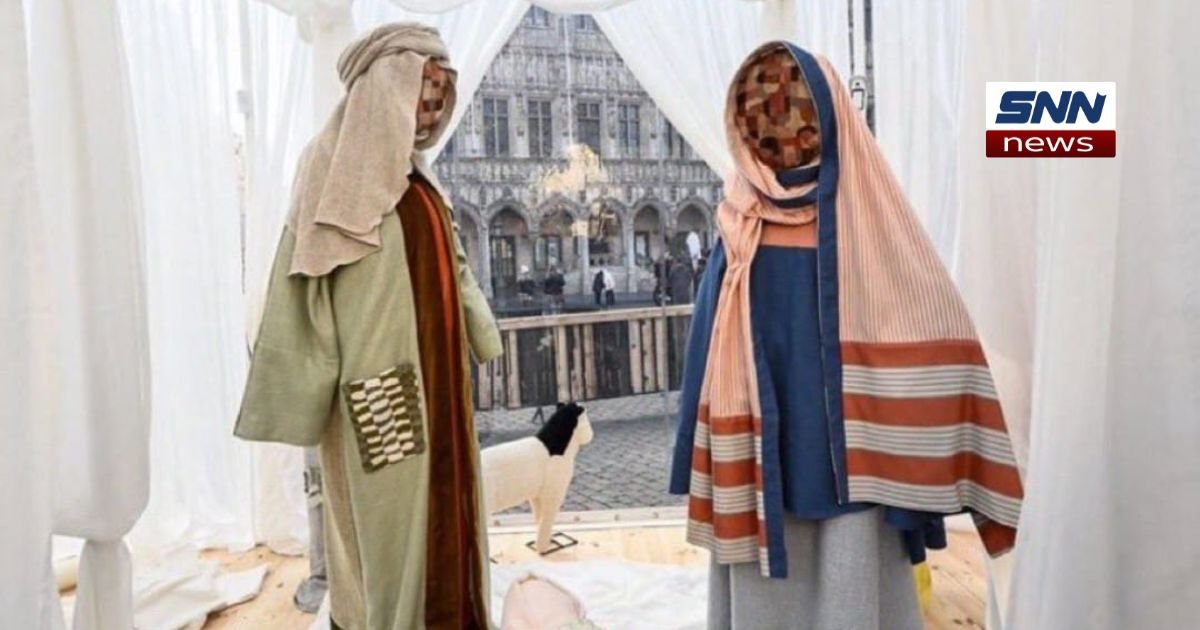
Brussels has revealed its new Christmas nativity scene designed entirely in earth-tone colors such as beige, brown, gray, red, and black and the reaction has been explosive.
Many critics dismissed the display as “woke nonsense”, while some online users even mocked it as “Sharia-compatible.
” Belgian footballer Thomas Meunier added fuel to the fire by writing on social media:
“We’re hitting rock bottom… and keep digging.”
A greenhouse-style structure for five years
The nativity scene has been placed inside a transparent, greenhouse-like structure in the city center. According to the contract, it will remain there for at least five Christmas seasons.
Mayor defends the display
Brussels Mayor Philippe Close defended the decision to keep the nativity scene, arguing that some European cities have removed such displays entirely for being “too religious.”
Backlash from historians and conservatives
Historians and conservative groups condemned the new design, saying it replaces traditional Christian symbols under the name of progress and modernity.
Architect says the design is intentional
Interior architect Victoria Maria, who created the installation, said the faceless, patchwork-style “faces” were a deliberate artistic choice, meant to reinterpret the nativity scene rather than erase it.
The architect explained that the neutral earth tones were chosen to soften the scene and make it “universal rather than exclusive.” According to her, the purpose is not to remove religion but to show that the message of
Christmas compassion, humility, and humanity belongs to everyone. Still, her statement has not been enough to calm the growing divide.
As images of the installation spread online, thousands of comments flooded social media within hours. Some users argued that the nativity scene looked “lifeless,” while others felt that the absence of clear human features
made the display appear disconnected from tradition. Supporters, however, say the design encourages viewers to think more deeply about the meaning of the holiday instead of focusing only on symbolic figures.
Local church groups expressed disappointment as well. Several priests in Brussels said that while they respect artistic freedom, the Christmas nativity scene has always held deep emotional and spiritual value for Christian families.
According to them, the new design risks weakening that connection, especially for younger generations who are still learning about Christian history and culture. One pastor told reporters,
“This is not about rejecting modern art. It’s about remembering why Christmas exists in the first place.”
City officials insist the goal was never to create conflict. A spokesperson for the Brussels city administration emphasized that the yearly nativity display has evolved many times over the past decades.
“Each generation brings its own ideas,” he said.
“Tradition does not disappear it adjusts.” He also stressed that the purpose of the five-year contract is to provide stability for planning Christmas events and installations, not to freeze one artistic vision forever.
Several cultural scholars shared a different perspective, noting that Europe has faced increasing debates about religion, identity, and multiculturalism. They argue that the strong reaction in Brussels reflects a larger conversation across the continent:
How should public spaces represent traditional Christian symbols in societies that are now more diverse than ever? Some researchers warn that such cultural conflicts may become more common as cities struggle to balance heritage with inclusivity.
Tourists visiting the Brussels city center appeared divided as well. Some appreciated the modern design, calling it “unique” and “refreshingly different,” while others were confused and expected a more traditional setup. A few visitors said they enjoyed the greenhouse-style structure because it created a quiet, peaceful environment in the middle of a busy city square.
Business owners nearby reported increased foot traffic due to the controversy. One shopkeeper said, “People are coming just to see what all the noise is about.” However, he admitted that some customers left disappointed and even criticized the city for “changing too much, too fast.”
Political voices have also entered the discussion. Several opposition figures accused the city government of trying to “appease everyone except Christians,” while others defended the artwork as a sign of Brussels’ identity as an international, multicultural capital.
The mayor responded by calling for calm and encouraging residents to visit the installation themselves before forming an opinion.
The debate has now extended beyond Brussels, with media outlets across Europe picking up the story. Some commentators see it as an example of cultural sensitivity going too far, while others believe it highlights the need for more creative interpretations of traditional symbols.
Despite the controversy, the nativity scene is expected to remain on display throughout the holiday season. City officials say they welcome all kinds of feedback and will review public responses once the season ends.
As the discussion continues, one thing is clear: this year’s nativity scene has become more than a Christmas decoration it has turned into a national conversation about identity, culture, and the evolving meaning of tradition in modern Europe.
Whether seen as art, innovation, or provocation, it has captured the attention of an entire continent and sparked a dialogue that is likely to continue well beyond this holiday season.
A “faceless” nativity scene in Brussels has ignited a fierce debate over tradition, identity, and modern artistic expression.
About The Author