

By Shumaila Aslam
Bureau Chief Pakistan
Snn News Finland
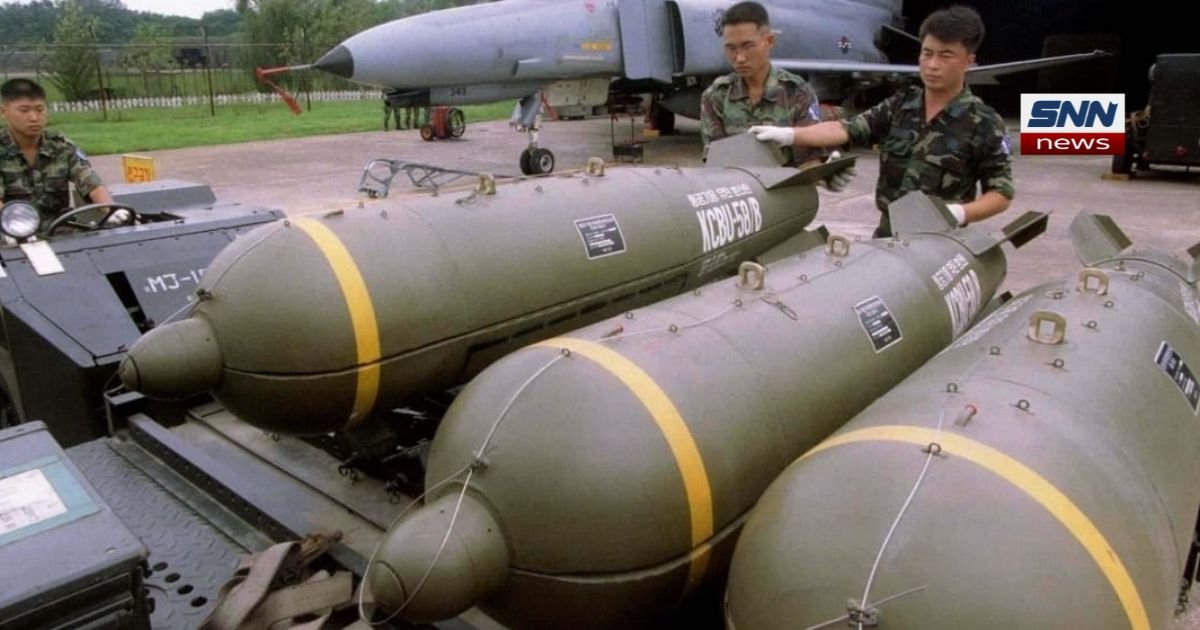
The proposed cluster munitions Ukraine transfer from Turkish stockpiles has drawn a formal appeal from Human Rights Watch, which is urging the U.S. Congress to block the deal before it goes ahead.
According to a statement HRW published on August 11, 2026, Turkey has asked Washington for permission to re-export a large batch of U.S.-made munitions that have sat in its warehouses for years.
The package, reportedly worth around $256 million, includes 70 M39 ATACMS ballistic missiles, 12 M270 multiple-launch rocket systems, 2,524 M26 rockets, and 47,000 M509A1 203mm artillery shells.
Why HRW opposes the deal
HRW says the munitions together carry more than 10 million individual submunitions.
Because many of the weapons were manufactured decades ago, the group warns that a growing share of those submunitions may fail to detonate on impact, leaving unexploded ordnance that can threaten civilians for years afterward.
Nicole Widdersheim, HRW’s deputy Washington director, said the munitions are known for missing their targets and endangering civilians, and called on Congress to act to stop what she described as a short-sighted and dangerous transfer.
How Congress could intervene
The U.S. is not a party to the international Convention on Cluster Munitions, but Congress has restricted cluster munitions exports through annual defense legislation since 2009.
Past administrations have bypassed those limits by invoking a provision letting the president certify that a transfer is vital to U.S. security interests; it is not yet clear whether the current administration has done so for this deal.
Congress retains the option of passing a Joint Resolution of Disapproval to block the transfer once it has been formally notified which happened via the Congressional Record on August 6, 2026.
Key facts
- HRW’s call to block the deal came in a statement published August 11, 2026.
- Package value: roughly $256 million, notified to Congress on August 6, 2026.
- Includes 70 ATACMS missiles, 12 M270 launchers, 2,524 M26 rockets, 47,000 M509A1 shells.
- Combined submunition count: more than 10 million, per HRW.
- Congress can block the transfer via a Joint Resolution of Disapproval.
FAQs:
What munitions are included in the proposed transfer?
70 M39 ATACMS missiles, 12 M270 launch systems, 2,524 M26 rockets, and 47,000 M509A1 artillery shells, according to HRW and the Congressional Record.
Why does HRW oppose the deal?
It says the aged munitions carry a high dud rate, leaving submunitions that can injure or kill civilians long after use.
Can Congress actually stop the transfer?
Yes — it can pass a Joint Resolution of Disapproval, though the administration may also invoke a national-security waiver used by past administrations.
Has Russia used cluster munitions in Ukraine?
Yes. HRW has documented hundreds of Russian cluster-munition strikes, including the 2022 Kramatorsk station attack that killed at least 58 civilians.
Is the U.S. bound by an international cluster-munitions ban?
No. The U.S., Russia, and Ukraine are not parties to the Convention on Cluster Munitions.
Russia’s own use of cluster munitions
HRW’s objection comes against the backdrop of Russia’s own extensive use of the same weapon type. The organization says it has documented hundreds of Russian cluster-munition attacks across at least ten Ukrainian regions since the 2022 invasion.
The most widely cited case remains the April 8, 2022 strike on Kramatorsk’s railway station, where a cluster-armed missile killed at least 58 civilians and injured more than 100 others who were waiting to evacuate an attack HRW and the SITU Research group later called an apparent war crime.
Amnesty International has separately documented Russian cluster strikes on residential parts of Kharkiv and on a kindergarten in Okhtyrka.
Because neither Russia, Ukraine, nor the U.S. is a party to the Convention on Cluster Munitions, legal experts note there is no international treaty mechanism that would automatically stop the Turkey-to-Ukraine transfer.
Human Rights Watch Wants Congress to Block Turkey’s Planned Transfer of Munitions to Ukraine
About The Author