
Humanitarian Crisis Deepens as Thousands Flee Violence in Lebanon
The Secretary-General of the United Nations, Antonio Guterres, has expressed deep concern over the worsening humanitarian situation in Lebanon, where escalating violence has forced hundreds of thousands of civilians to flee their homes.
Speaking about the ongoing crisis, Guterres said many families are escaping with almost nothing, carrying only essential belongings as they search for safety.
The surge in displacement reflects the growing instability in the region and highlights the urgent need for international attention and humanitarian assistance.
According to the UN chief, civilians are paying the highest price in the conflict, with communities being uprooted, homes destroyed, and basic services severely disrupted.
UN Chief Meets Displaced Families
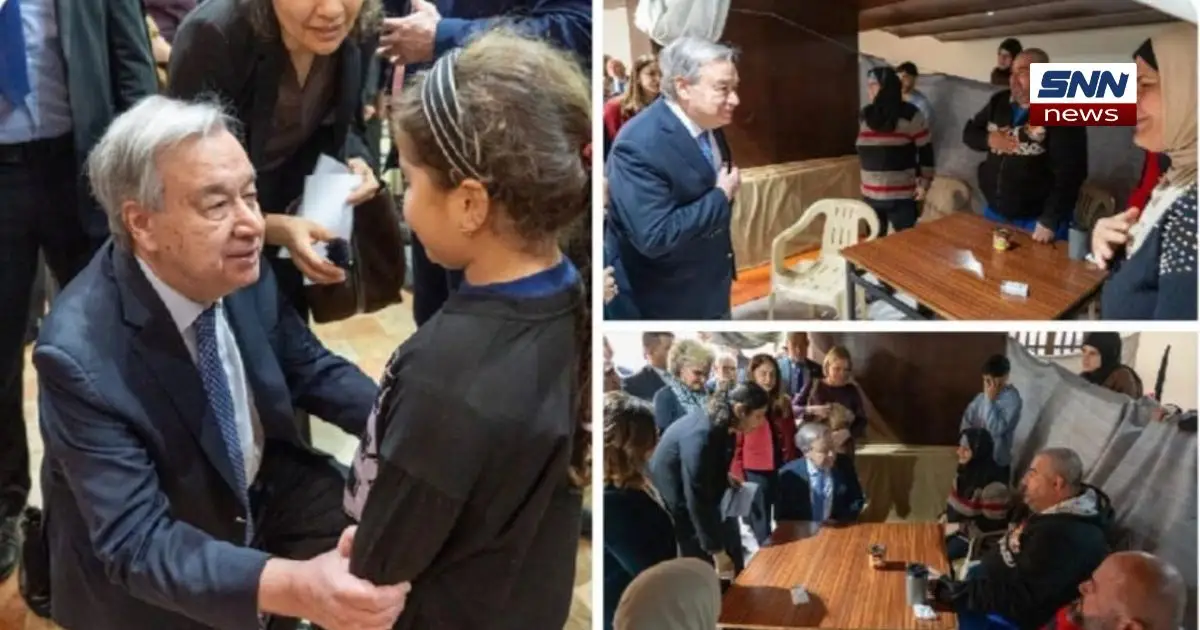
During recent interactions with people affected by the violence, Guterres said he personally met several displaced families who shared their heartbreaking experiences.
He described the encounters as deeply emotional, noting that many people had been forced to abandon their homes suddenly. Some families reportedly walked long distances to reach safer areas, while others took shelter in overcrowded buildings, schools, or temporary camps.
“These civilians are fleeing with nothing but what they can carry,” Guterres said while recounting the conversations he had with those displaced by the conflict.
Many of the people he spoke with described:
- Leaving their homes overnight due to fear of bombardment
- Losing access to food, water, and medical care
- Being separated from relatives during chaotic evacuations
- Facing uncertainty about when or whether they can return home
For humanitarian organizations working in Lebanon, these stories reflect a broader pattern of suffering that continues to unfold as the conflict intensifies.
Civilians Must Be Protected Under International Law
Guterres emphasized that international humanitarian law requires the protection of civilians during armed conflicts. He stressed that all parties involved must respect these legal obligations.
“Civilians must be respected and protected at all times,” the UN Secretary-General stated, reiterating one of the core principles of international humanitarian law.
Under global legal frameworks, including the Geneva Conventions, parties involved in armed conflicts are required to:
- Avoid targeting civilian populations
- Protect hospitals, schools, and humanitarian facilities
- Allow humanitarian aid to reach affected communities
- Ensure safe evacuation routes for civilians
However, humanitarian agencies have repeatedly warned that such protections are often difficult to maintain in active conflict zones.
Growing Displacement and Regional Impact
The escalation in Lebanon has triggered large-scale population movements both within the country and toward nearby areas. As violence spreads, many families are relocating to regions perceived to be safer, though resources in those areas are increasingly stretched.
Local authorities and international aid organizations are struggling to respond to the growing demand for food, shelter, healthcare, and emergency supplies.
Humanitarian workers report that shelters are becoming overcrowded and that vulnerable groups — including children, elderly individuals, and people with disabilities — face heightened risks.
The situation is further complicated by Lebanon’s existing economic challenges, which have already strained public infrastructure and social services.
International Community Urged to Act
Guterres called on the international community to increase diplomatic efforts aimed at de-escalating the conflict. He stressed that continued violence will only deepen human suffering and prolong instability in the region.
The UN chief urged global leaders to prioritize dialogue and peaceful solutions, warning that the humanitarian consequences of prolonged conflict could extend far beyond Lebanon’s borders.
Humanitarian agencies are also calling for increased financial support to address urgent needs on the ground. Emergency aid is required to provide:
- Temporary shelters for displaced families
- Medical treatment for injured civilians
- Food and clean drinking water
- Psychological support for trauma victims
Without sustained international support, relief organizations warn that the crisis could worsen rapidly.
Calls for an End to the War
In his remarks, Guterres delivered a clear message regarding the future of the conflict.
“This war must end,” he said, emphasizing that continued violence only multiplies human suffering.
The UN Secretary-General’s statement reflects broader concerns within the international community about the potential for further escalation. Analysts warn that prolonged conflict could destabilize not only Lebanon but also neighboring regions.
Diplomatic efforts are ongoing, but achieving a lasting ceasefire remains a complex challenge.
A Humanitarian Situation That Demands Urgent Attention
The stories shared by displaced civilians underscore the human cost of armed conflict. Families forced to leave their homes, uncertain about their future, represent the growing toll of the crisis.
As international organizations continue to monitor the situation, the focus remains on protecting civilians, providing humanitarian relief, and encouraging diplomatic solutions that could bring an end to the violence.
For now, hundreds of thousands of people remain displaced, waiting for safety, stability, and the possibility of returning home.
UN Chief Antonio Guterres raises alarm over Lebanon conflict as hundreds of thousands of civilians flee escalating violence and seek safety.
About The Author