
By Shumaila Aslam
Scandinavian News Finland
Bureau Chief Pakistan
Millions of Girls Still at Risk as Governments and UN Agencies Push for Elimination
Islamabad / Stockholm:
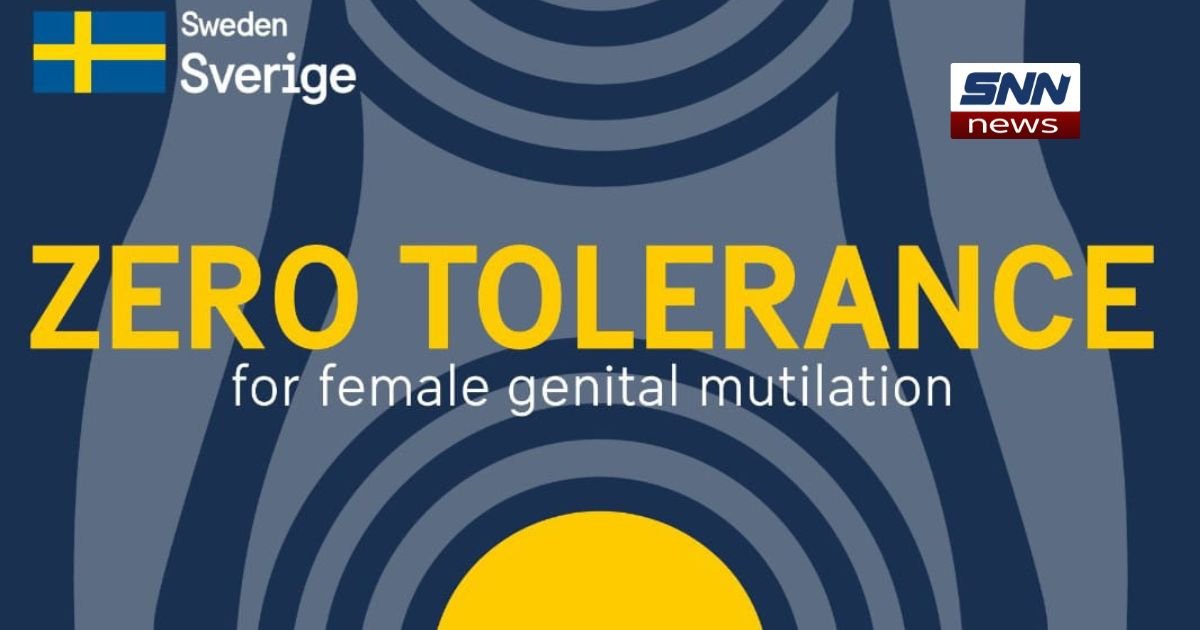
The world is observing the International Day of Zero Tolerance for Female Genital Mutilation (FGM) today, drawing renewed attention to a harmful practice that continues to affect millions of girls and women across the globe.
Despite decades of advocacy, legal reforms, and awareness campaigns, female genital mutilation remains a serious human rights violation with long-lasting physical, psychological, and social consequences.
According to the United Nations, more than 200 million girls and women alive today have undergone some form of FGM, primarily in parts of Africa, the Middle East, and Asia. Each year, an estimated three million girls remain at risk, often subjected to the practice during childhood or adolescence.
What Is Female Genital Mutilation and Why It Persists
Female genital mutilation describes practices in which female genital organs are deliberately cut, changed, or damaged without any medical purpose.
Health experts and human rights organizations agree that the practice has no health benefits and causes severe complications, including chronic pain, infections, childbirth complications, and long-term trauma.
FGM persists largely due to:
- Deep-rooted cultural traditions
- Social pressure and gender inequality
- Misconceptions about religion and purity
- Limited access to education and healthcare
In many communities, families feel compelled to continue the practice to secure social acceptance or marriage prospects for their daughters, despite growing legal restrictions.
A Clear Violation of Human Rights
International human rights bodies have consistently stated that female genital mutilation violates fundamental rights, including the right to health, security, bodily integrity, and freedom from torture and degrading treatment. It disproportionately affects girls who lack the ability to give informed consent, making it a serious child protection issue.
Medical professionals warn that the damage caused by FGM often lasts a lifetime. Survivors may experience complications during pregnancy and childbirth, increased risk of maternal and infant mortality, and lasting psychological distress such as anxiety and post-traumatic stress disorder.
Sweden’s Role in Global Efforts to End FGM
As part of international efforts to eliminate female genital mutilation, Sweden has taken an active role in supporting prevention and response initiatives, particularly in Africa where the practice remains widespread.
The Swedish government is contributing targeted funding and policy support to the UNFPA–UNICEF Joint Programme on the Elimination of Female Genital Mutilation, a global initiative operating in multiple high-prevalence countries.
The programme focuses on:
- Providing medical care for survivors
- Offering legal assistance and protection
- Supporting community-led abandonment initiatives
- Promoting education and awareness, especially among men and boys
- Strengthening national laws and enforcement mechanisms
Through this approach, the programme aims not only to support affected women and girls but also to address the root causes that allow the practice to continue.
Progress Made, but Challenges Remain
Over the past two decades, there has been measurable progress. Several countries have introduced or strengthened laws banning FGM, and public support for the practice has declined in some regions.
Increased education and advocacy have empowered many communities to publicly abandon the practice.
However, experts warn that progress is uneven and fragile. In areas affected by conflict, displacement, or poverty, girls face a heightened risk as protective systems weaken.
Migration has also made FGM a global issue, affecting communities far beyond the countries where it is traditionally practiced.
Health and social services in host countries, including parts of Europe, are increasingly required to provide care and protection for survivors and those at risk.
Why the International Day Matters
The International Day of Zero Tolerance for Female Genital Mutilation serves as a global reminder that ending FGM requires sustained political will, funding, and community engagement. It provides an opportunity for governments, civil society, and international organizations to assess progress and renew commitments.
Advocates stress that change is most effective when it comes from within communities, supported by education, economic opportunities, and respect for human rights. Survivors’ voices play a crucial role in challenging silence and stigma around the issue.
A Shared Global Responsibility
Ending female genital mutilation is not solely the responsibility of affected countries. It is a global human rights obligation that requires cooperation across borders. Governments, international institutions, healthcare providers, educators, and media all play a role in protecting girls and supporting survivors.
As awareness grows, experts emphasize that prevention efforts must focus on empowering girls, engaging families, and ensuring access to healthcare and justice. Without sustained action, millions more girls could face lifelong harm.
On this International Day of Zero Tolerance for Female Genital Mutilation, the message from human rights advocates is clear: the practice must end, and the rights and dignity of every girl must be protected.
Why does female genital mutilation remain a global human rights crisis despite international laws and prevention efforts?
About The Author