
By Riffat Kausar
SNN News Finland
Iranian Attacks Target American Military Bases Across the Middle East
In a significant escalation of regional tensions, Iran launched attacks today on several American military installations across the Middle East.
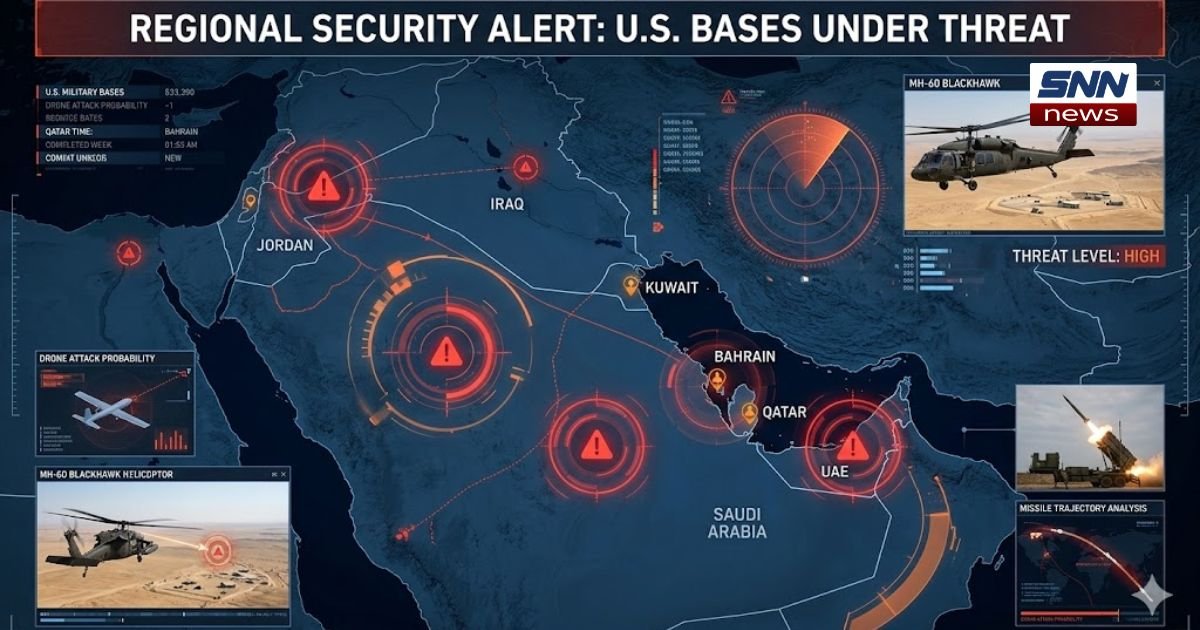
The strikes targeted bases in Bahrain, Qatar, Kuwait, the United Arab Emirates, Saudi Arabia, Jordan, and Iraq, marking one of the most coordinated assaults against U.S. forces in recent years.
Overview of the Attacks
According to defense sources, the following American bases were affected:
Bahrain
- Al-Juffair Base
- U.S. Fifth Fleet Command Center
Qatar
- Al-Udeid Air Base
Kuwait
- Arifjan Camp
- Ahmad Al-Jaber Air Base
- Mubarak Air Base
United Arab Emirates (UAE)
- Al-Dhafra Air Base
- Jebel Ali Port
- Fujairah Air Base
- American Military
Saudi Arabia
- Prince Sultan Air Base in Riyadh
- Tabuk Base
- Khamis Mushait Base
- A western base in Jeddah
Jordan
- Muwaffaq Salti Air Base
Iraq
- U.S. base in Erbil
Context and Background
The attacks come amid rising tensions between Iran and the United States over geopolitical and security disputes in the region.
Analysts suggest that these strikes may be a response to ongoing sanctions, military activities, and perceived U.S. interference in Iranian affairs.
- Strategic Importance: Many of these bases are key operational hubs for U.S. forces in the Middle East, including command centers, air bases, and logistics ports.
- Regional Security Impact: The attacks are likely to increase security concerns for both U.S. personnel and allied nations in the Gulf region.
- Historical Context: Iran has previously targeted U.S. forces indirectly through proxy groups. However, this direct series of strikes represents a more overt escalation.
- American Military
Immediate Consequences
While official reports about casualties or structural damage are still emerging, preliminary assessments indicate potential disruptions to U.S. military operations across the affected countries.
Experts warn that the attacks could lead to heightened military alerts, increased defense measures, and possible retaliatory responses.
- Bahrain: The Al-Juffair Base and Fifth Fleet Command Center serve as the operational hub for the U.S. Navy in the Persian Gulf, making these targets highly sensitive.
- Saudi Arabia: Prince Sultan Air Base and other military installations in Riyadh, Tabuk, and Khamis Mushait are critical for air operations and regional intelligence coordination.
- Iraq and Jordan: Bases like Erbil and Muwaffaq Salti are key for supporting U.S. counterterrorism and regional stabilization missions.
- American Military
International Reactions
Global leaders and security analysts have expressed concern over the escalating situation. The United Nations and allied nations have urged restraint and emphasized the need for diplomatic solutions to avoid further conflict.
- United States: Officials are reportedly evaluating the extent of damage and reviewing potential military and diplomatic responses.
- Regional Allies: Countries hosting U.S. bases are assessing security protocols and increasing protective measures for personnel and assets.
- American Military
Public Impact and Relevance
The attacks highlight the vulnerability of international military installations and the fragile security dynamics in the Middle East. They also underscore the potential for broader geopolitical consequences, affecting global energy markets, trade routes, and regional alliances.
- Civilian Considerations: While the strikes primarily targeted military installations, nearby civilian populations may face indirect risks, including disruptions to air travel and local infrastructure.
- Military Readiness: U.S. forces may adjust deployment strategies and increase surveillance across the region to prevent further attacks.
Looking Ahead
The coming days will be critical in determining whether these attacks lead to a wider military escalation or renewed diplomatic negotiations. Analysts emphasize the importance of coordinated international response and crisis management to prevent further destabilization.
- Monitoring of air and sea routes in the Persian Gulf and Arabian Sea will likely intensify.
- Diplomatic channels between Iran, the United States, and regional allies may become more active in pursuit of conflict de-escalation.
- U.S. military bases across the region may undergo enhanced security inspections and operational adjustments.
The strikes today represent a significant moment in Middle Eastern security dynamics, with potential implications for international relations, defense strategies, and regional stability.
Iranian strikes on American military bases escalate tensions across the Middle East.
About The Author