
By Hammad Kahlun
Scandinavian news Finland
Kaja Kallas Says Europe Must Stay United Amid Rising Transatlantic Tensions
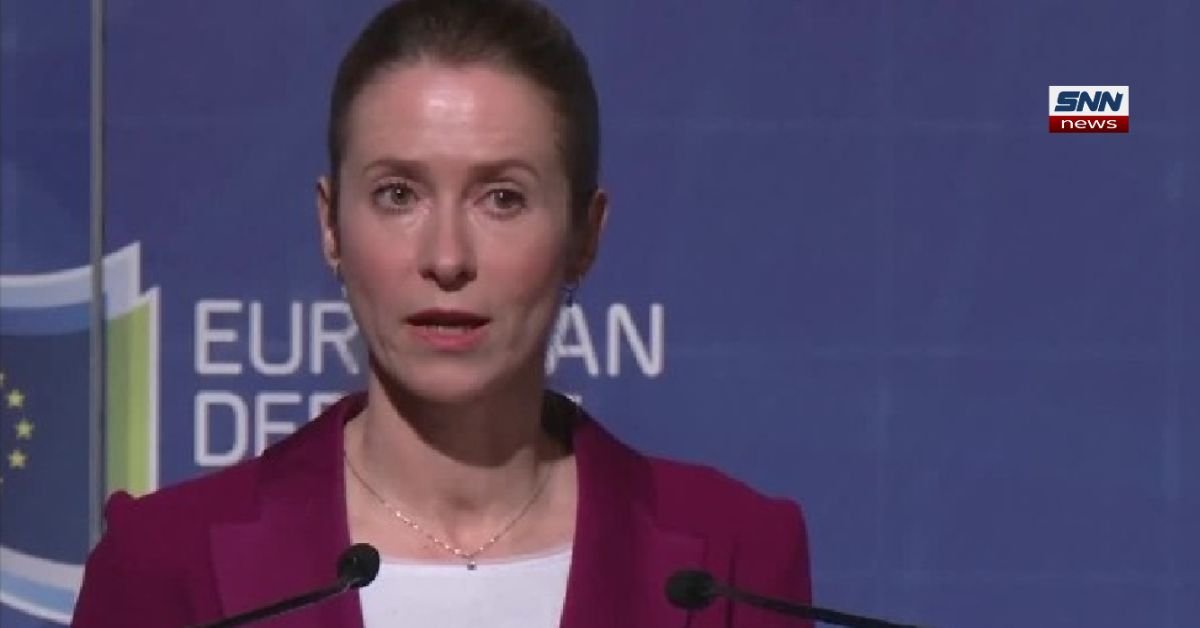
European Union foreign policy chief Kaja Kallas has issued a strong warning about growing political pressure on Europe, saying Washington is not trying to manage Europe but is instead pushing forces that could weaken the European Union.
Her remarks come at a time of increasing uncertainty over future US-EU relations, NATO policy, trade disputes, and the possible return of Donald Trump to the White House.
Kaja Kallas said the answer for Europe is not to seek separate bilateral deals with Washington, but to remain united.
According to her, Europe becomes an equal global power when it acts together, and that unity is essential during a period of geopolitical tension.
The statement has gained attention across Europe because it reflects wider concerns about the future of the EU’s relationship with the United States and the long-term stability of Western alliances.
Who Is Kaja Kallas?
Kaja Kallas is one of Europe’s most prominent political leaders and currently serves as the European Union’s top diplomat. Before taking the role, she was Prime Minister of Estonia and became known for her firm stance on Russia, European security, and democratic values.
She has consistently argued that Europe must become stronger, more coordinated, and more independent in defense and foreign policy matters.
Her latest comments highlight the growing debate within Europe over strategic autonomy and how the bloc should deal with changing US politics.
What Kallas Said About Washington and Europe
Kallas said Washington is not attempting to manage Europe but is instead moving in a direction that could dissolve European unity.
She also said some tactics being used resemble methods used by adversaries of the European Union.
While she did not provide detailed examples in the quoted remarks, the message suggests concerns about attempts to divide European states politically, economically, or diplomatically.
Her most direct message was that Europe should reject one-on-one deals with powerful outside actors if those deals weaken the wider bloc.
Instead, she said unity gives Europe equal standing on the world stage.
Why the Statement Matters Now
The timing of Kallas’s warning is significant. Europe is currently facing multiple challenges, including:
- The Russia-Ukraine war
- Questions over future US support for NATO
- Trade tensions with global powers
- Energy security concerns
- Rising populist politics in several countries
- Pressure on EU institutions
- Kaja Kallas
At the same time, possible leadership changes in the United States have raised concern among some European officials about future American commitment to collective alliances.
Kallas’s comments reflect fears that Europe could become politically fragmented if member states begin pursuing separate arrangements instead of common policy.
Europe and Trump Concerns
Donald Trump remains a major political figure in the United States, and his past comments on NATO, tariffs, and European defense spending continue to influence debate in Brussels and European capitals.
During his presidency, Trump criticized several European countries for not spending enough on defense and questioned parts of the transatlantic security framework.
Many European policymakers now want contingency plans in case future US administrations take a more transactional approach toward allies.
Kallas’s warning that Europe should not rely on bilateral deals appears linked to this broader concern.
Why EU Unity Is Central to the Debate
The European Union is strongest when its member states negotiate together on trade, sanctions, regulation, and foreign policy. When divided, individual countries often have less leverage against major powers such as the United States, China, or Russia.
Benefits of EU Unity Include:
- Stronger trade bargaining power
- Coordinated sanctions policy
- Shared security planning
- Common regulatory influence
- Greater diplomatic weight
- More stable internal markets
- Kaja Kallas
Kallas’s message suggests that unity is not only political symbolism but also practical strategy.
Strategic Autonomy and Europe’s Future
In recent years, the term “strategic autonomy” has become more common in EU policy discussions. It refers to Europe’s ability to act independently when needed in areas such as defense, technology, energy, and diplomacy.
Supporters say Europe must reduce overdependence on external powers. Critics argue Europe should remain closely tied to the United States and NATO.
Kallas’s remarks may add momentum to calls for stronger European defense industries, shared military planning, and more coordinated foreign policy.
Public Impact Across Europe
The debate is not limited to diplomats. Ordinary Europeans may feel the effects through:
- Energy prices
- Defense budgets
- Trade rules
- Job markets
- Security policy
- Inflation linked to global tensions
- Kaja Kallas
If Europe becomes politically divided, policy responses to crises may slow down. If unity increases, leaders may respond faster and with greater influence.
Reaction Across EU Capitals
While reactions vary by country, many European leaders publicly support stronger EU coordination. However, member states often disagree on migration, defense spending, budget rules, and foreign policy priorities.
That means Kallas’s call for unity may be popular in principle but difficult in practice.
Still, with war in Ukraine continuing and global competition rising, pressure for closer cooperation is increasing.
Background: EU-US Relations
The relationship between Europe and the United States remains one of the world’s most important alliances. The two sides cooperate on:
- NATO security
- Trade and investment
- Intelligence sharing
- Technology standards
- Sanctions enforcement
- Climate policy
- Kaja Kallas
However, disagreements over tariffs, defense spending, industrial subsidies, and foreign policy priorities have also emerged repeatedly.
Kallas’s comments show that Europe wants partnership with Washington, but not at the cost of internal cohesion.
What Comes Next
The future of EU unity will likely depend on upcoming elections, security developments, and economic conditions on both sides of the Atlantic.
For now, Kaja Kallas has delivered a clear message: Europe should not allow outside pressure to divide it. Instead, she says the bloc must act together if it wants equal influence in a rapidly changing world.
EU unity latest updates, Kaja Kallas statements, Europe US relations, Donald Trump Europe policy, EU foreign affairs news
About The Author