
By Riffat Kausar,
SNN News Finland
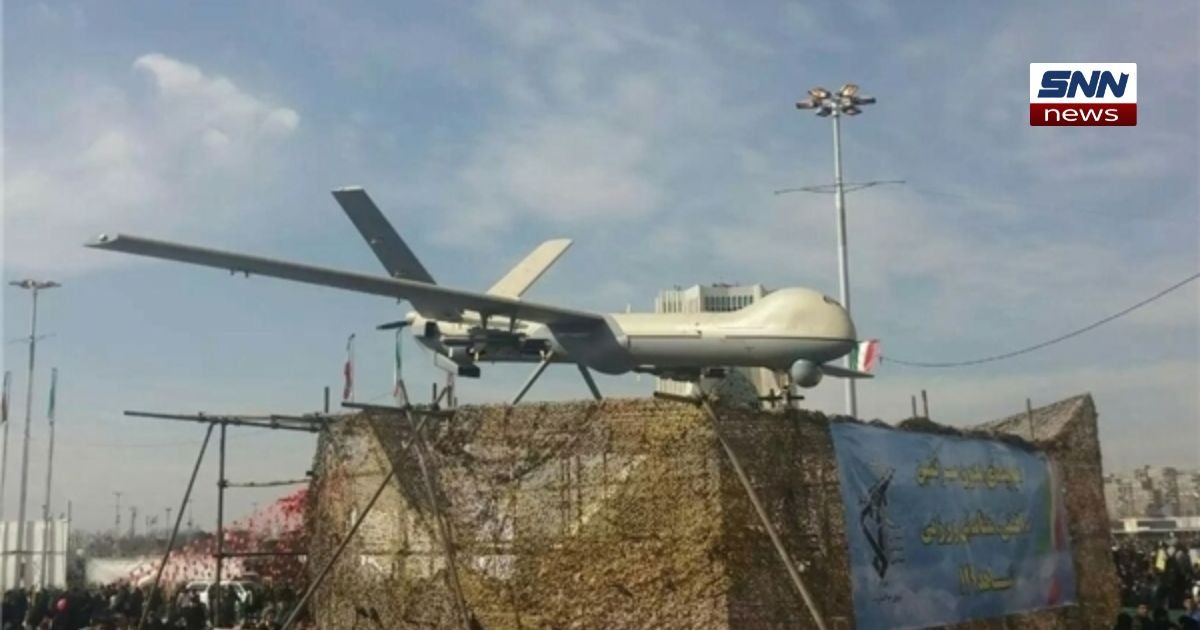
A recent attack involving a “Shahed-like drone” targeting a Royal Air Force (RAF) base in Cyprus has raised alarms in military and diplomatic circles.
However, a spokesperson for the United Kingdom’s Ministry of Defence (MoD) clarified that the drone was not launched from Iran, suggesting the incident could be part of a false flag operation rather than a direct act by Tehran.
The announcement comes amid growing international concerns over the proliferation of unmanned aerial vehicles (UAVs) in conflict zones, and the potential risks they pose to allied military installations.
The Drone Incident: What Happened
According to official sources, the drone, described as similar to Iran’s Shahed series, approached the RAF base in Cyprus late last week.
While it did not cause significant damage, the incident prompted heightened security measures and an immediate investigation by the base’s defense team.
- The drone’s flight path and telemetry data suggested it did not originate from Iranian territory.
- Officials are examining whether the operation was staged to appear as an Iranian attack, a tactic commonly known as a false flag operation.
- The base’s anti-drone defenses were activated, ensuring no personnel or critical infrastructure were harmed.
- Shahed-Like Drone
A Ministry of Defence spokesperson told SNN News Finland: “Preliminary investigations show no evidence linking this drone to Iran. We are exploring all possibilities, including a false flag operation aimed at creating confusion or escalating tensions.”
Background: Shahed Drones and Their Global Presence
Shahed drones, developed by Iran, have been widely reported in Middle Eastern conflict zones, including Syria and Yemen. These drones are known for their:
- Precision strike capabilities
- Relatively low cost and ease of deployment
- Ability to be mistaken for other UAVs due to design similarities
- Shahed-Like Drone
In recent years, Shahed-style drones have also appeared in regions far from Iran, often used by proxy groups or in operations designed to obscure the true source of attack. Security analysts note that the resemblance of drones can be deliberately exploited to mislead investigators and escalate political tensions.
Why Authorities Suspect a False Flag
The UK Ministry of Defence and allied intelligence sources are carefully analyzing the Cyprus drone incident. Several factors point toward the possibility of a false flag scenario:
- Unusual flight trajectory – The drone’s approach did not match the typical range or path of Iranian UAVs.
- No preceding intelligence – There were no prior alerts or credible threats from Iran regarding this RAF base.
- Timing and geopolitical context – Analysts note that the incident coincides with regional tensions where various actors could benefit from attributing the attack to Iran.
- Shahed-Like Drone
False flag operations are designed to mislead the public or military authorities, often creating pretexts for retaliation, sanctions, or heightened security responses.
Implications for Cyprus and Regional Security
Cyprus hosts several strategic military facilities used by NATO and allied forces, making it a sensitive location for drone activity. The recent incident underscores:
- The vulnerability of overseas military bases to unmanned aerial threats.
- The importance of international cooperation in drone detection and defense.
- The potential for misattribution in international conflicts, which could escalate tensions unnecessarily.
- Shahed-Like Drone
While the immediate threat to personnel was minimal, the MoD has increased patrols, surveillance, and counter-drone measures to prevent any recurrence.
Expert Analysis
Military experts emphasize that distinguishing the origin of drones is increasingly complex. Dr. Alex Turner, a defense analyst specializing in UAV technology, explains:
“The proliferation of Shahed-like drones makes attribution difficult. States or non-state actors can mimic these drones to conduct operations while concealing the true source. This is exactly why false flag operations are a growing concern in modern conflict.”
Experts also highlight the need for updated defense protocols in regions where high-value military assets are concentrated, including radar improvements and AI-assisted threat detection.
Moving Forward: Investigation Continues
The UK Ministry of Defence is coordinating with Cypriot authorities, NATO partners, and allied intelligence agencies to:
- Determine the precise launch point of the drone
- Analyze its onboard systems and materials
- Identify potential perpetrators behind the operation
- Shahed-Like Drone
Until the investigation is complete, authorities caution against attributing responsibility prematurely. The MoD reiterated that no direct evidence currently links Iran to the drone, and international observers have called for measured responses to avoid escalation.
Public Safety and Awareness
Although the drone did not result in casualties, the incident serves as a reminder of emerging aerial threats. Civilian authorities and military installations in sensitive areas are encouraged to maintain vigilance and report unusual UAV activity.
Shahed-Like Drone Threats and Global Incidents”
About The Author