
By Hammad Kahlun
Scandinavian news Finland
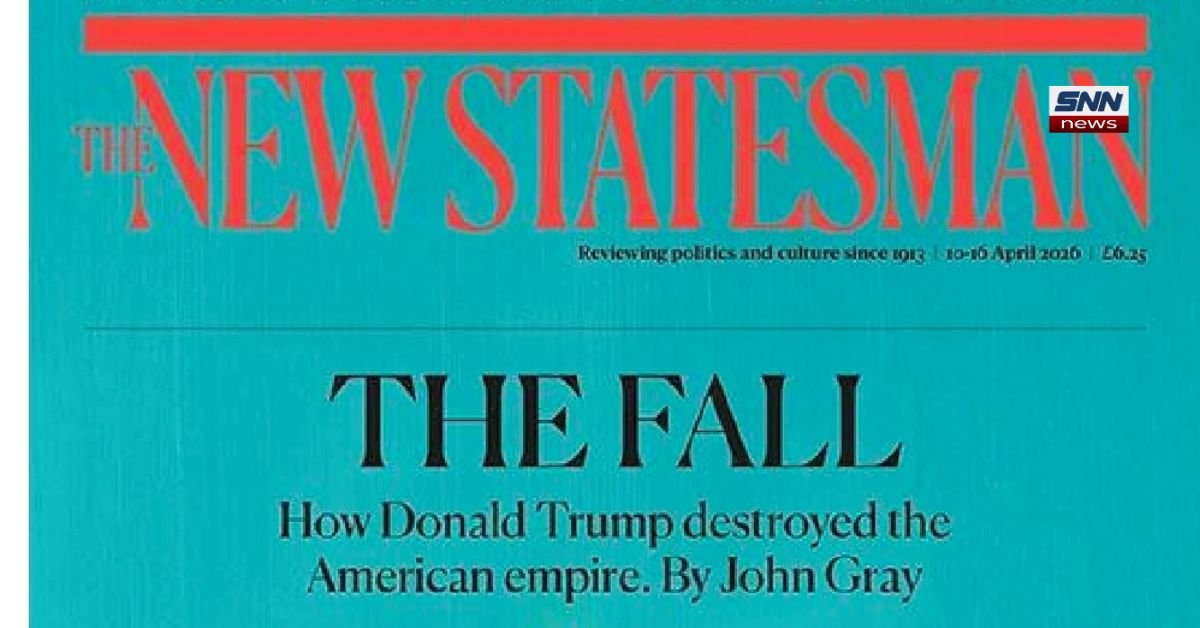
A recent analysis published in New Statesman has raised significant questions about the global position of the United States following escalating tensions with Iran.
The article argues that what was intended as a demonstration of American military strength has instead exposed signs of strategic weakness.
According to the report, policies associated with Donald Trump, particularly regarding Iran, may have unintentionally accelerated geopolitical changes.
The situation highlights shifting power dynamics in the Middle East and beyond, with broader implications for global security, oil markets, and international alliances.
US-Iran Conflict: A Strategy That Backfired?
The central argument presented is that the US Analysis approach toward Iran did not achieve its intended objectives.
Initially, the strategy was reportedly designed to limit Iran’s nuclear capabilities and assert dominance in the region.
However, analysts suggest that the situation evolved differently. Instead of weakening Iran, the conflict appears to have strengthened its regional influence.
The focus reportedly shifted from containing nuclear development to maintaining control over critical trade routes, particularly the Strait of Hormuz.
This narrow passage is one of the most important oil transit chokepoints in the world. Any disruption here can significantly impact global energy supplies and prices.
Key Developments Highlighted:
- The initial objective of limiting Iran’s capabilities was not fully achieved
- Strategic focus shifted toward securing oil supply routes
- Iran’s regional and economic influence appears to have grown
- The US faced increasing challenges in maintaining its position
- Analysis
Strategic Importance of the Strait of Hormuz
Why This Waterway Matters
The Strait of Hormuz plays a crucial role in the global oil market. A significant percentage of the world’s petroleum exports pass through this route daily.
Any attempt to control or influence this chokepoint carries major geopolitical consequences. The analysis suggests that Iran’s strengthened position near this route has increased its leverage in global energy markets.
Global Impact
- Oil prices are highly sensitive to instability in the region
- Energy-dependent economies face increased risks
- Shipping and trade routes could be disrupted
- International stakeholders are forced to reassess their strategies
- Analysis
Warnings and Policy Decisions
The report indicates that decision-makers, including Donald Trump, were advised of potential risks before escalating tensions with Iran. However, these warnings were reportedly not fully considered.
Experts argue that underestimating Iran’s resilience and regional alliances contributed to the current situation. Rather than achieving a quick and decisive outcome, the conflict created long-term strategic challenges.
Key Policy Concerns:
- Misjudgment of Iran’s response capabilities
- Overreliance on short-term military objectives
- Limited consideration of long-term geopolitical consequences
- Increased risk of prolonged regional instability
- Analysis
A Growing Strategic Dilemma for the United States
The United States now faces a complex decision regarding its role in the Middle East. The analysis outlines two primary options, both carrying significant risks.
Option 1: Strategic Withdrawal
Reducing involvement in the region could:
- Lower immediate military and financial costs
- Reduce exposure to regional conflicts
- However, weaken US influence and alliances
Option 2: Escalation of Military Engagement
Increasing military presence or launching a ground operation could:
- Attempt to restore control and influence
- Deter adversaries in the short term
- But risk large-scale conflict with unpredictable consequences
- Analysis
Comparisons have been drawn to past US military engagements, including:
- Vietnam War
- War in Afghanistan
- Iraq War
- Analysis
The article suggests that a new conflict could potentially exceed the scale and impact of these previous wars.
Shifting Global Power Dynamics
Opportunities for Other Global Powers
As the United States Analysis navigates this complex situation, other major powers may benefit from the shifting balance.
China’s Expanding Influence
China could gain strategic advantages in Asia by filling gaps left by reduced US involvement. Increased economic partnerships and regional influence may strengthen its global position.
Russia’s Strategic Leverage
Russia may also benefit by expanding its influence in Europe and the Middle East. The changing dynamics provide opportunities for diplomatic and economic engagement in contested regions.
Multipolar World Emerging?
The analysis points toward the gradual emergence of a more multipolar global order, where power is distributed among several key nations rather than dominated by a single superpower.
Public and Global Implications
The developments outlined in the report are not limited to political or military circles. They carry significant implications for the global population.
Economic Impact
- Fluctuations in oil prices can affect inflation worldwide
- Energy costs may rise for consumers
- Supply chain disruptions could impact global trade
- Analysis
Security Concerns
- Increased risk of regional conflicts
- Greater uncertainty in international relations
- Potential for broader geopolitical instability
- Analysis
Diplomatic Consequences
- Strained alliances
- Shifting partnerships
- Increased competition among global powers
- Analysis
Conclusion: A Turning Point in Global Power?
The analysis published by New Statesman concludes that recent developments could represent a critical moment in global history.
Actions associated with Donald Trump may have unintentionally accelerated changes in the international system Analysis .
Rather than reinforcing US dominance, the situation has exposed vulnerabilities and opened opportunities for rival powers.
Whether this marks the beginning of a long-term decline or a temporary setback remains uncertain.
What is clear, however, is that the global balance of power is evolving. Policymakers, analysts, and international stakeholders will continue to monitor these developments closely, as their consequences are likely to shape the future of global politics, security, and economic stability.
Read our full analysis on US strategic challenges and Iran’s growing influence in the Middle East and global oil markets.
About The Author