
By Hammad Kahlun
International News Correspondent
Scandinavian News Finland
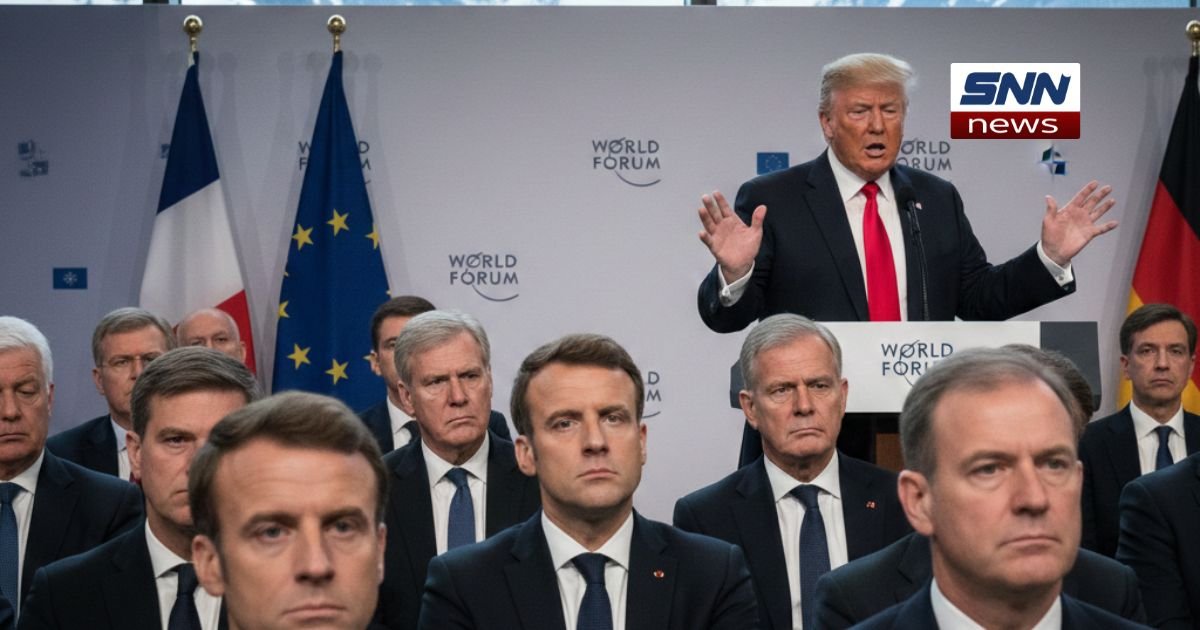
The World Economic Forum in Davos witnessed a moment of rare political intensity as former U.S. President Donald Trump delivered a confrontational address that left Europe’s leadership visibly unsettled and largely silent.
Speaking before an international audience, Trump launched a sweeping critique of European governance, accusing the continent’s leaders of weakness, indecision, and repeated concessions on global issues.
His remarks, delivered without restraint, framed Europe as increasingly dependent on American power for both security and global relevance.
Trump openly mocked French President Emmanuel Macron, referencing past negotiations on pharmaceutical pricing and portraying European leaders as quick to yield under U.S. pressure.
He questioned the credibility and effectiveness of NATO, asserting that the alliance would be ineffective without American military strength and leadership.
One of the most controversial segments of the speech centered on Greenland. Trump revisited historical arguments, claiming that Denmark’s rapid surrender during World War II demonstrated its inability to defend strategic territory.
He argued that American involvement had secured Greenland and suggested that returning control had been a strategic mistake, portraying Denmark’s continued sovereignty over the island as a security risk in the modern world.
Trump further emphasized U.S. military supremacy, stating that American defense capabilities far exceed those of its allies. He referenced recent global conflicts as evidence that U.S. military action renders adversaries incapable of effective retaliation.
Notably, the address proceeded without interruption. European leaders present did not respond publicly during the session, nor were there walkouts or objections an absence of reaction that spoke volumes about the current imbalance within the transatlantic relationship.
The episode highlighted a strained and increasingly asymmetric dynamic between the United States and Europe, raising fresh questions about the future of cooperation, mutual respect, and strategic independence within the Western alliance.
Trump’s Davos address laid bare the growing imbalance in U.S.–Europe relations.
About The Author