
By Hammad Kahlun
Scandinavian News Finland
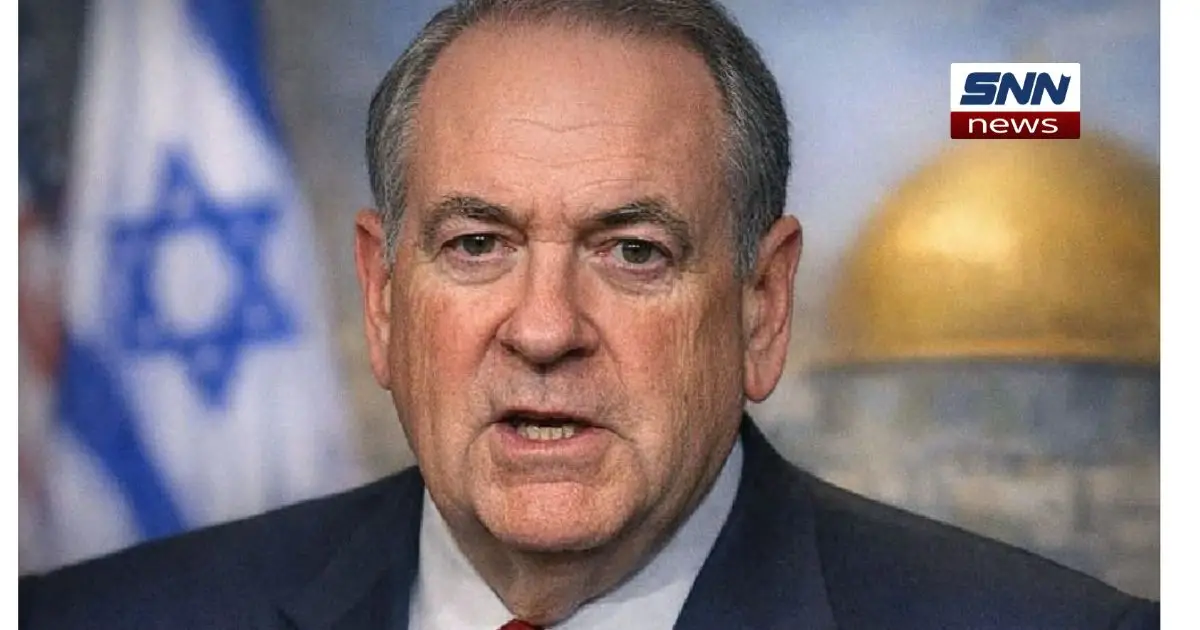
U.S. envoy Mike Huckabee has sparked widespread controversy after asserting that Israel holds a “Biblical right” to control the entire Middle East.
Critics say his statement risks inflaming extremism and undermining established principles of international law.
Outrage Across the Region
Huckabee’s remarks, based on religious and ideological interpretations, have provoked strong reactions from policymakers, diplomats, and analysts worldwide.
The comments come at a time when tensions in Gaza, Palestine, and the broader Middle East remain extremely high.
Experts warn that justifying modern geopolitical claims through biblical entitlement could:
- Legitimize expansionist agendas
- Deepen regional hostility
- Jeopardize fragile peace initiatives
- U.S. Envoy
“The danger of framing political control in religious terms is that it can embolden extremist groups and erode trust in international diplomacy,” said a Middle East analyst.
Implications for U.S. Foreign Policy
Huckabee’s statement has raised urgent questions about the role of religious ideology in U.S. foreign policy. Critics argue that such rhetoric blurs the line between personal beliefs and official diplomatic positions, potentially impacting America’s credibility in the region.
- Diplomatic Responsibility: U.S. envoys are expected to promote stability and peace, not fuel ideological conflicts.
- Regional Reactions: Several Middle Eastern governments have expressed concern over the potential for increased tensions.
- Global Perception: International observers warn that linking biblical claims to modern political authority undermines legal norms established by the United Nations and other bodies.
- U.S. Envoy
Context of the Israel–Palestine Conflict
The Israel–Palestine conflict has long been a flashpoint in Middle Eastern geopolitics. Issues surrounding territorial claims, settlements, and humanitarian concerns remain highly sensitive.
Huckabee’s comments risk framing the dispute through a religious lens rather than a diplomatic or legal one, complicating ongoing peace efforts.
Background:
- Israel and Palestine have a decades-long history of conflict over land and sovereignty.
- Gaza remains a center of humanitarian crisis and military tension.
- International efforts, including U.N.-mediated negotiations, have sought to establish a two-state solution.
- U.S. Envoy
By invoking religious entitlement, analysts fear that the comments could embolden extremist rhetoric on both sides, making reconciliation and dialogue even more challenging.
Responses From Leaders and Analysts
Political leaders and commentators have largely condemned Huckabee’s remarks:
- Some stress that mixing religion and geopolitics can escalate violence.
- Others highlight that the statement may undermine U.S. mediation efforts in the Middle East.
- Peace advocates warn that rhetoric justifying territorial expansion risks global instability beyond the region.
Broader Implications
Huckabee’s statements underscore the delicate balance required in Middle East diplomacy. They illustrate how public figures can influence perceptions and policy through statements that may inadvertently fuel conflict.
Key concerns include:
- Impact on Extremism: Religious justification for political control may be used by militant groups to legitimize aggression.
- Diplomatic Challenges: U.S. allies and adversaries may view such statements as inconsistent with official policy.
- Peace Efforts: Efforts toward long-term resolution in Gaza, Israel, and the wider Middle East could face setbacks.
Moving Forward
Observers emphasize the importance of maintaining diplomacy grounded in international law and human rights rather than religious or ideological interpretations. Peace advocates call for:
- Clear messaging from U.S. officials separating personal beliefs from official policy
- Support for dialogue and negotiation over unilateral claims
- Reinforcement of international norms to prevent escalation
- U.S. Envoy
As global attention remains on the Israel–Palestine conflict, Huckabee’s remarks serve as a reminder of the complex intersection between religion, politics, and diplomacy in one of the world’s most volatile regions.
The statement by the U.S. Envoy underscores the influence that high-profile American officials can have on international perceptions and regional stability.
Experts warn that framing territorial claims through religious narratives can embolden extremist factions, who may see such rhetoric as justification for aggressive actions, further escalating tensions in the Middle East.
The U.S. Envoy’s comments have also sparked debates about the role of personal ideology in official diplomacy, highlighting the delicate balance between belief systems and the responsibility to promote peace.
Analysts emphasize that while historical and religious perspectives are part of the region’s identity, foreign policy decisions must prioritize human rights, legal norms, and constructive dialogue.
Statements like these risk undermining years of diplomatic efforts, complicating negotiations, and eroding trust among regional and international stakeholders.
Read more on U.S. Envoy foreign policy and Middle East diplomacy challenges here.
About The Author