

By Hammad Kahlun
Scandinavian news Finland
Washington — A major search operation is underway after a U.S. Air Force F‑15E Strike Eagle was downed over Iran, with one crew member rescued and a second still missing, U.S. and regional officials say.
On April 3, 2026, Iranian air defenses struck a U.S. F‑15E fighter jet during ongoing hostilities with Tehran, officials confirmed.
The aircraft, part of Operation Epic Fury, was hit over Iranian territory, prompting both crew members to eject.
One airman was recovered by U.S. special forces in a high‑risk operation, while the second — a weapons systems officer (WSO) — remains unaccounted for as intense search efforts continue.
Iranian authorities have also mobilized local search efforts, encouraging civilians to report sightings and offering a reward of about $60,000 for capturing the missing American pilot alive, Iranian media reported.
What Happened: Downing of the F‑15E
The F‑15E Strike Eagle is a dual‑seat U.S. Air Force fighter designed for both air‑to‑air combat and precision ground strikes.
On April 3, it was engaged by Iranian surface‑to‑air defenses, forcing the crew to eject over a remote region of Iran’s Khuzestan Province.
- Both crew members escaped the jet via ejection seats.
- One crew member was located and rescued by U.S. special operations forces and is receiving medical care.
- The second crew member has not been found, and the search spans rugged terrain and hostile territory.
This marks the first confirmed U.S. crewed aircraft loss over Iran since escalations began in late February.
Search Operations and Challenges
U.S. military forces swiftly launched combat search and rescue (CSAR) operations after the aircraft went down. These missions typically involve a combination of:
- HH‑60G Pave Hawk helicopters for extraction
- HC‑130J Combat King II aircraft for aerial refueling and command support
- Drones and escort fighters to provide overhead cover
Videos and geolocation analysis suggest U.S. search aircraft were operating at low altitude over Iranian territory, increasing risk due to active air defenses.
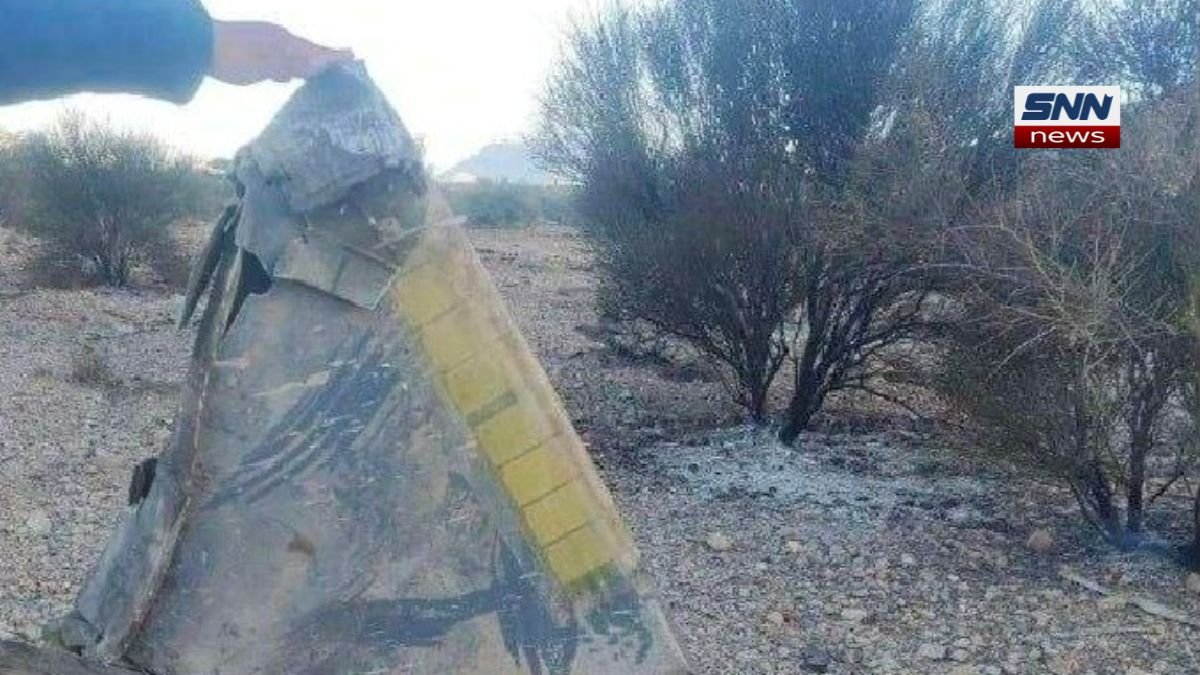
Iranian media circulated images of debris from the downed aircraft, initially misidentifying it as an F‑35 stealth jet, but analysts and U.S. sources confirmed the wreckage belongs to an F‑15E Strike Eagle.
Iran’s Response and Civilian Reward Offer
Following the shootdown, Iran’s state media reportedly urged local citizens to report any sightings of the downed aircrew, offering a $60,000 reward for capturing the missing U.S. pilot alive.
This unusual public incentive reflects:
- Tehran’s intention to assert control over the situation
- An effort to involve civilians in the search, potentially complicating U.S. rescue operations
Iran’s Revolutionary Guard and provincial authorities have both highlighted the reward, though international law and wartime conventions make the legal status of such offers questionable.
Regional Context: Escalating Conflict
The downing of the F‑15E occurred amid a broader conflict involving the United States, Iran, and Israel that has intensified over recent weeks.
Key developments in the wider theater include:
- Multiple airstrikes by U.S. and Israeli forces on Iranian military and infrastructure targets
- Continued missile and drone attacks by Iran into neighboring countries
- Civilian and military casualties on all sides
- Rising tensions in the strategically vital Strait of Hormuz
The conflict began following a joint U.S.–Israeli strike that killed Iran’s Supreme Leader, triggering retaliatory exchanges and an expanded campaign known as Operation Epic Fury.
Impact and Implications
The loss of an F‑15E and the ongoing hunt for the missing crew member carry several significant implications:
Military and Strategic
- Undermines U.S. assertions of air superiority over Iranian airspace
- Highlights effectiveness or resilience of Iran’s integrated air defenses
- Raises risk of escalation due to potential capture or harm to U.S. personnel
Political
- Puts pressure on U.S. leadership amid domestic criticism of the conflict
- Complicates diplomatic efforts, including peace talks explored through Pakistani mediation channels.
Humanitarian and Legal
- International bodies may scrutinize conduct of both sides regarding treatment of downed aircrew
- Reward offers for capturing military personnel may violate wartime norms
Conclusion
The downing of the U.S. F‑15E Strike Eagle over Iranian territory marks a critical escalation in an already tense regional conflict.
While one crew member has been successfully rescued, the second remains missing, prompting an intensive search by U.S. special forces under highly dangerous conditions.
Iran’s announcement of a civilian reward for capturing the pilot adds a complex layer to the operation, raising both legal and humanitarian concerns under international wartime norms.
The incident underscores the risks faced by military personnel in hostile airspace and highlights the effectiveness of Iran’s air defense systems.
Strategically, the event may influence U.S. military operations, diplomatic negotiations, and regional stability. For now, the focus remains on safely recovering the missing aircrew, mitigating further escalation, and navigating the sensitive political and humanitarian implications of the incident.
This episode serves as a stark reminder of the fragile security environment in the region and the high stakes involved for both Miltery forces and civilians amid ongoing hostilities.
About The Author