
By Hammad Kahlun
Scandinavian news Finland
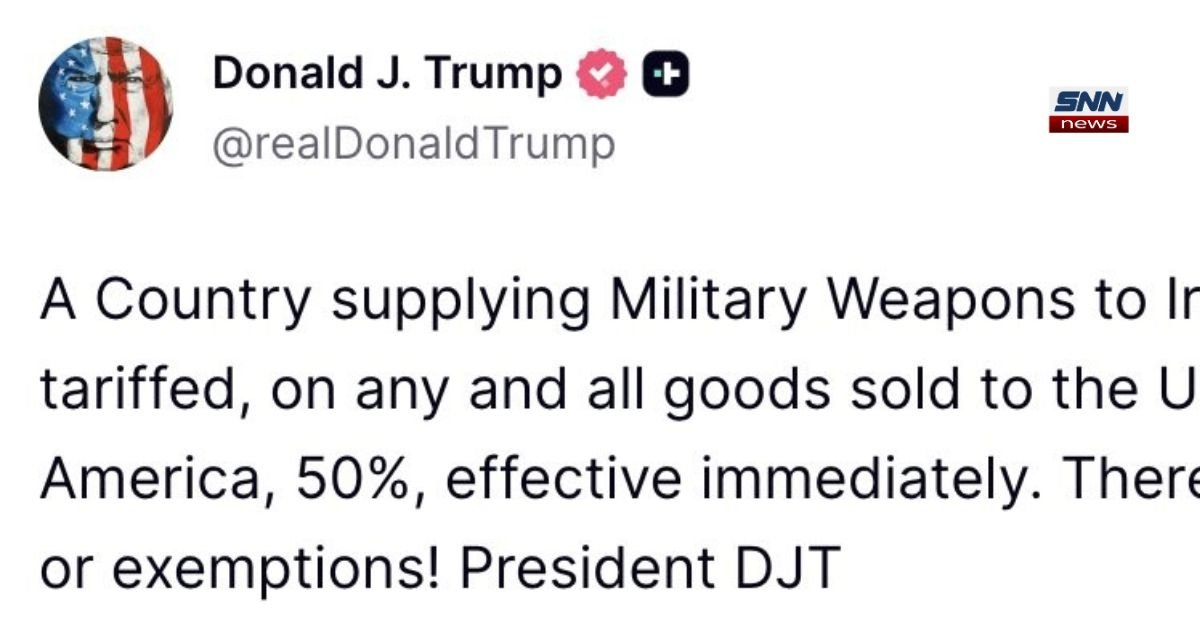
WASHINGTON, April 8, 2026 – U.S. President Donald Trump Immediate has declared sweeping tariffs on any nation found to be supplying military weapons to Iran, imposing a Immediate 50 percent duty on all goods those countries export to the United States.
The announcement, made via Trump’s Truth Social platform, comes just hours after a temporary two‑week ceasefire was agreed between Washington and Tehran amid escalating tensions in the Middle East.
In a direct message on social media, Trump wrote that there will be “no exclusions or exemptions” for the tariff, which he said would take effect Immediate on “any and “all goods these countries send to the U.S.”
This policy move marks one of the most significant U.S. actions in recent months aimed at limiting outside military assistance to Tehran, even as diplomatic channels work to maintain calm in the region.
What Trump Ordered: Key Details of the New Tariff Policy
- Tariff Rate: 50 percent tariff on all imports from countries that supply weapons to Iran.
- Effective Date: Immediately, according to Trump’s public statement.
- Scope: Applies to all goods from offending nations, not limited to military items.
- Exemptions: None — the president emphasized that no country would be exempt.
- Announcement Platform: Truth Social, Trump’s preferred social media channel for official pronouncements.
- Immediate
Analysts note the broad wording of the tariff suggests a strategic attempt to discourage foreign military cooperation with Iran by threatening deep economic penalties.
However, legal and diplomatic questions remain over how such tariffs can be implemented under existing U.S. trade laws.
Context: Middle East Conflict and Ceasefire Agreement
The tariff announcement follows a temporary two‑week ceasefire between the U.S. and Iran, designed to ease intense hostilities that had raised concerns about broader regional conflict and disrupted global energy markets.
The ceasefire includes provisions for the temporary reopening of the Strait of Hormuz, a strategic waterway through which a large portion of the world’s oil supply passes.
Security around this route has been a flashpoint in the conflict, and its reopening is seen as a key element in stabilizing energy markets.
Trump’s tariff threat appears to be intended both to sustain economic pressure on Iran’s supporters and to reinforce diplomatic leverage during the ceasefire negotiations.
Who Could Be Affected?
Although Trump did not name specific countries at the time of his announcement, analysts and multiple news reports suggest that China and Russia could be among the primary targets of this policy.
Both nations have been accused in various international assessments of providing military materials or technical assistance to Iran in the past, despite repeated denials from Beijing and Moscow.
Potential Implications for Major Trade Partners
- China: As one of the United States’ largest trading partners, China exports hundreds of billions of dollars worth of consumer goods annually. If this tariff were applied to Chinese goods, it could significantly raise costs for American importers and consumers, and further strain U.S.‑China relations.
- Russia: While U.S. imports from Russia are comparatively small, Moscow’s historical military cooperation with Tehran raises its profile in discussions about arms supplies.
- Immediate
Experts also emphasize that enforcing such broad tariffs requires clear legal authority, which remains a subject of debate following a recent U.S. Supreme Court ruling that limited the president’s ability to impose global tariffs under emergency powers.
Legal and Trade Authority Questions
One of the central uncertainties surrounding the tariff announcement is how the U.S. will legally impose the duties.
Earlier this year, the Supreme Court ruled that the president had exceeded his authority under the International Emergency Economic Powers Act (IEEPA) when attempting to impose wide‑ranging tariffs, raising questions about the legality of the new measure.
Trade experts point out that alternative legal routes — such as Section 301 or Section 232 of U.S. trade law, which allow tariffs on unfair trade practices or for national security reasons — could be used.
However, these methods typically require formal investigations and public comment periods that delay implementation.
Because of these complexities, even though the president’s announcement states the tariffs are effective immediately, actual enforcement could face legal challenges and procedural hurdles in U.S. courts or international trade bodies.
Economic and International Impact
The immediate economic effects of the tariff declaration are uncertain, but several trends are worth noting:
- Global Markets: In the wake of ceasefire news and the tariff threat, global market reactions have been mixed. Previously, ceasefire announcements led to significant shifts in oil prices and stock indices.
- Supply Chains: Countries targeted by a 50 percent tariff could see their exports to the U.S. become significantly less competitive, incentivizing supply chain realignment or diversion of goods to other markets.
- Diplomatic Relations: Countries with strong trade ties to the U.S. may seek clarification and negotiations to avoid punitive duties, adding complexity to broader geopolitical negotiations involving Iran, China, and Russia.
- Immediate
Looking Ahead: What Comes Next?
The announcement positions economic pressure as a central part of the U.S. strategy to counter external military support for Iran. As the temporary ceasefire period unfolds, diplomats, traders, and policy experts will closely watch:
- Whether the tariffs are formally enacted and enforced through legal trade mechanisms.
- Responses from the governments potentially affected, including Beijing and Moscow.
- Potential impacts on global trade and supply chains tied to U.S. import markets.
- Immediate
With tensions still fragile in the Middle East, and trade ties with key global powers already strained, the decision to tie tariffs to military assistance signals a complex mix of foreign policy, economic strategy, and geopolitical brinkmanship in the months ahead.
“President Trump has announced an immediate 50% tariff on all goods from countries supplying weapons to Iran.”
About The Author