
By Hammad Kahlun
Scandinavian news Finland
Trump Prepares to Negotiate with Iran Using Its Own Framework
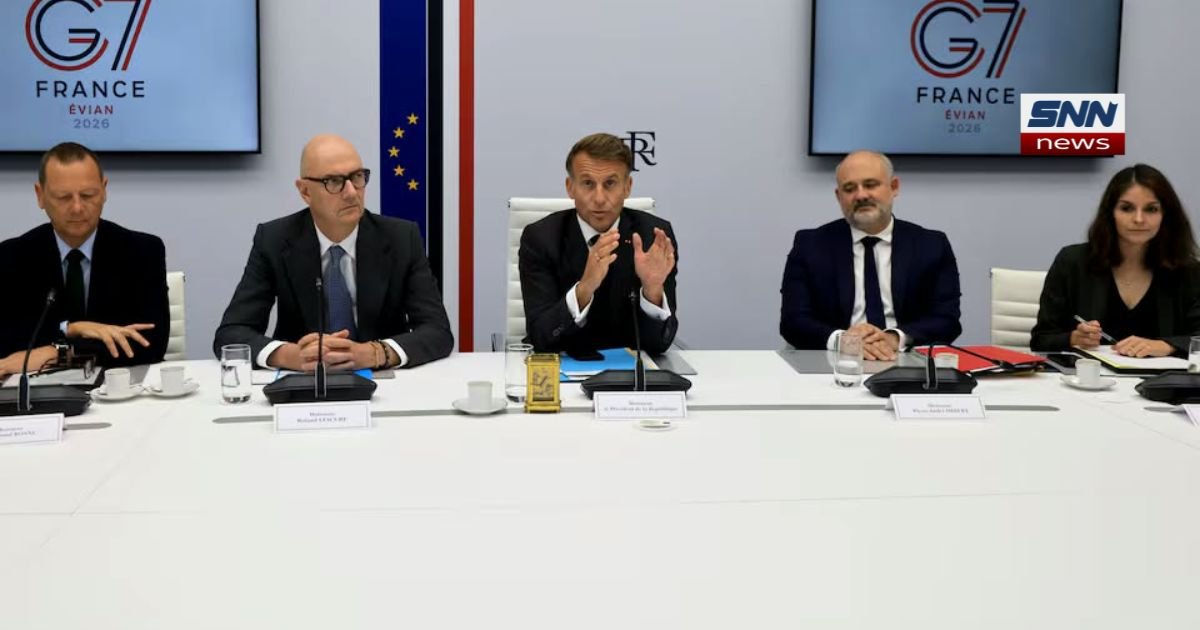
Iran 10-Point a surprising development on the international stage, former U.S. President Donald Trump is reportedly considering direct negotiations with Iran 10-Point relying on a 10-point framework proposed by Tehran itself.
Analysts describe this move as a significant shift from previous U.S. policy, potentially signaling a major setback for Washington and its regional ally, Israel.
The framework, presented by Iranian officials earlier this year, outlines key steps to de-escalate tensions in the Middle East, address nuclear concerns, and establish a more stable security environment.
If Trump adopts this approach, it marks a departure from earlier hardline rhetoric that suggested Iran’s political system and “civilization” needed to be suppressed or eliminated.
The 10-Point Framework Explained
Iran’s 10-point plan focuses on diplomatic engagement rather than military confrontation. Key aspects include:
- Nuclear Restrictions: Agreements to limit uranium enrichment and increase transparency at nuclear facilities.
- Regional Security Guarantees: Commitments to reduce interference in neighboring countries and curb proxy conflicts.
- Economic Cooperation: Proposals to lift certain sanctions in exchange for verifiable compliance.
- Cultural and Civilizational Respect: Calls for mutual recognition of each nation’s cultural heritage and political sovereignty.
- 10-Point
Experts note that this framework emphasizes negotiation and compromise, contrasting sharply with past U.S. strategies that relied on economic pressure and threats of military action.
Why This Move Could Humiliate the US and Israel
For decades, U.S. foreign policy has centered on isolating Iran, with Israel often framing Tehran as an existential threat. Trump’s potential adoption of Iran’s own framework could be seen as:
- Acknowledging Iran’s Strategy: By negotiating on Tehran’s terms, the U.S. may appear to concede strategic leverage.
- Undermining Past Policies: Longstanding sanctions and military postures could lose credibility if Iran’s approach succeeds diplomatically.
- Impacting Israel’s Security Posture: Israel, which has historically opposed concessions to Iran, may face a more complex regional environment.
- 10-Point
Political commentators suggest that such a shift could be perceived domestically and internationally as a rare diplomatic “victory” for Iran 10-Point.
Historical Context of US-Iran Relations
U.S.-Iran 10-Pointrelations have been strained since the 1979 Iranian Revolution, which overthrew the Shah and established the Islamic Republic. Key events shaping the current tensions include:
- The 2015 Nuclear Deal (JCPOA): Intended to limit Iran’s nuclear program in exchange for sanction relief, the deal collapsed in 2018 when Trump withdrew the U.S. and reimposed sanctions.
- Regional Conflicts: Iran’s support for proxy groups in Iraq, Syria, and Lebanon has fueled friction with U.S. allies.
- Economic Pressures: U.S. sanctions have severely impacted Iran’s economy, prompting calls for both negotiation and confrontation.
- 10-Point
The proposed 10-point framework represents a new attempt by Tehran to reset relations through diplomacy rather than confrontation, providing Trump with a potential pathway to reduce tensions.
Regional and Global Implications
Should Trump proceed with this negotiation strategy, the impact would be significant across the Middle East and beyond. Possible outcomes include:
- Reduced Risk of Military Conflict: Direct diplomacy may prevent escalation in hotspots like the Persian Gulf and Syria.
- Shifts in Alliances: U.S. and Israeli influence may be recalibrated as Iran asserts its role in regional decision-making.
- Economic Opportunities: Lifting sanctions could open trade channels for international companies, though political risks remain high.
- Public Perception: Populations in the U.S., Israel, and Iran will closely scrutinize any concessions or agreements, affecting domestic politics.
- 10-Point
Analysts warn that any misstep in negotiation could trigger backlash from hardline factions within Iran 10-Point, Israel, and even within U.S. political circles.
Expert Opinions on the Negotiation Strategy
Foreign policy experts emphasize the uniqueness of this approach:
- Dr. Lisa Hammersmith, Middle East Analyst: “Negotiating on Iran’s terms represents a stark departure from decades of U.S. policy. It’s unprecedented and politically risky, but it also opens a door to stability.”
- Amir Tavakoli, Iranian Diplomatic Scholar: “Iran has long sought recognition for its sovereignty and civilization. This framework is a diplomatic olive branch, and it will be tested by the responses of both the U.S. and Israel.”
- Regional Security Consultant: “If successful, this could redefine power dynamics in the Middle East. Both Washington and Jerusalem must weigh long-term consequences carefully.”
- 10-Point
Potential Challenges and Criticisms
While the framework emphasizes diplomacy, critics argue that implementation could be complicated by:
- Domestic Opposition: Hardline factions in Iran and conservative policymakers in the U.S. may resist compromise.
- Verification Mechanisms: Ensuring compliance with nuclear and regional security agreements requires robust monitoring.
- Geopolitical Uncertainty: Conflicts in Yemen, Syria, and Lebanon could undermine progress even if agreements are reached.
- 10-Point
Despite these challenges, proponents believe that direct engagement, rather than isolation, offers the best hope for sustainable peace in the region.
Conclusion: A Turning Point in Middle East Diplomacy?
Trump’s reported willingness to negotiate using Iran’s 10-point framework could mark a historic pivot in U.S. foreign policy.
By moving away from confrontation and towards structured diplomacy, the U.S. may face both criticism and opportunity: criticism from those who view it as conceding power, and opportunity to stabilize a volatile region.
As negotiations potentially unfold, the world will be watching closely. The success or failure of this strategy may not only redefine U.S.-Iran relations but also reshape alliances, security considerations, and economic prospects across the Middle East.
Read more on US-Iran relations and Middle East diplomacy strategies in our detailed analysis.
About The Author