
By Hammad Kahlun
Scandinavian News Finland
The Call That Left the Vatican’s New Leader on Hold
Even the leader of the world’s 1.3 billion Catholics cannot escape the frustration of a bank security check.
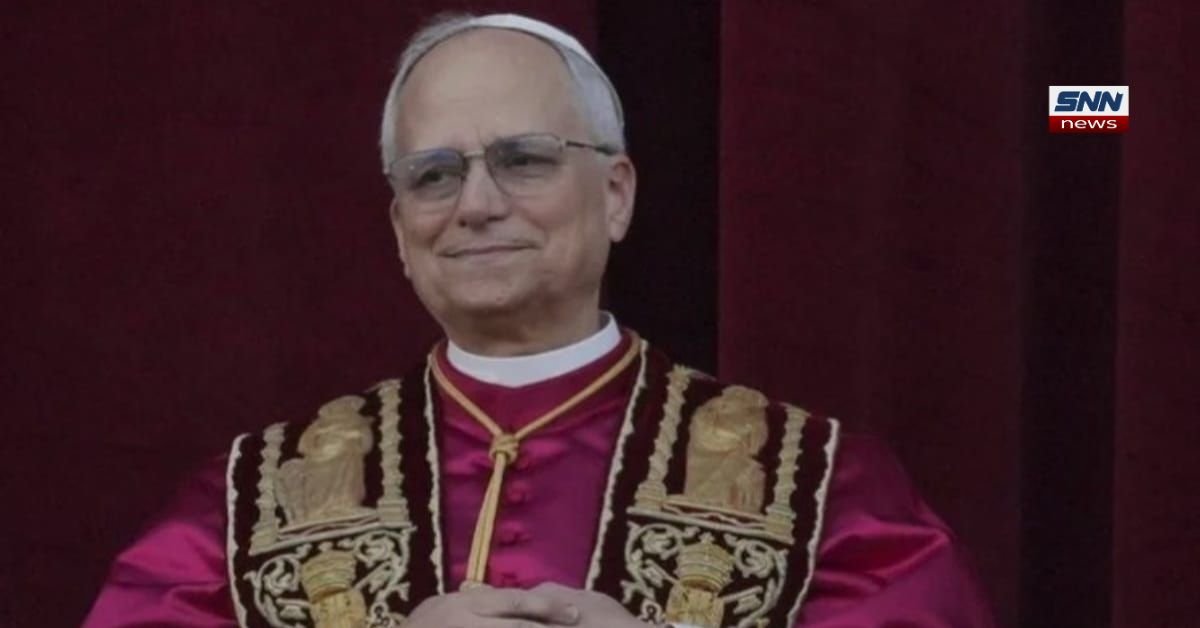
Pope Leo XIV, the newly elected head of the Roman Catholic Church, recently attempted to update his personal banking details with a United States financial institution where he holds a private account.
What followed was a moment that is both deeply human and quietly extraordinary a reminder that even the most recognisable office in the world means nothing to a call centre script.
What Actually Happened
According to a story shared by the Pope’s close personal friend, Catholic priest Tom McCarthy, Pope Leo XIV picked up the phone and called his bank’s customer support line.
He went through the process properly. He answered the required security questions. He provided his personal information. He then made a simple request to update his registered phone number and home address.
The bank employee on the other end of the line refused.
Standard procedure, the operator explained. Changes of this nature require a visit to a physical branch in person. No exceptions.
At that point, the Pope reportedly asked the question that has since made its way around the world:
“What if I tell you I’m Pope Leo?”
The operator’s response was immediate. They hung up.
The story was later reported by The New York Times, which confirmed that the matter was eventually resolved through other means.
Why This Story Has Captured Global Attention
On the surface, this is a lighthearted story about bureaucracy meeting its match in an unlikely caller.
But it has resonated far beyond Vatican circles for a reason that most people instinctively understand.
Bank security systems are built to be sceptical. They are designed to protect customers from fraud including, in a deeply ironic twist, protecting the Pope from someone pretending to be the Pope. The operator who hung up was, by the logic of their own training manual, doing exactly the right thing.
That tension between institutional rules and obvious human reality is something almost every adult on the planet has experienced in some form.
A frozen account. A refused transaction. A customer service line that simply will not budge.
The difference, in this case, is that the person on the other end of the line happened to be the head of one of the oldest and most powerful institutions in human history.
Who Is Pope Leo XIV?
Pope Leo XIV was elected to lead the Roman Catholic Church following the passing of Pope Francis.
He is the first American-born pope in the history of the Catholic Church a historic milestone that drew global attention and significant media coverage at the time of his election.
Born Robert Francis Prevost, he spent decades as a missionary and church administrator before his elevation to the papacy.
His selection represented a significant shift in the geographical centre of Catholic leadership, moving for the first time to the Americas.
His retention of a personal US bank account is consistent with his background a practical remnant of a life lived largely in the United States before assuming one of the world’s most demanding roles.
The Human Side of a Historic Office
What makes this story particularly compelling is what it reveals about the transition Pope Leo XIV is navigating.
Becoming Pope does not erase a personal history. It does not automatically close old accounts, cancel old subscriptions, or update every database that holds your previous name and address.
The administrative reality of an entirely new identity new title, new residence, new role runs up against systems that were never designed to accommodate it.
Most people change jobs and move house. Very few change their name to Pope.
The practical challenges are, in their own way, a window into the very human experience of a man who, weeks or months ago, was Robert Prevost and who is now responsible for the spiritual guidance of more than a billion people worldwide.
Priest Tom McCarthy: The Man Who Shared the Story
The account came to public attention through Father Tom McCarthy, described as a close friend of the Pope. McCarthy shared the anecdote as an illustration of both the Pope’s humility and his good humour in the face of an absurd situation.
It is a detail worth noting. The story was not shared as a complaint, nor as a criticism of the bank involved. It was shared as something closer to a parable a gentle reminder that the trappings of great office do not exempt anyone from the small, grinding frustrations of modern life.
The New York Times subsequently reported on the incident and confirmed that the banking issue was ultimately resolved, though the specific means of resolution were not disclosed.
Key Facts at a Glance
- Who: Pope Leo XIV, born Robert Francis Prevost, first American-born pope
- What: Failed a standard bank security verification call
- Where: Via telephone with a US financial institution
- When: Shortly after his election as Pope
- Why it matters: Highlights the human and administrative challenges of transitioning into one of the world’s most historic roles
- Source: Priest Tom McCarthy, reported by The New York Times
- Outcome: The issue was subsequently resolved
A Small Story With a Large Reflection
There is something quietly reassuring about this story. In a world where the papacy can feel impossibly distant housed in ancient stone, draped in centuries of ceremony the image of Pope Leo XIV on hold with a bank call centre brings the office back to earth.
He answered the security questions. He made his request. He even played his strongest card.
It did not work.
And somewhere in that small, very ordinary failure, there is something that makes him feel, for a moment, entirely recognisable.
Read how world leaders and public figures are navigating the unexpected human challenges of historic roles in our ongoing leadership coverage.
About The Author