
By Hammad Kahlun
Scandinavian News Finland
Israel Operated Covert Base Inside Iraq Without Baghdad’s Knowledge
A startling intelligence revelation has emerged from the deserts of western Iraq Israel quietly constructed and operated a secret military base on Iraqi soil, using it to launch and support long-range strikes against Iran more than 1,000 miles away.
The operation, which remained hidden for an extended period, was reportedly conducted with the knowledge of the United States, raising serious questions about sovereignty, international law, and the expanding shadow war across the Middle East.
The story did not break in a government briefing or a leaked document. It was a shepherd who first noticed something was wrong.
How the Secret Base Was Discovered
A Shepherd, Helicopters, and a Dead Soldier
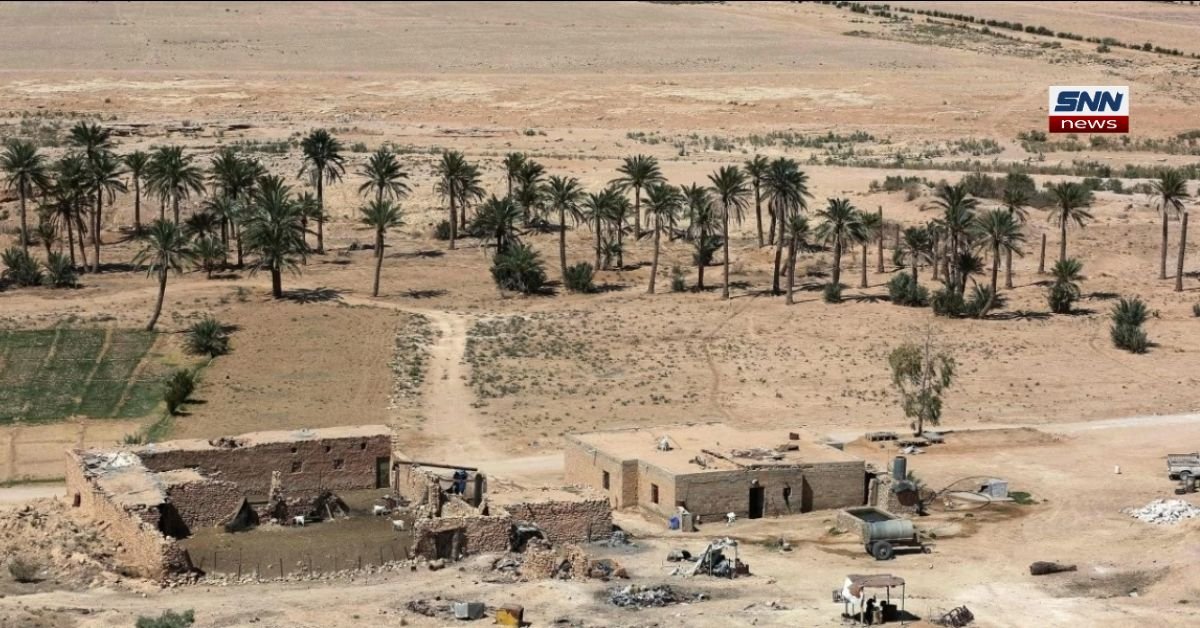
In the remote stretches of Iraq’s western desert, a local shepherd observed military helicopters operating in an area where no such activity had been seen before. The sighting prompted Iraqi security forces to send troops to investigate the location.
What happened next confirmed that something significant was being concealed. Before Iraqi soldiers could reach the site and establish what was happening on the ground, the base was struck from the air.
The attack killed one Iraqi soldier and left two others wounded.
Iraq formally filed a complaint with the United Nations, placing direct blame on the United States for the incident.
Washington, however, denied any involvement in the strike, distancing itself from the operation publicly while according to reports having been aware of Israel’s presence in the region.
What Israel Was Doing in Iraq
Long-Range Operations Against Iran
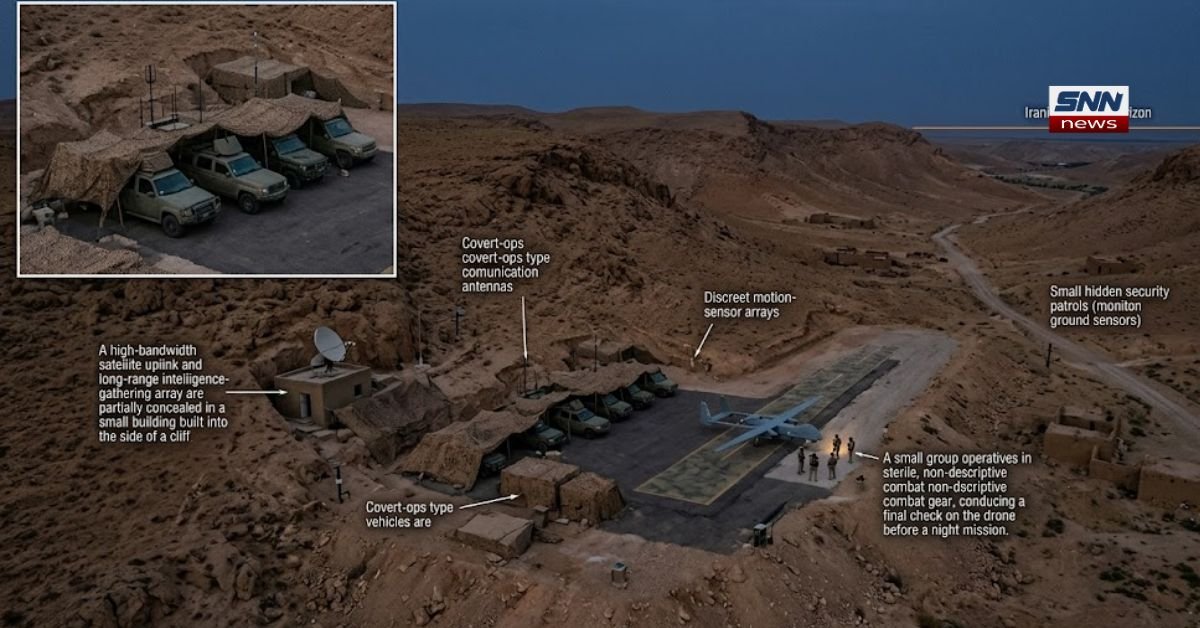
The covert base served a strategic purpose: to significantly reduce the distance between Israeli forces and targets inside Iran.
With Iran sitting more than 1,000 miles from Israeli territory, maintaining a forward operating position inside Iraq gave Israeli forces a substantial logistical and operational advantage for conducting strikes deep into Iranian Base territory.
The operation was part of a broader, largely undeclared Israeli campaign to degrade Iranian military capabilities, weapons infrastructure, and supply chains across the region a campaign that has relied heavily on secrecy, precision, and deniability.
Even after Iraqi soldiers were attacked, the installation continued operating quietly and without detection.
its continued operation underscored both the sophistication of the Israeli military’s Base covert capabilities and the complex, often contradictory relationships between the regional powers involved.
The Israeli Military’s Own Signals
An Air Force Chief’s Telling Words
Even before the full details of the Iraqi base emerged, Israel’s outgoing Air Force chief had offered a carefully worded hint at what had been taking place beyond Israel’s borders.
Speaking publicly before his departure from the role, he referenced what he called “special missions which could ignite the imagination” language that, in retrospect, pointed directly toward precisely the kind of covert, long-range operation now being reported.
It was a rare moment of near-transparency from a military Base establishment that operates largely in silence on its most sensitive activities. Those words now carry considerably more weight.
Iraq’s Position: A Country Used Without Consent
A Sovereign Nation at the Centre of Someone Else’s War
For Iraq, the revelation carries a particular weight. The country which shares no formal military alliance with Israel and has its own complex internal politics shaped heavily by Iranian influence found itself hosting an Israeli military installation without the knowledge or consent of its government.
Key facts that place Iraq’s situation in context:
- Iraq and Israel have no diplomatic relations
- Iraq’s parliament has previously passed legislation aimed at criminalising normalisation with Israel
- Iran holds significant political and military influence inside Iraq through allied armed factions
- The presence of a foreign military base on Iraqi soil without government approval represents a direct violation of Iraqi sovereignty under international law
- Base
Baghdad’s decision to file a formal UN complaint reflected the gravity with which Iraqi officials viewed the breach.
The complaint placed Washington in a difficult position accused by an ally of involvement in an operation it publicly denied knowing about.
The United States: Aware but Not Responsible?
Washington’s Complicated Role
The United States’ position in this affair is one of the most consequential unresolved questions. According to reports, American officials were aware that Israel had established and was operating the covert base in western Iraq.
Yet when Iraq filed its UN complaint attributing responsibility for the strike on its soldiers to Washington, the United States denied direct involvement.
This distinction between awareness and active participation sits at the heart of the diplomatic fallout. Whether knowledge of an ally’s covert military operation on a third country’s soil constitutes complicity under international law is a question that legal scholars and foreign policy analysts are now actively debating.
What is not in dispute is that one Iraqi soldier is dead, two are wounded, and a foreign military base operated inside Iraqi borders without Baghdad’s authorisation.
Why This Story Matters Beyond the Region
A New Model of Covert Warfare
The Iraqi base story is significant not only for what it reveals about Israeli and American strategy in the Middle East, but for what it signals about the future of modern warfare more broadly.
Key implications include:
- Forward basing in non-allied territory is now an active feature of Israeli military doctrine
- Plausible deniability between allied nations is being tested to its legal and diplomatic limits
- Sovereign nations can find themselves hosting foreign military operations without any formal agreement or knowledge
- Civilian observers in this case, a shepherd are increasingly the first to notice what governments conceal
- Base
The outgoing Israeli Air Force chief’s reference to missions that “ignite the imagination” was not idle boasting.
It was a description of a military operating at the edges of what the international community considers permissible and doing so with considerable success.
What Happens Next
Iraq has not received a satisfactory explanation from either Israel or the United States. The UN complaint remains on the record.
The soldiers who were struck were investigating what turned out to be a real and active foreign military installation on their own country’s soil.
The base, by all accounts, continued to operate even after the strike. The operation it supported Israel’s long-range pressure campaign against Iran shows no signs of ending.
The shepherd saw the helicopters. The soldiers came to look. One of them did not come home.
And the war that no one officially declared continues in the desert.
Discover how covert military operations and secret bases are reshaping the rules of modern warfare across the Middle East.
About The Author