
By Hammad Kahlun
Scandinavian news Finland
Armenia Plans Direct Rail Corridor to Europe Bypassing Russia
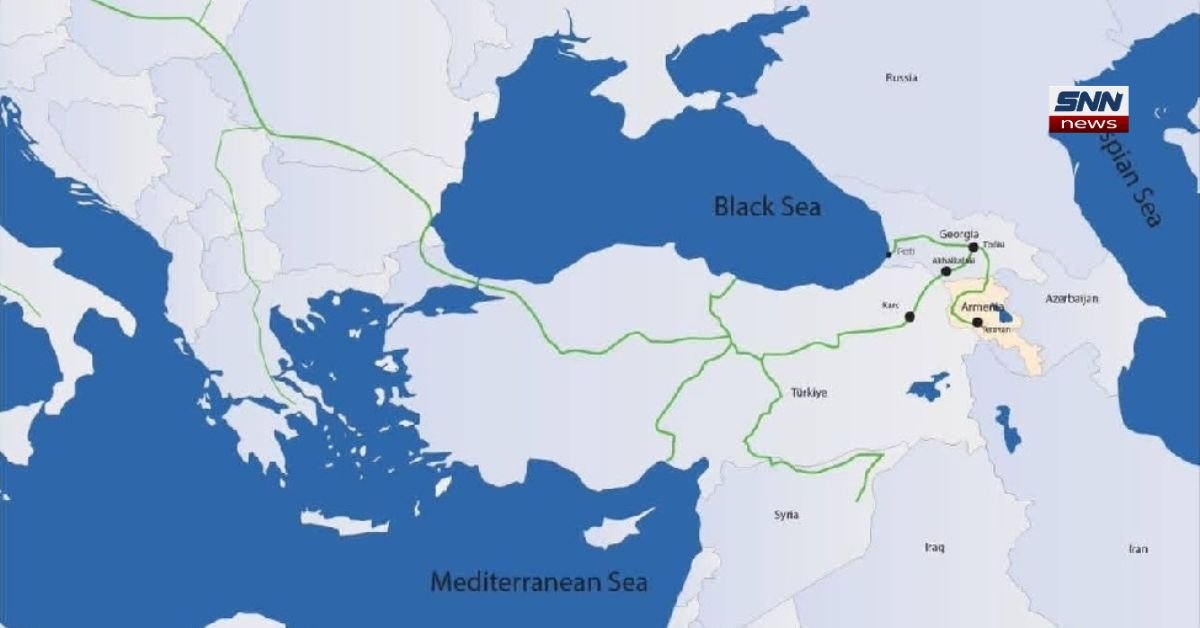
Armenia has announced plans to establish a new railway corridor connecting the country to Europe through Georgia and Turkey, marking a major shift in regional transport and foreign policy strategy.
Armenian Prime Minister Nikol Pashinyan said the planned route would give Armenia direct access to European markets while reducing dependence on Russia for trade and transit.
The proposed railway connection comes during a period of increasingly strained relations between Yerevan and Moscow.
Armenian officials have recently signaled interest in expanding regional partnerships with neighboring countries and strengthening economic links with Europe.
According to government statements, Armenia is also exploring direct rail connections with Turkey, Azerbaijan, and Iran as part of a broader transportation and economic integration plan.
Prime Minister Nikol Pashinyan Announces Strategic Rail Expansion
Prime Minister Nikol Pashinyan described the railway initiative as an important step toward improving Armenia’s regional connectivity and economic resilience.
The route through Georgia and Turkey is expected to provide Armenian exporters with faster access to European trade networks and Black Sea logistics corridors.
The announcement reflects Armenia’s growing efforts to diversify its economic and geopolitical partnerships at a time when traditional ties with Russia are weakening.
The Armenian government believes expanded rail infrastructure could:
- Increase regional trade opportunities
- Improve cargo transportation efficiency
- Strengthen links with European markets
- Reduce dependence on Russian transit routes
- Support long-term economic growth
Officials have not yet provided a final timeline for the full implementation of the railway project, but discussions on regional transport cooperation are ongoing.
Armenia’s Relations With Russia Continue to Deteriorate
Relations between Armenia and Russia have cooled significantly over the past two years.
Political disagreements, security concerns, and economic tensions have contributed to a noticeable shift in diplomatic relations between the two longtime allies.
Russia has traditionally been Armenia’s main strategic and economic partner. However, recent developments in the South Caucasus region have pushed Yerevan to reassess its foreign policy priorities.
The situation has become more sensitive following disagreements over regional security arrangements and Moscow’s role in the Armenia-Azerbaijan conflict.
At the same time, Russia has imposed restrictions on several Armenian imports, including:
Products Facing Russian Restrictions
- Armenian wine
- Brandy
- Mineral water
- Flowers
These trade measures have raised concerns among Armenian exporters and businesses that rely heavily on the Russian market.
Economic analysts say the restrictions may further encourage Armenia to seek alternative trade routes and stronger economic partnerships outside Russia.
Railway Route Through Georgia and Turkey Could Reshape Regional Trade
The proposed railway corridor through Georgia and Turkey could become one of the most important transport developments in the South Caucasus region in recent years.
For decades, Armenia’s transport options have been limited by geopolitical tensions and closed borders.
Direct rail access through Turkey would represent a major policy change after years of frozen diplomatic relations between the two countries.
Turkey and Armenia have recently taken cautious steps toward normalizing relations, including discussions on border crossings, trade, and transportation cooperation.
If completed, the railway route could help Armenia connect more efficiently with:
- European Union markets
- Mediterranean trade routes
- Black Sea transport corridors
- Regional logistics hubs
Experts believe improved rail infrastructure could also lower transportation costs and increase export competitiveness for Armenian businesses.
Armenia Also Exploring Rail Links With Azerbaijan and Iran
In addition to the European corridor, Armenia is reportedly considering future rail connections with Azerbaijan and Iran.
These projects are part of wider regional efforts aimed at improving transport integration in the South Caucasus.
Relations between Armenia and Azerbaijan remain fragile following years of conflict over Nagorno-Karabakh. However, international mediators and regional governments continue to encourage economic cooperation and transport reopening initiatives.
A potential rail link between Armenia and Azerbaijan could support regional trade and cross-border economic activity if political conditions improve.
Meanwhile, Iran remains an important economic partner for Armenia, particularly in energy and regional commerce. Expanded rail connectivity with Iran could provide Armenia with additional trade access to Middle Eastern and Asian markets.
European Connectivity Seen as Economic Opportunity
Armenia’s push toward stronger European connectivity reflects broader economic ambitions beyond traditional regional alliances.
Government officials have increasingly emphasized the importance of diversification in trade, energy, transportation, and diplomatic relations. Access to European markets is viewed as a way to reduce economic vulnerabilities and attract foreign investment.
Economic experts note that transportation infrastructure often plays a critical role in national development strategies. Improved railway access can help countries:
Potential Economic Benefits
- Expand export capacity
- Improve supply chain reliability
- Attract international investors
- Create logistics and transport jobs
- Strengthen regional trade integration
The success of the railway initiative will depend on political agreements, infrastructure funding, and long-term regional cooperation.
Regional Geopolitics Driving Infrastructure Changes
The South Caucasus region has become increasingly important in global trade discussions because of its strategic location between Europe and Asia.
Countries in the region are seeking new transit routes as geopolitical tensions reshape international trade patterns.
Armenia’s decision to pursue alternative transport corridors reflects these changing dynamics.
Analysts say many governments are now attempting to reduce reliance on single trade partners and develop more flexible supply routes. In Armenia’s case, growing tensions with Russia appear to be accelerating that transition.
The railway project may also strengthen Armenia’s role in regional logistics and international transportation networks if agreements move forward successfully.
Armenia’s Transport Strategy Signals Broader Policy Shift
The announcement of new railway plans highlights a broader transformation in Armenia’s economic and foreign policy direction.
By pursuing stronger ties with Europe and neighboring countries, Yerevan appears focused on creating a more diversified and independent regional position.
Although significant political and logistical challenges remain, the railway initiative signals Armenia’s intention to expand beyond traditional dependence on Moscow.
As negotiations continue, regional governments, businesses, and international observers will closely monitor whether the proposed rail connections can move from political vision to operational reality.
The outcome could have lasting implications for trade, diplomacy, and regional stability across the South Caucasus and Europe.
/armenia-railway-europe-georgia-turkey-russia-relations-2026
About The Author