

By Abida Kahlun
Scandinavian News Agency
Exoplanet radio signals have been detected for the first time, according to a report from SNN News Finland, marking what would be a milestone in the search for worlds beyond our solar system.
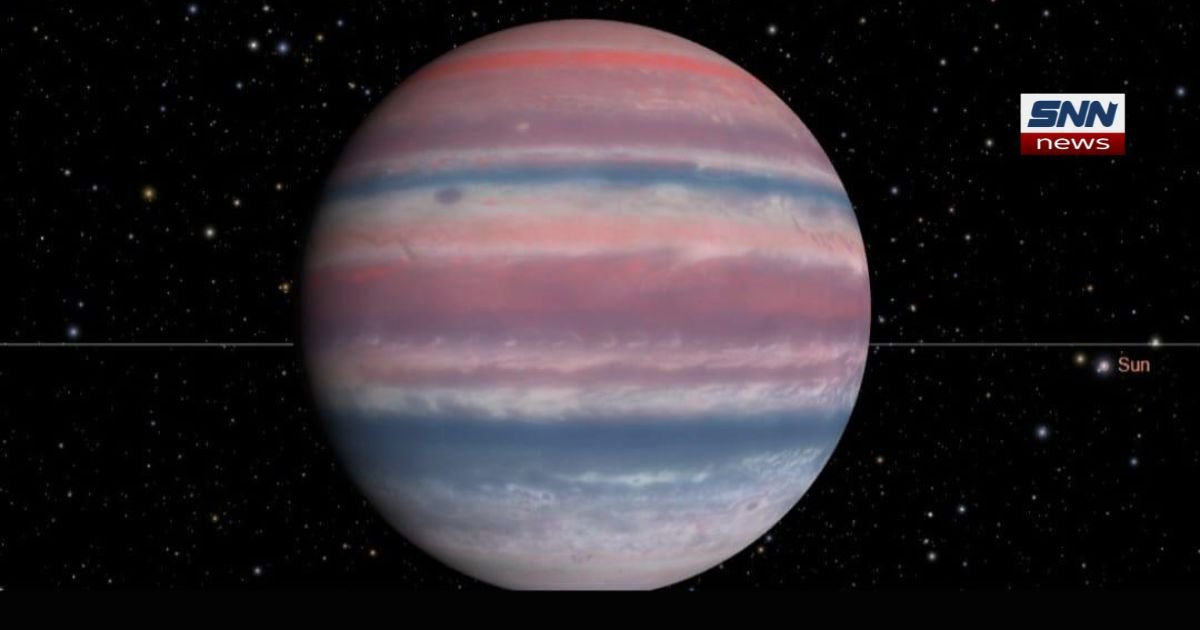
The signals reportedly came from Beta Pictoris b, a gas giant researchers describe as roughly 63 light-years from Earth.
The report is careful to clarify that the emissions are not evidence of alien technology. Instead, they are described as a natural phenomenon caused by charged particles striking the planet’s magnetic field.
Scientists have long looked for exactly this kind of radio emission as an indirect way to study planets that are otherwise too faint and distant to observe directly.
What Makes Beta Pictoris b Different
According to the report, Beta Pictoris b is a massive gas giant, cited as roughly 10 times the mass of Jupiter, our solar system’s largest planet.
Its magnetic field is described as at least 2,500 times stronger than Earth’s, though this figure comes from the original report and has not been independently confirmed here.
A planetary magnetic field works like a protective shield. It is generated by movement in a planet’s molten interior and deflects charged particles from its host star, similar to how Earth’s own field protects it from solar wind.
Strong magnetic fields are generally considered important because they can help retain a planet’s atmosphere and, by extension, any water on its surface.
Why Exoplanet Radio Signals Matter for the Hunt for Life
Beta Pictoris b itself is described as uninhabitable, likely due to its size, composition, and the intensity of its magnetic environment. However, the report suggests the detection technique itself is the real significance of this finding. If scientists can detect radio emissions from a planet’s magnetic field, they may eventually be able to apply the same method to smaller, rocky planets.
That matters because a strong magnetic field is considered one of the ingredients that could allow a planet to hold onto liquid water and a stable atmosphere over long timescales, both of which are considered important conditions for habitability as we understand it on Earth.
Detecting magnetic fields remotely, without needing to see the planet directly, could give astronomers a new tool for narrowing down which distant planets are worth closer study.
Caution Around a New Kind of Discovery
Radio astronomy involving exoplanets is described as a young and difficult field, since these signals are extremely faint compared to the radio noise produced by stars and interstellar gas.
As with many early-stage astronomical findings, independent confirmation from other observatories and peer-reviewed publication would typically be expected before the result is treated as fully established within the scientific community.
Key Facts
- Beta Pictoris b is reported to be a gas giant roughly 63 light-years from Earth
- Its mass is cited as about 10 times that of Jupiter
- Its magnetic field is reported to be at least 2,500 times stronger than Earth’s
- The radio emissions are attributed to charged particles interacting with the planet’s magnetic field, not any artificial source
- Researchers say the detection method could eventually help identify potentially habitable exoplanets
- Exoplanet Radio
FAQs:
Did scientists find aliens on Beta Pictoris b?
No. The report is explicit that the radio signals are a natural effect caused by charged particles hitting the planet’s magnetic field, not a sign of intelligent life.
What is Beta Pictoris b?
It is a gas giant planet located in a solar system roughly 63 light-years from Earth, reported to have about 10 times the mass of Jupiter.
Why does a planet’s magnetic field matter?
A strong magnetic field can shield a planet’s atmosphere from being stripped away by stellar particles, which is thought to help preserve conditions that could support liquid water.
Could this method help find habitable planets?
According to the report, yes the same radio-detection technique could potentially be applied to smaller, rocky exoplanets to check whether they have protective magnetic fields.
Has this finding been independently confirmed?
That has not been confirmed here. As with early-stage astronomical discoveries, independent verification and peer review would typically follow before the result is broadly accepted.
Caution Around a New Kind of Discovery
Radio astronomy involving exoplanets is described as a young and difficult field, since these signals are extremely faint compared to the radio noise produced by stars and interstellar gas.
As with many early-stage astronomical findings, independent confirmation from other observatories and peer-reviewed publication would typically be expected before the result is treated as fully established within the scientific community.
Read more about the first exoplanet radio signals and the latest discoveries in astronomy and space science.
About The Author