
By Riffat Kausar
SNN News Finland
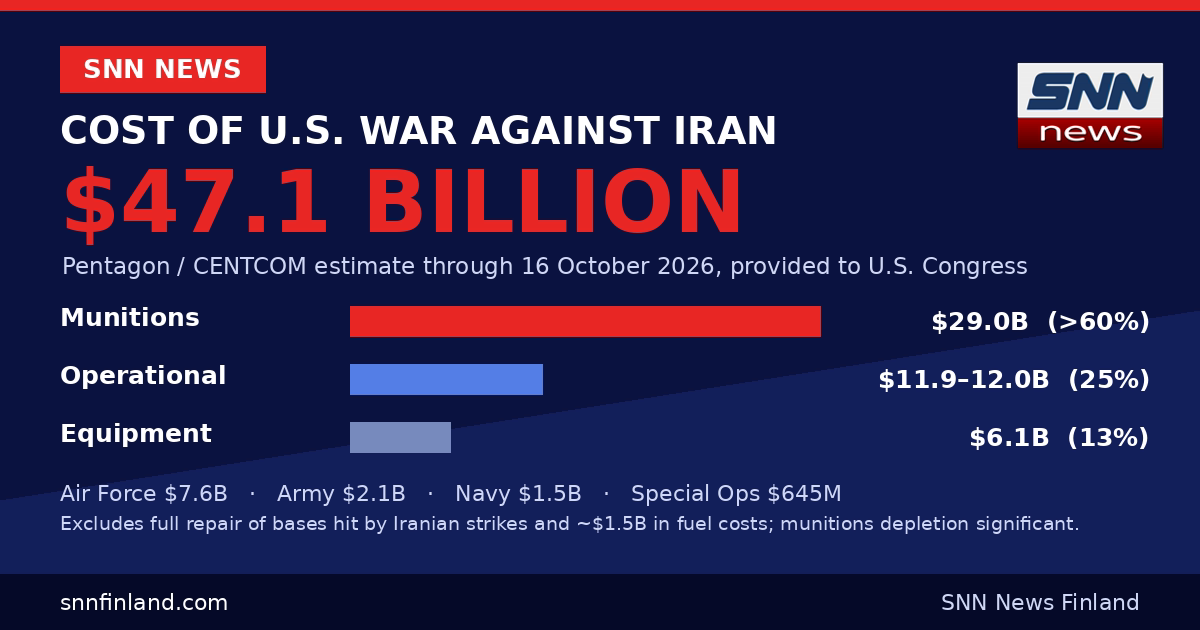
WASHINGTON — The cost of America’s war against Iran has reached $47.1 billion, according to figures the Pentagon provided to Congress, with bombs, missiles and other munitions accounting for more than 60% of the bill.
Munitions dominate the bill
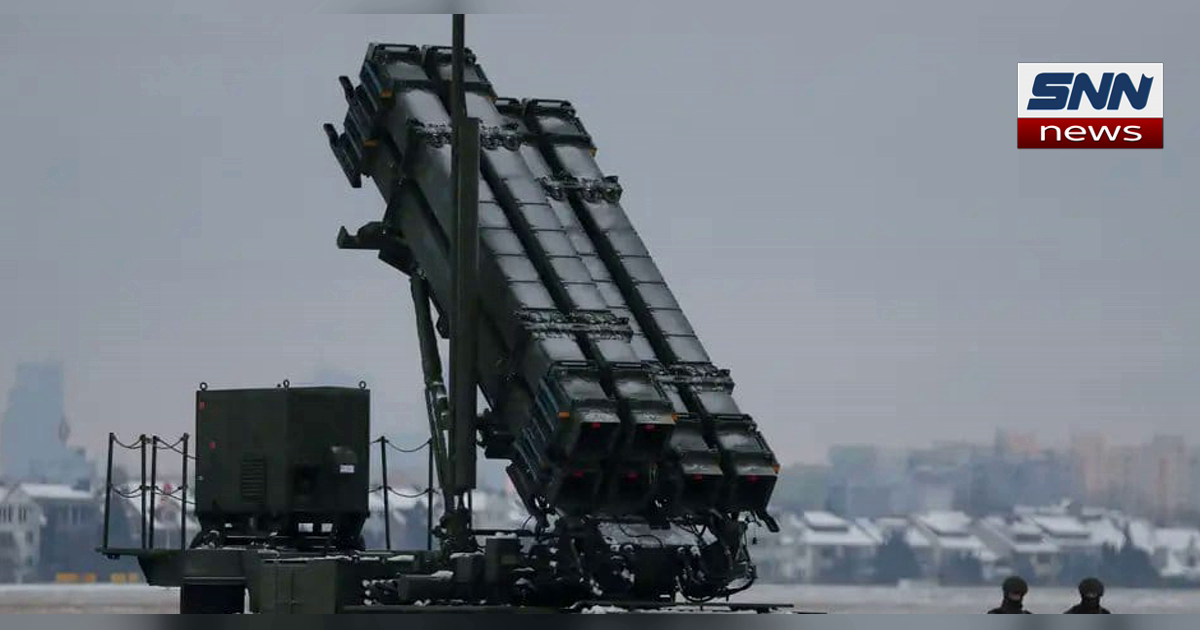
The estimate puts spending through 16 October 2026 at $47.1 billion. Of that, about $29 billion — more than 60% of the total — went on munitions, including bombs, missiles and air-defence interceptors. The heavy use of Patriot interceptors and similar systems is the single largest driver of the cost.
A further $11.9–12.0 billion, roughly a quarter of the total, covers operational and incremental costs, including support for more than 50,000 US troops in the region. Equipment and platform replacement accounts for $6.1 billion, reflecting dozens of damaged or destroyed aircraft, including drones, and other weaponry.
Where the money went, by service
Within the operational total, the Air Force spent $7.6 billion operating fighter and bomber squadrons. The Army’s costs reached $2.1 billion for sustaining forces in the region, while the Navy spent $1.5 billion deploying more than two dozen warships, including several aircraft carriers.
Special Operations costs came to $645 million. Smaller line items include $92.2 million for US Transportation Command, $14 million for US Cyber Command and $24.5 million for in-house medical support.
A rising estimate
The figure has climbed steadily as the campaign has continued. It stood at $37.5 billion in July 2026 and reached $43.6 billion by early September, before rising to $47.1 billion through mid-October — an increase of about $3.5 billion on the previous estimate.
The war began on 28 February 2026, meaning the $47.1 billion reflects roughly eight months of operations. Because the accounting runs only to 16 October, the true cost today is likely to be higher still.
What the figure leaves out
The estimate is described as an undercount. It does not fully include major repair and replacement costs for US bases and facilities hit by Iranian missiles and drones. An additional $1.5 billion for fuel and other costs had been requested through a supplemental budget measure.
Munitions depletion is also significant. Independent analysts have estimated that a large share of Patriot interceptor stocks — in the region of 60% — was expended during the conflict, and that replenishment will take years and further spending.
The pressure is not only financial. The war’s effect on global energy costs has weighed on the political picture at home, with the cost of the campaign becoming an issue ahead of US midterm elections. SNN News Finland has reported on the wider energy fallout, including G7 nations releasing reserves, and on regional developments such as strikes on Saudi energy infrastructure. Iran’s own posture has also been in focus, including its long-running emphasis on domestic mobilisation.
Key facts
- Total: $47.1 billion for the US campaign against Iran, through 16 October 2026.
- Munitions: about $29 billion — more than 60% of the total.
- Operations: $11.9–12.0 billion, supporting more than 50,000 US troops.
- By service: Air Force $7.6 billion; Army $2.1 billion; Navy $1.5 billion; Special Operations $645 million.
- Caveat: the figure excludes full repair costs for bases hit by Iranian strikes and about $1.5 billion in fuel costs.
Frequently asked questions
How much has the US spent on the war with Iran?
About $47.1 billion through 16 October 2026, according to Pentagon figures provided to Congress.
What is the biggest cost?
Munitions, at roughly $29 billion — more than 60% of the total — driven by heavy use of bombs, missiles and air-defence interceptors.
When did the war start?
On 28 February 2026.
Is $47.1 billion the final figure?
No. It covers spending only to mid-October, is described as an undercount, and excludes full repair costs for damaged bases.
What about weapons stockpiles?
They were significantly depleted, particularly Patriot interceptors. Analysts estimate that a large share of those stocks was expended, and say replenishment will take years.
Verified by Scandinavian News Agency Finland.
About The Author