
By Riffat Kausar
Snn News Finland
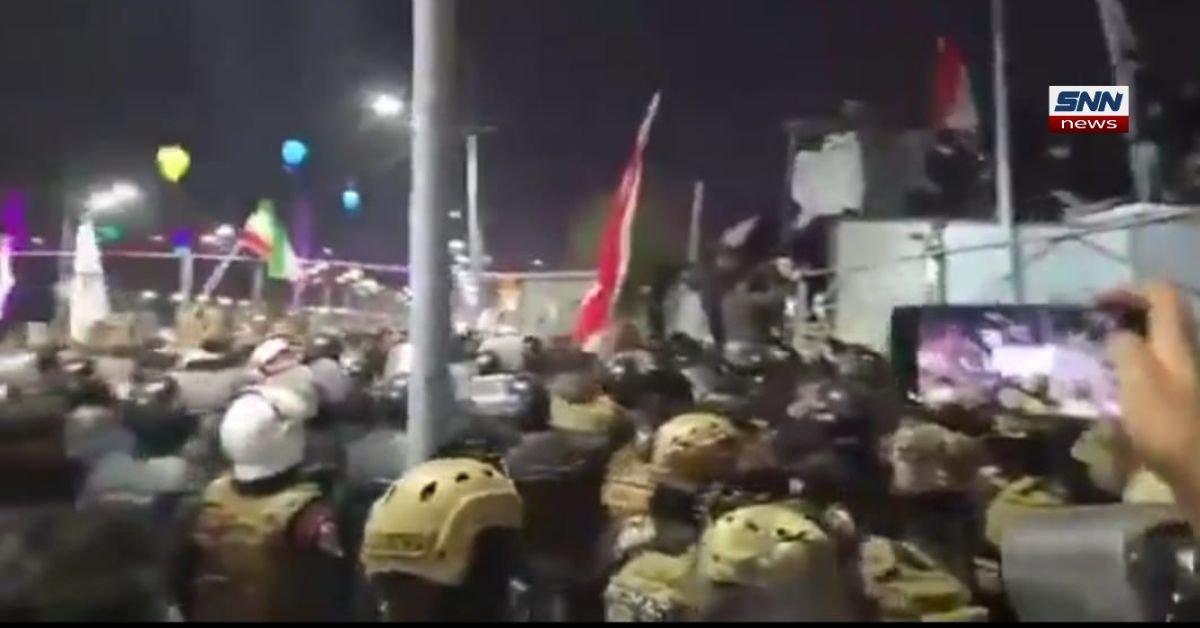
Islamic protesters stormed the Kuwaiti consulate in Basra, Iraq, in a significant escalation of tensions, forcibly removing the Kuwaiti flag from the building.
The incident, which took place amid rising regional sensitivities, has drawn strong condemnation from Kuwait, which described the act as a clear violation of international diplomatic norms.
Authorities in Iraq have yet to release a full account of the security response, while concerns are growing over the safety of diplomatic missions operating in volatile areas.
What Happened at the Kuwaiti Consulate
According to initial reports, a group of protesters gathered outside the Kuwaiti consulate in Basra before breaching the premises.
Witnesses say the protesters entered the compound and removed the Kuwaiti national flag, symbolically challenging Kuwait’s diplomatic presence.
The protest appeared to be driven by political and religious sentiments, although the exact motivations behind the demonstration remain unclear.
Videos circulating on social media show crowds chanting slogans, but officials have not confirmed the authenticity of all footage.
No casualties have been officially reported so far. However, the incident has raised alarms about the vulnerability of diplomatic missions in the region.
Kuwait’s Official Response
The government of Kuwait issued a strong statement condemning the attack, emphasizing that such actions violate international agreements governing diplomatic protection.
Kuwaiti officials stressed that host countries are legally obligated to ensure the safety and security of foreign diplomatic missions under the Vienna Convention on Diplomatic Relations.
Key points from Kuwait’s response:
- The incident is a breach of international law
- Iraq must uphold its duty to protect diplomatic facilities
- Immediate action is required to prevent similar incidents
- Kuwaiti
Kuwait has called on Iraqi authorities to investigate the matter thoroughly and hold those responsible accountable.
Iraq’s Responsibility Under International Law
Under the Vienna Convention, which governs diplomatic relations worldwide, host nations are required to:
- Protect embassy and consulate premises from intrusion or damage
- Prevent disturbances that could harm diplomatic staff
- Ensure the dignity and security of foreign missions
- Kuwaiti
Failure to meet these obligations can strain diplomatic ties and may lead to international consequences.
In this case, Iraq faces increased pressure to demonstrate its commitment to these responsibilities, especially given its complex internal security challenges.
Security Concerns in Basra
Basra, a key economic hub in southern Iraq, has experienced periodic unrest in recent years. While the city is vital for Iraq’s oil exports, it has also seen protests related to political dissatisfaction, economic inequality, and governance issues.
Security experts note that diplomatic missions in such regions often become symbolic targets during times of unrest.
Factors contributing to instability:
- Political tensions within Iraq
- Economic grievances among local populations
- Influence of regional ideological movements
- Kuwaiti
The storming of the Kuwaiti consulate highlights ongoing vulnerabilities in maintaining law and order in sensitive areas.
Regional and Diplomatic Implications
The incident could have broader implications for relations between Iraq and Kuwait, two neighboring countries with a historically complex relationship.
Although ties have improved in recent years, events like this risk undermining diplomatic progress.
Potential consequences:
- Diplomatic tensions between Iraq and Kuwait
- Increased security measures at foreign missions
- Calls for stronger enforcement of international law
- Kuwaiti
Regional observers warn that attacks on diplomatic facilities can escalate quickly if not addressed promptly and transparently.
Historical Context of Iraq-Kuwait Relations
Relations between Iraq and Kuwait have been shaped by a difficult history, most notably the Gulf War, when Iraq invaded Kuwait. Since then, both countries have worked to rebuild diplomatic and economic ties.
In recent years, cooperation has improved, particularly in areas such as trade and regional stability. However, incidents targeting diplomatic sites risk reviving tensions and mistrust.
Public Reaction and Media Coverage
The incident has sparked widespread discussion on social media and in regional media outlets. While some commentators condemned the attack as unlawful, others linked it to broader frustrations within Iraqi society.
Journalists and analysts have emphasized the importance of distinguishing between peaceful protest and unlawful actions targeting diplomatic entities.
Importance of Protecting Diplomatic Missions
Diplomatic missions play a crucial role in maintaining international relations, facilitating dialogue, and providing services to citizens abroad.
Attacks on such institutions are considered serious violations because they:
- Undermine international cooperation
- Threaten the safety of diplomatic personnel
- Disrupt essential diplomatic functions
- Kuwaiti
Global organizations and governments consistently stress the need to uphold diplomatic protections, even during times of political unrest.
What Happens Next
Iraqi authorities are expected to launch an investigation into the incident. Key questions remain unanswered, including:
- How protesters were able to breach the consulate
- Whether security forces responded appropriately
- What measures will be taken to prevent future incidents
- Kuwaiti
Kuwait is likely to monitor the situation closely and may seek diplomatic assurances from Iraq regarding the safety of its missions.
Conclusion
The storming of the Kuwaiti consulate in Basra marks a serious breach of diplomatic norms and highlights ongoing security challenges in the region.
Kuwait’s strong condemnation underscores the importance of adhering to international law, particularly the obligations outlined in the Vienna Convention.
As Iraq works to manage internal tensions and maintain international partnerships, the incident serves as a reminder of the critical need to protect diplomatic missions.
The response from Iraqi authorities in the coming days will be crucial in determining whether this event escalates into a broader diplomatic issue or is resolved through accountability and strengthened security measures.
Read more on Kuwaiti diplomatic relations and Middle East tensions
About The Author