
By Hammad Kahlun
Scandinavian news Finland
A 1969 Text Reignites Interfaith Debate
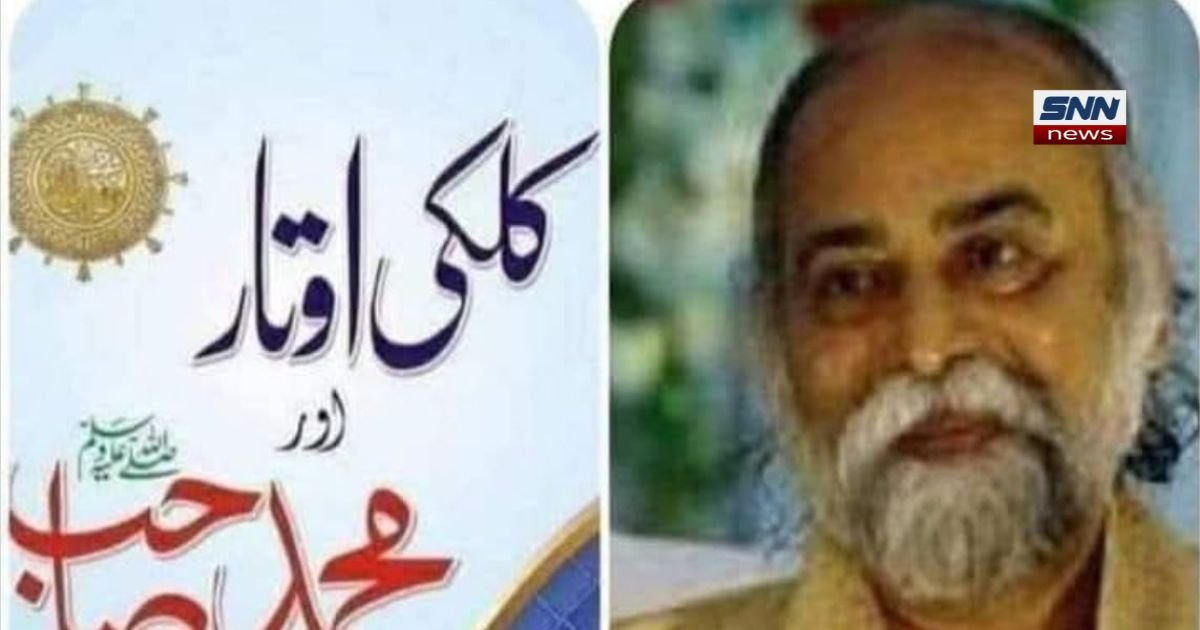
A book written more than five decades ago by a Hindu scholar, arguing that the “Kalki Avatar” prophesied in Hindu scriptures refers to the Islamic Prophet Muhammad, continues to circulate widely online and spark debate.
The work, titled Kalki Avatar Aur Muhammad Saheb, was authored by Ved Prakash Upadhyay, a Sanskrit scholar, and first published in Hindi in 1969–1970 by the Saraswat Vedanta Publication Society in Allahabad.
In Hindu tradition, Kalki is regarded as the tenth and final incarnation of the god Vishnu, prophesied to appear at the end of the current age.
Upadhyay’s book argues that scriptural descriptions of this figure match the life of Prophet Muhammad rather than a future incarnation.
The Author’s Central Argument
According to accounts of the book circulating on Islamic and interfaith websites, Upadhyay presents several points of comparison drawn from the Vedas and Puranas.
These include claims that the prophesied figure would be the final messenger to guide humanity, would be born in “an island” interpreted as the Arabian peninsula, and would receive revelation inside a cave paralleling the Prophet Muhammad’s first revelation in the Cave of Hira.
The book also draws a linguistic comparison between the names of the prophesied figure’s parents and the names of the Prophet’s parents, Abdullah and Aminah, and links a described “heavenly journey” to the Isra and Miraj, the night journey and ascension described in Islamic tradition.
Claims About Endorsement Remain Unverified
Some accounts state that Upadhyay’s research was reviewed by several other Hindu scholars before publication and that he held academic honors, including a Sanskrit scholarship award.
These claims appear primarily in blog posts and interfaith-focused websites rather than in independent academic or mainstream media sources, and could not be independently verified.
Mixed Reception Across Communities
The book has found a following among some readers interested in interfaith parallels between Hinduism and Islam, and has been translated and republished multiple times, including in Urdu and Bengali.
It has also drawn criticism from Hindu scholars who reject Upadhyay’s interpretation of the texts, though specific rebuttals from named religious institutions were not identified in available sources.
The work has also been noted, in some accounts, to overlap with earlier writings by an Ahmadiyya Muslim scholar on the same theme, a point Upadhyay’s supporters dispute.
Why It’s Resurfacing Now
Though decades old, the book periodically regains attention as it is shared and re-shared across social media and religious discussion forums, particularly in South Asia.
Its recurring circulation reflects an ongoing, unresolved debate over scriptural interpretation between Hindu and Muslim communities rather than any new development connected to the original 1969 publication.
What is the Kalki Avatar in Hindu Book scripture
About The Author