
Prolonged Power Outage Hits Religious Community in Southern Ukraine
Skadovsk, Ukraine — A group of nuns living in a monastery in the occupied city of Skadovsk have been without electricity, heating, and stable living conditions for more than six weeks, highlighting the worsening humanitarian situation in areas under Russian control.
According to local reports, the blackout began on December 23, 2025, and continued for more than a month and a half.
During this period, no electricity was supplied to the monastery, leaving residents to endure freezing winter conditions without proper heating or power. The city of Skadovsk, located in Ukraine’s Kherson region, has remained under Russian occupation since the early stages of the war.
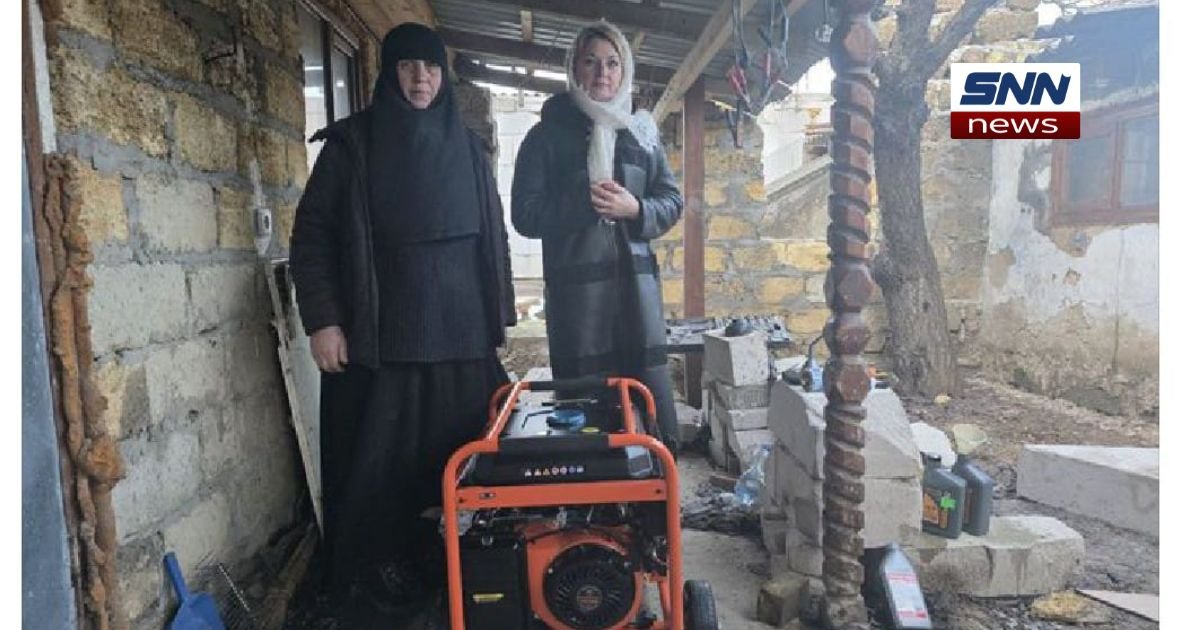
The situation only changed in February 2026, when a new power generator was finally delivered to the monastery. Until then, the nuns were forced to survive without basic utilities, raising questions about the treatment of civilians and religious institutions in occupied territories.
Generator Failure Leaves Monastery Without Heat
The monastery had relied on an old generator after the power grid failed. However, the aging equipment eventually broke down, leaving the building without electricity or heating at the height of winter.
With outdoor temperatures dropping significantly, the lack of heating posed serious health risks, particularly for elderly residents. There were no immediate repairs or replacements provided by occupation authorities, despite repeated awareness of the situation.
Key impacts reported during the blackout included:
- No electricity for lighting or basic appliances
- No heating during winter conditions
- Limited ability to cook or preserve food
- Increased health risks due to cold exposure
Local sources say the nuns attempted to manage with minimal resources, but conditions became increasingly difficult as the outage continued.
Delayed Response From Occupation Authorities
Despite the length and severity of the outage, occupation authorities reportedly did not take swift action to resolve the issue. The new generator was delivered only after more than six weeks without power, leaving the monastery isolated and vulnerable.
This delay has drawn attention to broader infrastructure failures in occupied areas, where electricity, water, and heating supplies have frequently been disrupted. Residents in several towns across the region have reported similar blackouts since winter began.
Observers note that while some facilities receive priority access to resources, others — including religious and civilian institutions — often face long delays or complete neglect.
Context: Life in Occupied Skadovsk
Skadovsk is a port city on the Black Sea and has faced ongoing infrastructure challenges since coming under Russian occupation. Damage to energy networks, limited maintenance, and supply shortages have led to repeated power outages across the city.
Since late 2025, the situation has worsened due to colder weather and strained resources. Many residents rely on generators or improvised heating methods, which are often unsafe and unreliable.
In occupied regions, access to utilities is not only a technical issue but also a humanitarian concern. International organizations have repeatedly warned that prolonged outages during winter can have severe consequences, especially for vulnerable populations.
Religious Institutions Not Spared
The case of the Skadovsk nuns shows that religious institutions are not immune to the broader hardships faced by civilians. While the nuns were known locally for their support of Russian forces, this affiliation did not prevent the monastery from being left without basic services for an extended period.
Experts say this reflects a wider pattern in conflict zones, where infrastructure breakdowns affect all residents regardless of political stance or public alignment.
“This situation illustrates how fragile daily life becomes under occupation,” said a regional analyst familiar with conditions in southern Ukraine. “When systems fail, there is often no quick or effective response.”
Public and Humanitarian Impact
Extended blackouts can have long-term effects beyond immediate discomfort. Lack of electricity impacts:
- Health and safety
- Access to food and clean water
- Communication with the outside world
- Mental well-being of residents
Human rights groups continue to stress that occupying powers have obligations under international law to ensure basic living conditions for civilians in areas under their control.
While the delivery of a new generator has restored some level of stability to the monastery, the incident has added to concerns about neglect, accountability, and the broader humanitarian situation in occupied Ukrainian territories.
Ongoing Uncertainty
As winter conditions persist, residents of Skadovsk remain uncertain about the reliability of electricity and heating supplies. Temporary solutions such as generators offer limited relief but do not replace stable infrastructure.
The experience of the nuns underscores the daily challenges faced by civilians living under occupation and highlights the urgent need for consistent access to essential services.
For now, the monastery has power again, but the weeks spent without electricity serve as a reminder of the fragile and uncertain reality in conflict-affected regions.
Read more on humanitarian crises in occupied Ukrainian cities and their impact on civilians.
About The Author