

By Hammad Kahlun
Scandinavian News Finland
Iran has reportedly closed the Strait of Hormuz, according to Israeli media, raising alarms about potential disruptions in the global oil market.
This strategic waterway is critical for international energy trade, and its closure could lead to a sharp increase in energy prices worldwide.
Strategic Importance of the Strait of Hormuz
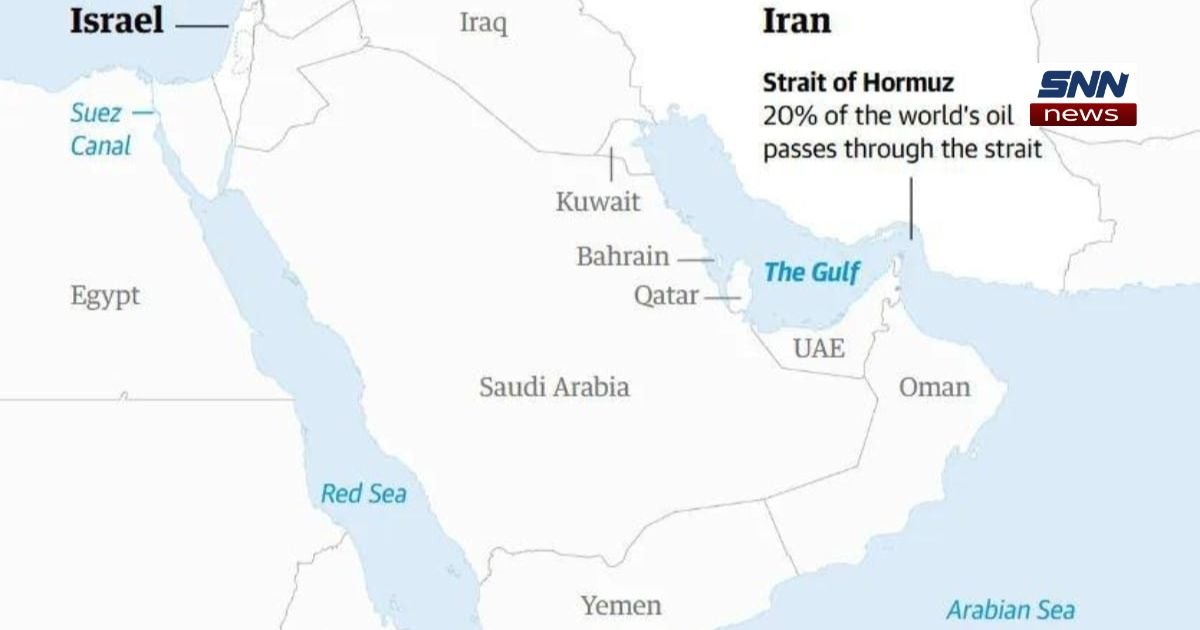
The Strait of Hormuz serves as a crucial passage for the transportation of oil worldwide.
Nearly 20% of the world’s oil and gas shipments pass through this narrow passage, which links the Persian Gulf with the Gulf of Oman and the Arabian Sea.
- It serves as a major route for oil exports from Saudi Arabia, Iran, Iraq, and Kuwait.
- Any obstruction can directly affect global energy markets, impacting prices and supply chains.
- The strait’s geopolitical significance has made it a focal point of international security discussions.
Immediate Effects on Oil Tankers and Shipping
Reports indicate that oil tanker traffic through the strait has already been halted, leaving global markets concerned about supply shortages.
Shipping companies and traders are monitoring the situation closely, as even short-term disruptions could lead to significant economic consequences.
- Tankers waiting to pass through the strait may face delays, increasing shipping costs.
- Insurance premiums for vessels in the region are expected to rise due to heightened risks.
- Alternative routes, such as pipelines bypassing the strait, may be considered, but capacity is limited.
Potential Impact on Global Energy Prices
Analysts warn that the closure of the Strait of Hormuz could trigger a sharp rise in global energy prices. With a substantial portion of oil supply delayed or halted, countries heavily reliant on imports may experience price shocks.
- Industrial sectors and transportation may face increased costs.
- Inflation in energy prices could ripple into other parts of the global economy.
- Countries with strategic oil reserves may release supplies to stabilize markets.
Historical Context and Regional Tensions
The Strait of Hormuz has been a flashpoint in regional conflicts for decades. Iran has previously threatened to close the strait in response to international sanctions or military pressures.
- In 2019, tensions with the United States led to temporary disruptions in tanker movements.
- The strait’s closure has often been used as leverage in diplomatic negotiations.
- Global powers, including the U.S. and European nations, maintain naval presence to ensure open passage.
Geopolitical Implications
Closing the strait not only affects oil markets but also has broader geopolitical consequences. Nations dependent on Middle Eastern energy may reconsider foreign policy and energy strategies.
- Increased military presence by foreign powers may escalate tensions.
- Regional alliances and trade agreements could be influenced by energy security concerns.
- International negotiations may intensify to reopen the vital waterway.
Steps Taken by Global Stakeholders
Governments and energy organizations are closely monitoring developments to mitigate risks. Potential measures include:
- Releasing strategic oil reserves to stabilize supply.
- Exploring alternative shipping routes where feasible.
- Engaging in diplomatic discussions with Iran and regional partners.
Conclusion
The reported closure of the Strait of Hormuz by Iran signals a critical juncture for global energy markets. With nearly one-fifth of the world’s oil passing through this waterway, even brief disruptions can have far-reaching economic and geopolitical consequences.
Analysts and governments are closely watching the situation, as the impact could be felt across global markets and affect energy prices for consumers worldwide.
About The Author