
By Hammad Kahlun
Scandinavian News Finland
Millions of people across Iran took part in nationwide mourning ceremonies following the funeral of 180 young girls who were killed in what Iranian officials and families described as acts of Israeli brutality.
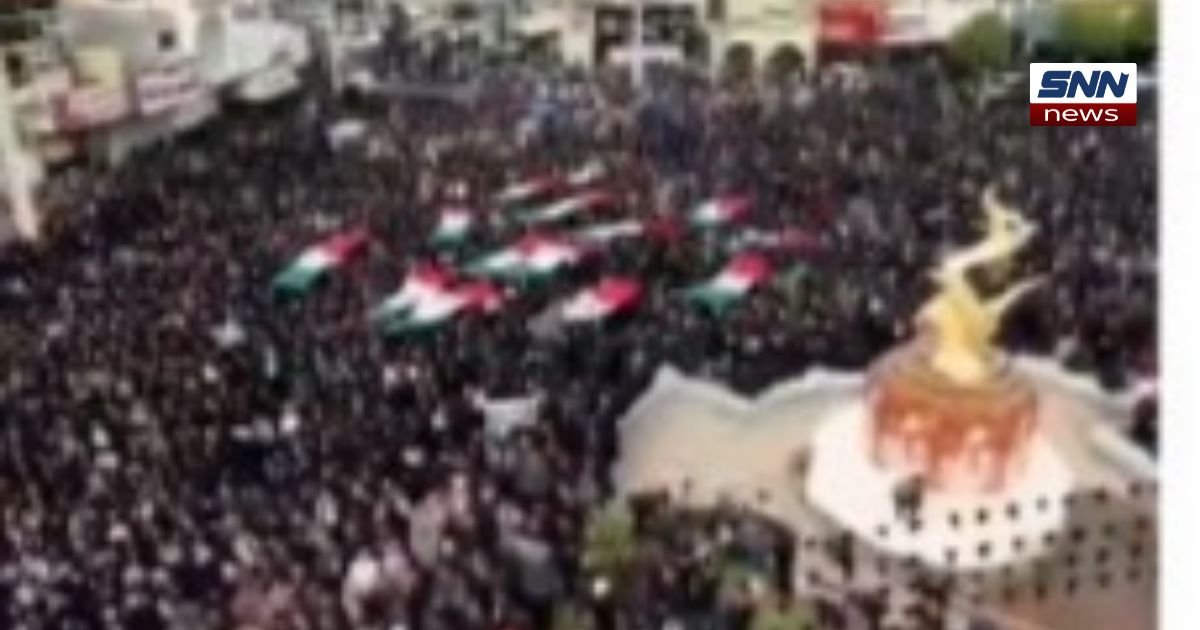
The funerals, held in multiple cities, turned into massive public gatherings marked by silence, grief, and visible anger, reflecting deep emotional shock across the country.
According to local authorities, the girls were among civilians who lost their lives during recent Israeli military actions that Iranian media say disproportionately affected non-combatants.
While details continue to emerge, the scale of the funeral ceremonies highlights the profound national impact of the incident.
Nationwide Mourning and Public Response
From Tehran to smaller provincial cities, streets were filled with mourners carrying photographs of the victims, flowers, and black banners. Despite the massive crowds, many ceremonies were marked by quiet, restrained grief rather than loud demonstrations.
Witnesses described scenes of parents standing in silence beside small coffins, while classmates and relatives struggled to comprehend the loss. Religious leaders led prayers, emphasizing patience and remembrance, while avoiding calls for immediate escalation.
Public reaction across Iran has been intense:
- Schools and universities observed moments of silence
- Public buildings lowered flags
- Social media platforms were flooded with messages of condolence and grief
- Cultural programs and sporting activities were either delayed or called off in response to the national mourning.
State television broadcast continuous coverage of the funerals, focusing on the human cost of the violence rather than political messaging.
Who Were the Victims?
Officials stated that the 180 victims were girls of varying ages, many of them school students. Families reported that the children had no involvement in any military or political activity, reinforcing claims that they were innocent civilians caught in the conflict.
Community members described the victims as ordinary children with ambitions, studies, and families. Teachers and neighbors spoke to local media about the long-term emotional damage inflicted on surviving siblings and classmates.
Medical and psychological experts warned that the trauma could have lasting effects on children across the country who are witnessing images of peers killed in violence.
Context of the Conflict
Tensions between Iran and Israel have remained high for years, driven by regional power struggles, military actions, and opposing alliances. While both sides accuse each other of aggression, civilian casualties continue to draw international concern.
Iranian officials argue that Israeli military operations have increasingly resulted in civilian harm, including women and children. Israel, in previous statements regarding regional operations, has maintained that its actions target security threats, not civilians.
However, independent verification of specific incidents remains limited due to restricted access in conflict zones.
International human rights organizations have repeatedly called for greater transparency and accountability when civilian casualties occur, especially involving children.
Emotional and Social Impact
Beyond politics, the funerals revealed a deep sense of collective mourning. Psychologists interviewed by local media emphasized that the deaths of children resonate more strongly in any society, often becoming symbols of innocence lost.
Key social impacts observed include:
- Increased anxiety among parents and children
- Community-led counseling initiatives in schools
- Religious gatherings focused on healing and solidarity
- Growing public debate on civilian protection in conflicts
Many Iranians expressed frustration that global attention often fades quickly when civilian victims are from the region.
International Silence and Criticism
One of the strongest sentiments voiced during the funerals was anger over what mourners described as global indifference. Several speakers criticized international institutions and Western governments for failing to respond strongly to the deaths.
Posters carried by mourners questioned why similar incidents elsewhere receive immediate global outrage, while the deaths of these girls have drawn limited official reaction. Iranian media commentators framed this as a moral failure of the international community.
So far, no major international body has released a detailed public statement specifically addressing the funerals, though diplomatic sources say the situation is being monitored.
Calls for Accountability, Not Escalation
Despite the anger, many speakers at the funerals emphasized restraint. Religious scholars and community leaders urged the public to seek justice through international law rather than revenge.
Statements focused on:
- Protecting civilians in all conflicts
- Independent investigations into civilian deaths
- Upholding humanitarian law
- Preventing further loss of innocent lives
This tone appeared aimed at avoiding immediate escalation while maintaining pressure for accountability.
A Moment That Will Not Be Forgotten
As night fell and the funerals concluded, candles were lit across several cities in memory of the victims. The images of small graves and grieving families have become a defining moment in Iran’s public consciousness.
For many Iranians, the deaths of the 180 girls are not just another statistic in a long-running conflict but a deeply personal tragedy that has reshaped national sentiment. Whether this moment leads to international action or fades into history remains uncertain.
What is clear is that for millions in Iran, the grief is real, enduring, and impossible to ignore.
Read more on how regional conflicts are affecting civilian life and public sentiment in the Middle East.
About The Author