
By Shumaila Aslam
Scandinavian News Finla
Bureau Chief Pakistan
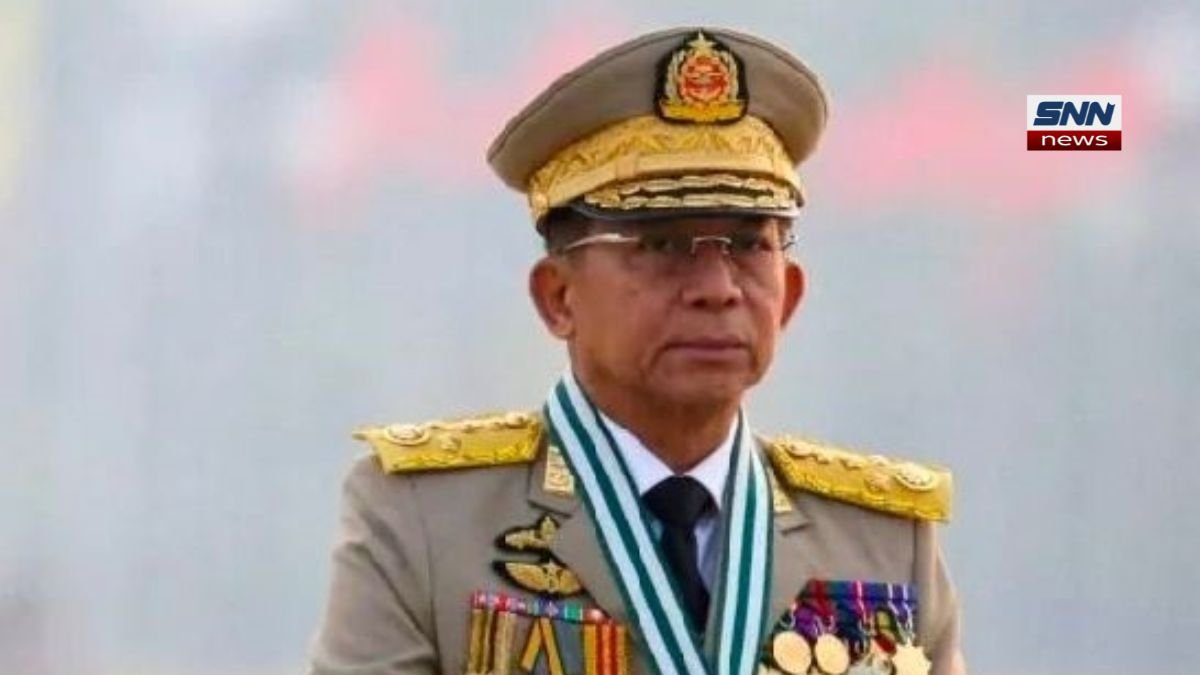
Myanmar’s military leader, Min Aung Hlaing, has been formally elected as the country’s 11th president following a parliamentary vote, solidifying his control over the nation more than five years after leading a coup that toppled the elected government.
The move has drawn international attention, with China quickly offering congratulations and pledging continued support to Myanmar’s military-led administration.
Meanwhile, the country remains engulfed in armed conflict, with opposition and ethnic resistance groups recently uniting to form a stronger front against military rule.
Parliamentary Vote Confirms Military Leader
The Myanmar parliament, largely dominated by military-backed representatives, held a vote on [insert exact date if available] that resulted in Min Aung Hlaing being confirmed as president.
This formal elevation cements his authority over the nation, reinforcing the military’s influence in government after years of political turmoil.
- The election comes five years after the military ousted the democratically elected government of Aung San Suu Kyi’s National League for Democracy (NLD).
- Critics argue the parliamentary process was heavily skewed in favor of the military, with limited participation from civilian representatives.
- Myanmar
China Extends Support
Following the announcement, China officially congratulated Min Aung Hlaing, emphasizing its commitment to continued bilateral relations and regional stability.
Chinese officials cited ongoing economic and strategic cooperation between the two countries as a foundation for their support.
China’s response highlights its broader approach to Southeast Asia, where it often prioritizes stability and state-to-state engagement over direct criticism of internal governance.
Rising Resistance and Civil Conflict
Despite the consolidation of power, Myanmar continues to face escalating unrest. Armed resistance groups, including ethnic militias and anti-coup factions, have recently announced the formation of a new united front aimed at challenging military authority.
- The alliance signals a coordinated effort among previously fragmented groups.
- Reports suggest that clashes between military forces and resistance fighters have intensified in several regions, leading to civilian displacement and increased humanitarian needs.
- Myanmar
The ongoing civil conflict underscores the deep divisions within Myanmar, reflecting years of unresolved ethnic tensions and widespread opposition to military rule.
Humanitarian Concerns and Public Impact
Humanitarian organizations have expressed alarm at Min Aung Hlaing’s ascension to the presidency.
Many victims of the military’s past actions, including alleged extrajudicial killings and widespread human rights violations, are expected to view this development as a painful reminder of ongoing oppression.
- Aid agencies warn that the election may exacerbate existing humanitarian crises, including displacement, food insecurity, and restricted access to medical care.
- International observers note that without meaningful dialogue or reforms, civilian suffering is likely to continue.
- Myanmar
Historical Context of Military Rule
Min Aung Hlaing, a career army officer, rose through the ranks to lead the military in 2011, overseeing a gradual transition from strict military dictatorship to a controlled quasi-civilian government.
- In February 2021, he orchestrated a coup against the NLD government, citing unsubstantiated claims of election fraud.
- Since the coup, Myanmar has seen nationwide protests, international sanctions, and severe crackdowns on dissent.
The election to the presidency can be seen as the culmination of years of political maneuvering to entrench military control.
Regional and International Implications
Min Aung Hlaing’s presidency has broader implications for regional security and international relations:
- ASEAN countries face pressure to balance engagement with the Myanmar government while addressing human rights concerns.
- Western nations have largely condemned the military’s actions and imposed targeted sanctions, though their impact remains limited.
- The new administration may rely on strategic partnerships, particularly with China and other neighboring states, to maintain economic and political stability.
Looking Ahead
Analysts predict continued instability in Myanmar as resistance groups strengthen their coordination and military forces maintain a firm grip on power.
The international community faces a complex challenge in addressing both the humanitarian crisis and political deadlock.
- Peaceful resolution appears distant as the junta consolidates power while armed opposition grows.
- Monitoring by global human rights organizations and increased humanitarian assistance remain critical to mitigate civilian suffering.
Min Aung Hlaing’s election as president marks a decisive moment in Myanmar’s modern history, reinforcing military dominance while intensifying the struggle for democratic governance.
As the nation grapples with ongoing conflict and humanitarian challenges, the eyes of the world remain fixed on how this political shift will shape the future of Myanmar.
Myanmar’s military chief Min Aung Hlaing becomes president amid ongoing conflict.
About The Author