
By Abida Kahlun
Bureau Chief Helsinki
Snn News Finland
A large-scale cybercrime network operating from Latvia has been uncovered following a major police raid that exposed millions of fraudulent digital activities.
Authorities revealed that approximately 49 million fake accounts were being managed from a single office, highlighting the growing sophistication of global cyber fraud operations.
The crackdown resulted in the seizure of thousands of devices and financial assets, shedding light on how a small group of individuals managed a vast, multi-billion-dollar illegal network targeting victims across at least 80 countries.
Key Findings from the Police Raid
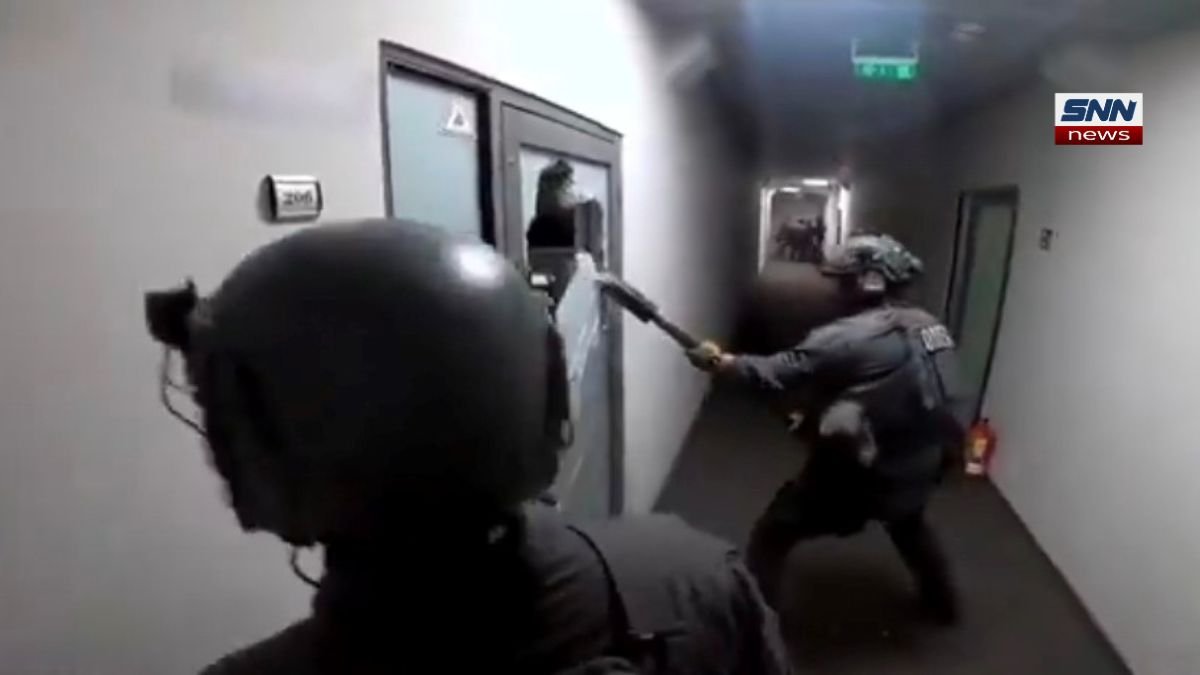
Law enforcement agencies conducted a coordinated raid on a facility suspected of hosting illegal telecom and cyber operations. The scale of the discovery has raised serious concerns about international digital security and regulatory gaps.
Major Seizures
Authorities reported confiscating:
- Around 1,200 SIM boxes used for large-scale communication manipulation
- Approximately 40,000 active SIM cards linked to global networks
- Four luxury vehicles believed to be purchased through illicit funds
- $500,000 in cash
- $310,000 in cryptocurrency assets
- Network
Officials stated that these resources enabled the operators to run an extensive fraud system with minimal physical infrastructure.
How SIM Box Technology Enabled Global Fraud
At the core of the operation were SIM boxes—devices designed to route calls and messages through multiple SIM cards, often masking their origin.
While such technology has legitimate uses in telecommunications, it is frequently exploited for illegal purposes.
Role of SIM Boxes in Cybercrime
Each SIM box was capable of generating thousands of fake accounts daily on platforms such as WhatsApp and Telegram, as well as fraudulent banking profiles.
These fake identities were then used in a variety of illegal activities, including:
- Phishing attacks targeting individuals and businesses
- Online banking fraud and identity theft
- Extortion schemes
- Facilitating human trafficking operations
Experts say the ability to rapidly create and discard digital identities makes SIM box networks particularly dangerous and difficult to trace.
Scale and Reach of the Operation
Despite the complexity of the system, investigators found that only seven individuals were directly responsible for running the entire network.
This highlights how advanced technology can amplify criminal capabilities, allowing a small group to operate at a global scale.
International Impact
The network was reportedly connected to users and targets in over 80 countries, making it one of the most extensive SIM-based fraud operations uncovered in recent years.
Authorities believe the group exploited regulatory loopholes in telecom systems and used encrypted communication channels to avoid detection.
The cross-border nature of the crimes has prompted calls for stronger international cooperation in tackling cybercrime.
Financial Implications and Criminal Profits
The seizure of cash and cryptocurrency suggests that the operation generated significant profits. Investigators estimate the network could be worth billions of dollars, considering the scale of fraudulent transactions and illegal activities conducted daily.
Cryptocurrency, in particular, played a key role in enabling anonymous transactions, making it harder for authorities to trace financial flows. Law enforcement agencies are now working to track these digital assets and identify additional individuals linked to the network.
Tehran’s Claim and Geopolitical Context
In a separate development, authorities in Tehran claimed that they had independently disrupted elements of the operation and destroyed equipment allegedly linked to the United States.
While details remain unclear and have not been independently verified, the statement introduces a geopolitical dimension to the case. It underscores how cyber operations often intersect with international tensions and conflicting narratives.
Analysts caution that such claims should be examined carefully, as cybercrime networks frequently operate across multiple jurisdictions without direct state involvement.
Growing Threat of SIM-Based Cybercrime
The Latvia case reflects a broader global trend where cybercriminals increasingly rely on telecom infrastructure to conduct fraud at scale.
Why SIM Box Fraud is Rising
Several factors contribute to the rise of SIM-based fraud:
- Easy access to SIM cards in large quantities
- Limited regulation in certain regions
- Increasing reliance on mobile verification systems
- Growth of digital banking and online services
These elements create opportunities for criminals to exploit weaknesses in authentication systems, particularly those that depend on SMS-based verification.
Challenges for Law Enforcement
Combating such networks presents significant challenges for authorities worldwide. The decentralized and cross-border nature of these operations makes investigation and prosecution complex.
Key Obstacles
- Difficulty in tracking encrypted communications
- Jurisdictional limitations across countries
- Rapid turnover of digital identities
- Use of cryptocurrency for anonymous transactions
Experts emphasize the need for improved coordination between telecom providers, financial institutions, and international law enforcement agencies.
Public Impact and Safety Concerns
The exposure of this network has raised concerns among the public, especially regarding data security and online safety.
Millions of individuals may have been targeted through phishing messages, fraudulent calls, or fake financial services.
Authorities are urging users to remain vigilant and adopt basic cybersecurity practices, such as:
- Avoiding suspicious links and messages
- Verifying sources before sharing personal information
- Using secure authentication methods beyond SMS
Conclusion
The dismantling of the SIM box fraud network in Latvia highlights the evolving nature of global cybercrime.
With just a handful of operators managing millions of fake accounts, the case underscores how technology can be misused on a massive scale.
As investigations continue, the incident serves as a warning to governments, businesses, and individuals about the urgent need to strengthen digital security frameworks.
Enhanced regulation, international cooperation, and public awareness will be critical in preventing similar operations in the future.
The Latvia SIM box fraud network highlights how a small group can control millions.
About The Author