
By Hammad Kahlun
Scandinavian news Finland
Slovakia Takes European Union to Court Over Russian Energy Phase-Out Plan
Slovakia has announced that it will challenge the European Union in court over its decision to fully phase out Russian gas and oil imports by 2027.
The move marks a new political and legal conflict inside the EU over energy security, economic stability, and long-term relations with Russia.
The Slovak government argues that the decision could seriously damage Europe’s economy and was adopted without the required unanimous approval from all member states.
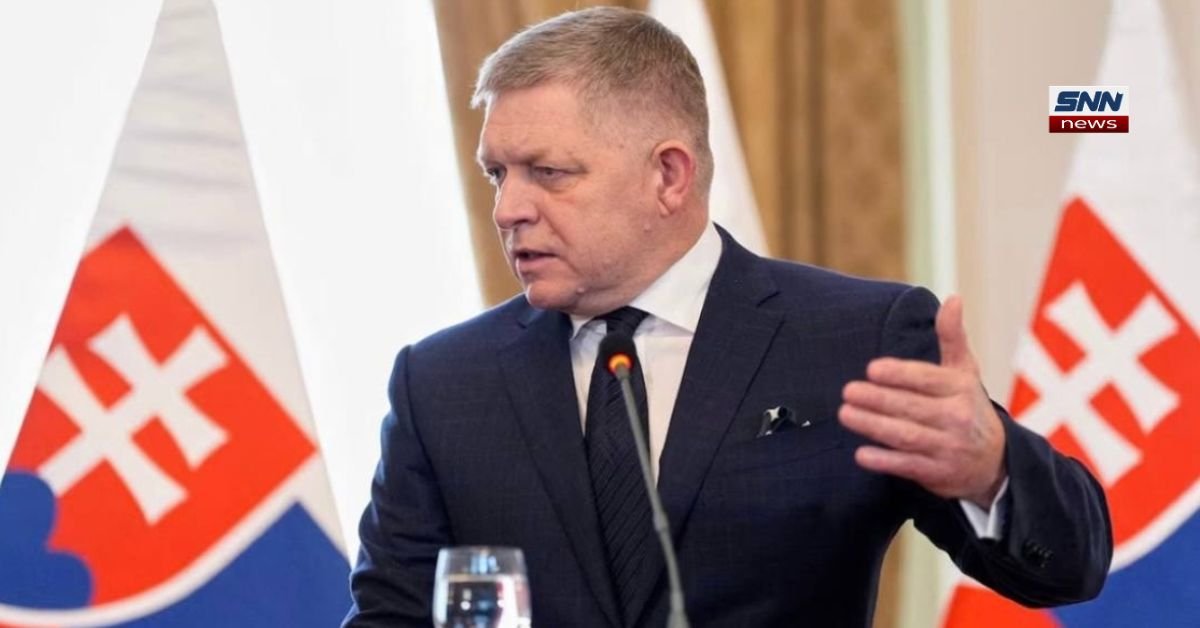
Prime Minister Robert Fico has described the policy as “extremely harmful” for European households and industries already facing high energy costs.
The case is expected to be filed at the Court of Justice of the European Union (CJEU) after instructions were issued to Slovakia’s Justice Ministry.
Why the EU Wants to End Russian Energy Imports
The European Union has been working to reduce dependence on Russian energy since the escalation of the Russia-Ukraine war in 2022. The policy aims to strengthen energy independence and limit financial flows that could support Russia’s war economy.
The plan includes a gradual ban on:
- Russian natural gas imports
- Crude oil supplies
- Liquefied natural gas (LNG) contracts
- Long-term energy agreements with Russian suppliers
EU leaders have set 2027 as the target year for a full phase-out, arguing that diversification toward renewable energy and alternative suppliers is essential for long-term stability.
However, not all member states agree on the speed and economic impact of the transition.
Slovakia’s Position: Economic Risk and Legal Objections
Slovakia, like several Central European countries, has historically relied on Russian energy imports due to geographic and infrastructure limitations. The government argues that replacing these supplies quickly could lead to:
- Higher energy prices for households
- Increased costs for industrial production
- Supply instability during winter seasons
- Pressure on national budgets
Prime Minister Robert Fico has publicly criticized the EU decision, stating that it risks weakening European competitiveness.
He also claims the policy was not approved with full consensus, which raises legal questions under EU decision-making rules.
Legal Challenge at the EU Court
Slovakia is preparing to bring the case before the EU’s top judicial authority.
- Whether unanimous agreement was required
- Whether member states’ energy rights were violated
- Whether the policy disproportionately harms certain countries
This legal move aligns Slovakia with earlier resistance efforts seen in other EU states.
Hungary’s Parallel Position and Political Alignment
Hungary has also been a key opponent of strict energy restrictions on Russia. Under Prime Minister Viktor Orbán, Budapest has repeatedly argued that energy decisions should reflect national interests and economic realities.
Hungary previously explored legal and diplomatic resistance to EU sanctions and energy restrictions, particularly regarding oil and gas supply chains.
The issue has often created tension between Hungary and other EU institutions, especially over foreign policy unity.
Péter Magyar’s Statement on Druzhba Pipeline
In a separate development, Hungarian opposition figure Péter Magyar, who is seen as a potential future political leader, stated that oil flows through the Druzhba pipeline could resume in the near future.
The Druzhba pipeline is one of Europe’s longest oil transport systems and has historically supplied crude oil from Russia to several Central and Eastern European countries.
If flows resume or increase, it could signal:
- A shift in Hungary’s energy strategy
- Possible easing of restrictions depending on political leadership
- Continued reliance on existing infrastructure despite EU diversification goals
However, no official confirmation has been made regarding policy changes.
Energy Divide Inside the European Union
The dispute highlights a growing divide within the EU over how quickly to cut ties with Russian energy. While Western European countries generally support faster diversification, several Central and Eastern European states remain concerned about costs and infrastructure readiness.
Key points of disagreement include:
Economic Impact
Countries like Slovakia and Hungary argue that rapid transition increases inflation and energy bills.
Energy Security
Some governments fear shortages during peak demand periods if alternative supplies are not secured in time.
Political Unity
The debate has raised concerns about whether EU members can maintain a unified foreign policy approach toward Russia.
Broader Context: Europe’s Energy Transformation
Since 2022, the European Union has accelerated efforts to restructure its energy system. This includes:
- Expanding LNG imports from the United States and Qatar
- Investing in renewable energy projects
- Increasing energy storage capacity
- Improving cross-border energy infrastructure
- Reducing long-term dependency on single suppliers
Despite these efforts, energy transition remains uneven across member states due to economic differences and infrastructure limitations.
Public Impact Across Europe
The outcome of the legal dispute could have wide-reaching consequences for households and industries across the continent. Energy pricing remains a sensitive issue in many EU countries, especially where inflation has already affected living standards.
Possible public impacts include:
- Changes in electricity and heating costs
- Adjustments in industrial production expenses
- Political debates over EU authority and national sovereignty
- Increased focus on energy independence policies
What Happens Next
The case brought by Slovakia is expected to take time as EU court proceedings often involve detailed legal review and political consultation.
Meanwhile, energy policy discussions within the European Union are likely to continue intensifying.
Hungary’s position and internal political developments may also influence the direction of future energy agreements.
For now, the dispute highlights one of the most complex challenges facing Europe: balancing energy security, economic stability, and geopolitical strategy in a rapidly changing global environment.
Slovakia EU Russian gas ban court case, Hungary energy policy Druzhba pipeline update, EU energy phase-out Russia 2027 dispute, Europe energy security crisis debate
About The Author