
By Hammad Kahlun
Scandinavian news Finland
Mass Illegal Border Crossing Detected Through Tunnel Near Lithuania-Belarus Border
Lithuanian border guards detained 30 migrants after they allegedly crossed illegally from Belarus through an underground tunnel, according to official reports.
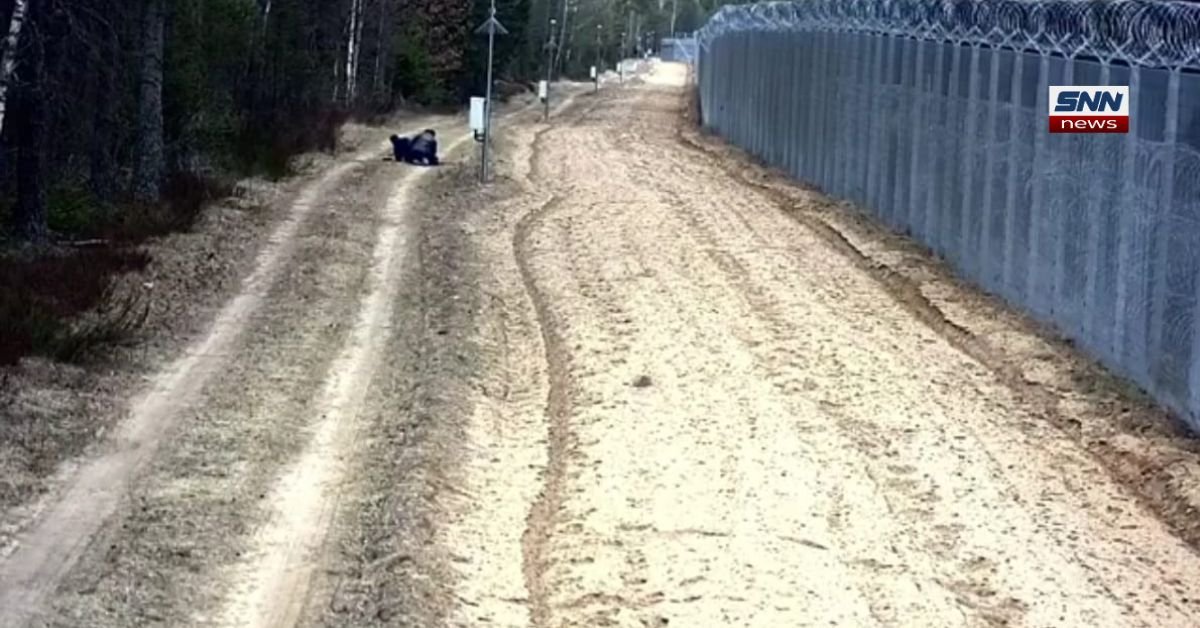
The unusual border incident was recorded on April 6 in the Vilnius district through a video surveillance system monitoring the frontier area.
Authorities said the group entered Lithuania within a few minutes using a hidden tunnel route, raising fresh concerns about migrant smuggling networks and border security in Eastern Europe.
Officials reported that the detained individuals were mainly citizens of Afghanistan, Iraq, and Pakistan.
The case has drawn attention because tunnel crossings are considered rare compared with other irregular migration attempts involving forests, rivers, or damaged fencing.
Incident Captured by Surveillance Cameras
Lithuanian border officials stated that surveillance systems in the Vilnius district detected suspicious activity during the afternoon hours. Security footage reportedly showed a group of migrants emerging through an underground passage before moving into Lithuanian territory.
Lithuanian Border guards quickly responded and detained all 30 individuals shortly after the crossing.
Authorities did not immediately disclose the exact location of the tunnel or technical details about how it had been constructed. Investigators are expected to examine whether the passage had been used previously or built recently for organized smuggling operations.
Nationalities of Detained Migrants
Officials said the detained group included people claiming citizenship of:
- Afghanistan
- Iraq
- Pakistan
- Lithuanian
Only some individuals reportedly carried identity documents, which may delay formal verification processes. In such cases, authorities usually conduct interviews, biometric checks, and coordination with international agencies to establish nationality and identity.
Why the Lithuania-Belarus Border Remains Sensitive
The border between Lithuania and Belarus has remained a major pressure point since a migration crisis began in 2021. Lithuania, Poland, and Latvia have repeatedly accused Belarus of facilitating irregular migration flows toward the European Union.
Belarus has denied orchestrating migrant movements. However, EU officials have previously described the situation as hybrid pressure aimed at destabilizing neighboring member states.
Since then, Lithuania has strengthened fencing, surveillance systems, patrol capacity, and emergency response mechanisms along the border.
Underground Tunnel Raises Security Concerns
The use of an underground tunnel has increased concern among security experts because it suggests planning, logistics, and possible criminal coordination.
Why Tunnel Crossings Matter
Tunnel routes can create several risks:
- Avoiding border fences and checkpoints
- Evading thermal cameras or patrol routes
- Enabling larger group crossings quickly
- Supporting human smuggling networks
- Increasing danger to migrants inside confined spaces
- Lithuanian
Authorities are likely to inspect nearby border areas for additional hidden access points or connected routes.
Lithuania’s Response to Illegal Migration
Lithuania has introduced tougher border measures in recent years in response to repeated crossing attempts. These measures include:
- Expanded electronic surveillance
- Border fencing and barriers
- Increased patrol staff
- Faster detention and screening procedures
- Cooperation with EU border agency Frontex
- Lithuanian
Officials say these measures are intended to protect the external border of the European Union while following international legal obligations.
What Happens to the Detained Migrants
After detention, migrants typically undergo legal and administrative procedures. These may include:
Identity Verification
Authorities check available documents and collect personal data.
Health and Safety Screening
Medical checks may be conducted, especially after physically difficult crossings.
Asylum Requests
Individuals may request asylum if they claim fear of persecution in their home countries.
Return Procedures
If no legal right to remain is established, deportation or return procedures may begin under Lithuanian and EU law.
Each case is usually assessed individually under domestic and international rules.
Humanitarian and Legal Debate Continues
Border incidents involving migrants often create debate between security enforcement and humanitarian responsibility. Human rights organizations have urged European governments to ensure access to asylum procedures, legal representation, and humane treatment.
At the same time, governments argue they must stop organized smuggling networks that profit from dangerous illegal crossings.
The latest tunnel case is likely to renew those discussions across the European Union.
Role of Belarus in Regional Tensions
Relations between Lithuania and Belarus remain tense due to political disputes, sanctions, and security concerns. Lithuania has been a strong supporter of democratic opposition groups from Belarus and a vocal critic of Minsk.
The migration issue has therefore become linked to wider geopolitical tensions in the region.
Analysts say future border incidents could continue to affect diplomatic relations and EU security planning.
Public Impact in Lithuania and Europe
For Lithuania, border security is not only a national issue but also an EU responsibility because the country guards part of the bloc’s external frontier.
Cases involving mass crossings can impact:
- Public debate on migration policy
- Border security budgets
- Relations with Belarus
- EU asylum discussions
- Law enforcement cooperation
- Lithuanian
European governments are closely monitoring new smuggling methods, especially those involving tunnels or coordinated transport routes.
Broader Migration Pressures in Europe
Europe continues to face migration pressures caused by war, instability, poverty, and displacement in multiple regions.
People from Afghanistan, Iraq, and Pakistan have often appeared in asylum and irregular migration statistics due to long-running political and economic challenges.
Officials say criminal smuggling groups frequently exploit vulnerable people by promising access to Europe through unsafe routes.
What Comes Next
Lithuanian authorities are expected to continue investigating how the tunnel was built, who organized the crossing, and whether similar routes exist along the Belarus border.
Security patrols may be increased in nearby areas, while detained migrants will likely enter legal processing systems.
The case highlights how migration routes continue to evolve and how border agencies across Europe are adapting to increasingly sophisticated methods of illegal entry.
Lithuania Belarus border crisis latest, EU migrant crossing updates, Belarus tunnel border case, Vilnius border security news, Europe migration news
About The Author