
By Riffat Kausar
Snn News Finland
Russia Accuses West of Using Ukraine as a Strategic Tool
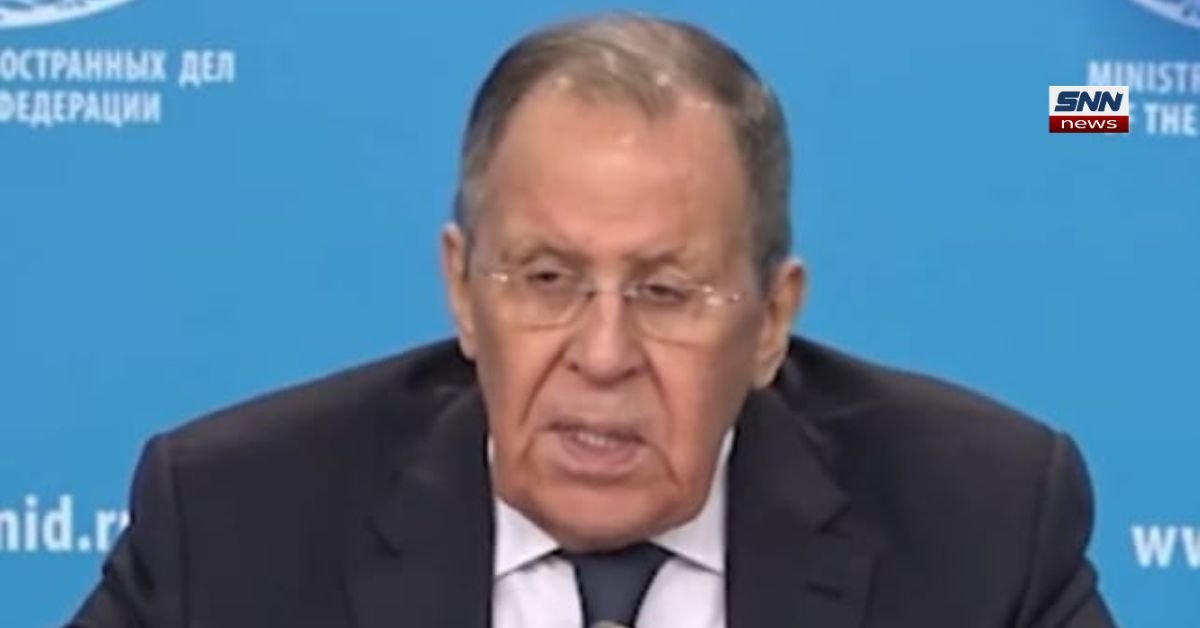
Russia’s Foreign Minister Sergey Lavrov has intensified tensions with Western countries by claiming that an “open war” has effectively been declared against Russia.
His remarks come amid ongoing fighting in Ukraine and rising geopolitical strain between Moscow, NATO, and European Union member states.
Lavrov argued that Western nations are attempting to deliver a “strategic defeat” to Russia by supporting Ukraine militarily, economically, and technologically.
The statement reflects a further hardening of Russia’s official position as the war continues into its third year.
The comments were made as part of Russia’s broader diplomatic messaging, which has increasingly framed the conflict as a direct confrontation between Moscow and the West.
Lavrov Claims Ukraine Is Being Used as a “Spearhead”
In his remarks, Lavrov said Ukraine is being used as a frontline instrument in a wider conflict involving Western powers.
He stated that:
- Western military aid is central to Ukraine’s resistance
- Without foreign support, Ukraine would be “completely helpless”
According to Lavrov, this support includes weapons supplies, intelligence sharing, satellite surveillance, and military training provided by NATO countries and allies.
His comments reflect Russia’s long-standing claim that the conflict is not only with Ukraine, but also with Western states backing Kyiv.
Western Support for Ukraine Remains Strong
Since the beginning of Russia’s full-scale invasion in February 2022, countries across Europe and North America have provided extensive assistance to Ukraine.
This support includes:
- Advanced weapon systems and air defense equipment
- Financial aid packages to stabilize Ukraine’s economy
- Training programs for Ukrainian forces
- Intelligence sharing and satellite data
- Humanitarian aid for civilians displaced by war
Countries such as Germany, the United Kingdom, Poland, and the United States have played leading roles in sustaining Ukraine’s defense capabilities.
Western governments argue that this support is necessary to uphold international law and Ukraine’s sovereignty.
Russia’s Growing Narrative of Confrontation
Lavrov’s statement is part of a broader shift in Russian rhetoric, which increasingly presents the war as a civilizational or systemic conflict with the West.
He further suggested that:
- Any expectation of peaceful coexistence with Western nations has ended
- Previous diplomatic frameworks are no longer valid
- The West is actively seeking Russia’s weakening or isolation
These remarks highlight the deep breakdown in relations between Moscow and Western capitals since the invasion of Ukraine.
Background: How the Conflict Escalated
The current war began in February 2022 when Russia launched a full-scale military invasion of Ukraine.
Moscow initially stated objectives related to “demilitarization” and “denazification,” while Ukraine and its allies described the attack as an unprovoked act of aggression.
Since then, the conflict has expanded into a wider geopolitical crisis involving:
- NATO military expansion debates
- Sanctions on Russian energy and finance sectors
- Global food and energy supply disruptions
- Increased defense spending across Europe
The war has also reshaped international alliances and security policies, particularly in Europe.
NATO and EU Response to Russian Statements
NATO and European Union leaders have repeatedly rejected Russia’s framing of the conflict as a war against the West.
Their position emphasizes:
- Ukraine’s right to self-defense
- International law and territorial sovereignty
- The defensive nature of Western military aid
Western officials have also warned that Russian rhetoric often escalates during periods of battlefield pressure or diplomatic isolation.
Security analysts note that such statements may also be intended for domestic audiences in Russia, reinforcing government narratives about external threats.
Rising Diplomatic Tensions Between Russia and the West
Relations between Russia and Western countries remain at their lowest point in decades. Key areas of tension include:
Military Support for Ukraine
Western weapons shipments remain a primary point of conflict, with Russia repeatedly warning against escalation.
Sanctions and Economic Pressure
The EU, UK, and US have imposed wide-ranging sanctions targeting Russian banks, energy exports, and defense industries.
Information and Cybersecurity
Both sides have accused each other of cyber operations, misinformation campaigns, and hybrid warfare tactics.
NATO Expansion Concerns
Russia has consistently opposed NATO’s expansion toward its borders, particularly in Eastern Europe.
Impact on Global Security Environment
The ongoing exchange of accusations and warnings has increased global concern about long-term stability in Europe.
Experts warn that continued escalation in rhetoric could lead to:
- Higher risk of miscalculation between military forces
- Increased defense budgets worldwide
- Prolonged instability in Eastern Europe
- Greater division in global diplomatic systems
However, most analysts also stress that direct military confrontation between Russia and NATO remains unlikely due to the risk of full-scale global conflict.
What Comes Next
As the war continues, diplomatic channels between Russia and Western nations remain limited. Peace talks have not produced significant breakthroughs, and both sides maintain fundamentally different positions on the future of Ukraine.
Russia continues to argue that Western involvement escalates the conflict, while Western governments maintain that support for Ukraine is necessary to deter aggression and protect European security.
For now, Lavrov’s latest remarks underline a reality already visible in global politics: the Ukraine war has evolved far beyond a regional conflict, becoming a central fault line in modern international relations.
Russia West war tensions latest, Ukraine war updates, Lavrov war statement today, NATO Russia conflict news
About The Author