
By Hammad Kahlun
Scandinavian news Finland
Russia’s Yabloko election ban has intensified debate over political competition ahead of the country’s 2026 parliamentary elections after the Supreme Court on Monday cancelled the registration of the party’s federal candidate list.
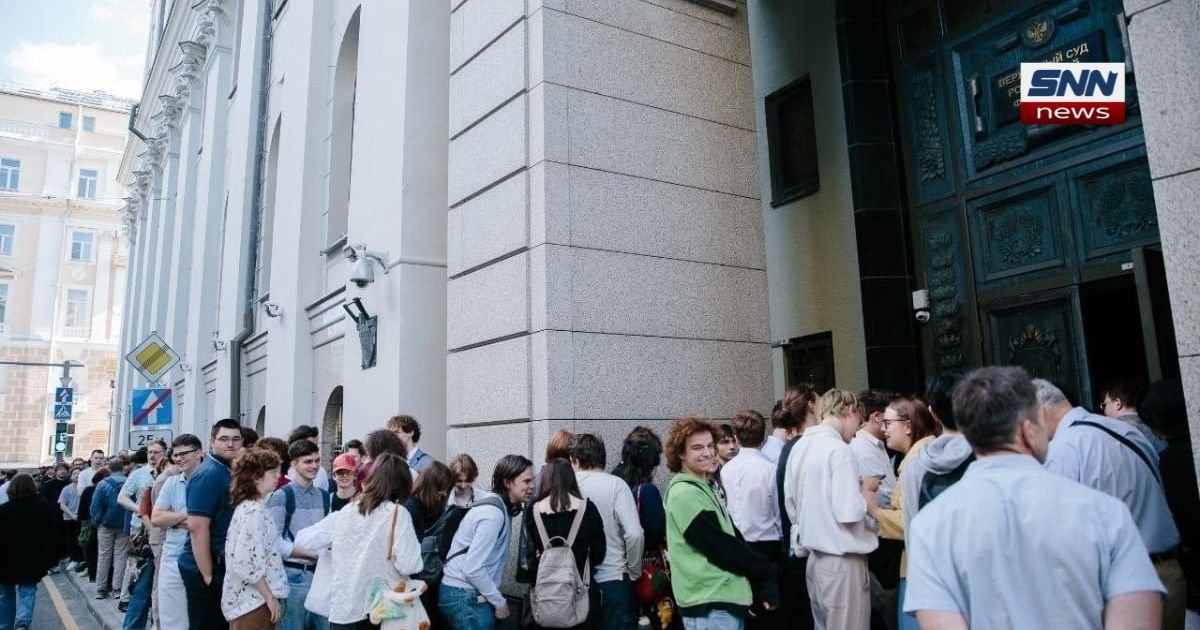
Supporters gathered outside the court in Moscow to back the party as judges considered the legal challenge.
Russian independent media reported that hundreds of mostly young supporters came to the court building.
The case concerns Yabloko Election Ban participation in the State Duma election rather than an outright legal prohibition of the political party itself.
Reports published on August 10 said the Supreme Court accepted a lawsuit seeking to remove Yabloko’s federal list from the election.
Yabloko election ban reaches Russia’s Supreme Court
The legal challenge was brought by Alexei Zhuravlyov, chairman of the Rodina party, according to Russian media reports.
The dispute emerged only days after Yabloko Election Ban had been admitted to the federal ballot, making the party one of the few opposition forces with a nationwide electoral presence.
Yabloko Election Ban has described itself as an anti-war political force and has repeatedly called for an end to the Russia-Ukraine war.
Its own political committee says the party has faced criminal and administrative cases involving members because of its opposition to the government’s war policy.
Why Yabloko matters in Russia’s election
Yabloko Election Ban is a long-established Russian liberal democratic party founded more than three decades ago.
Although its electoral support has historically been limited, it has maintained a distinctive position by openly advocating negotiations and a ceasefire in Ukraine.
Claims that the party has only around 3% support should be treated cautiously unless tied to a specific, recent poll.
The figure in the raw notes could not be independently established as a reliable current nationwide measure.
The party’s relatively small electoral base does not necessarily remove its political significance.
Amnesty International previously described Yabloko Election Ban as the last officially registered Russian party openly calling for an end to the invasion of Ukraine, while warning about increasing pressure on its members.
Supporters gather outside Moscow court
The Supreme Court proceedings drew supporters to Moscow despite Russia’s strict restrictions on public demonstrations.
Independent reporting said hundreds of people came to the court to express support for Yabloko.
The gathering illustrates the narrow space available for public political opposition in Russia.
However, it would be speculative to describe the event simply as “theater for democracy” without evidence establishing that the participants or authorities were staging it.
Yabloko supporters have argued that the party should be allowed to participate in elections and present voters with an alternative political programme.
The party’s campaign materials currently promote peace, political freedom and an end to restrictions on information.
Key Facts
- Russia’s Supreme Court ruled on Yabloko’s federal election list on August 10, 2026.
- The ruling removes Yabloko’s federal list from the State Duma election.
- Supporters gathered outside the Supreme Court in Moscow.
- Yabloko openly opposes the continuation of the Russia-Ukraine war.
- Removing an election list is not the same as formally banning the political party.
- Yabloko Election Ban
FAQs:
Is Yabloko banned in Russia?
The August 10 ruling concerns Yabloko’s federal candidate list for the State Duma election. It should not automatically be described as a formal ban on the entire party.
Why is Yabloko considered an opposition party?
Yabloko has consistently promoted a liberal-democratic political programme and has openly opposed Russia’s war in Ukraine.
Who challenged Yabloko’s election participation?
Russian media reported that Rodina party chairman Alexei Zhuravlyov filed the legal challenge seeking Yabloko’s removal from the election.
Did Russians protest outside the court?
Independent Russian reporting said hundreds of supporters gathered outside the Supreme Court in Moscow on August 10.
What happens next?
The political consequences will depend on further legal developments and how Yabloko responds to the Supreme Court decision.
What the court decision means
The Supreme Court’s decision removes Yabloko’s federal candidate list from the 2026 State Duma election. It does not, by itself, mean that the Yabloko party has been formally outlawed across Russia.
The development follows other legal pressure involving the party. In July, the Supreme Court upheld an administrative ruling against Yabloko chairman Nikolai Rybakov over what Russian authorities classified as the display of extremist symbols.
The latest ruling is therefore likely to remain a major issue for Russia’s opposition politics as the parliamentary election approaches.
Yabloko official website: Russian Democratic Party YABLOKO
About The Author