
By Shumaila Aslam
Scandinavian News Finland
Bureau Chief Pakistan
Austrian Photographer Captures Rare Lynx Behavior in Spain
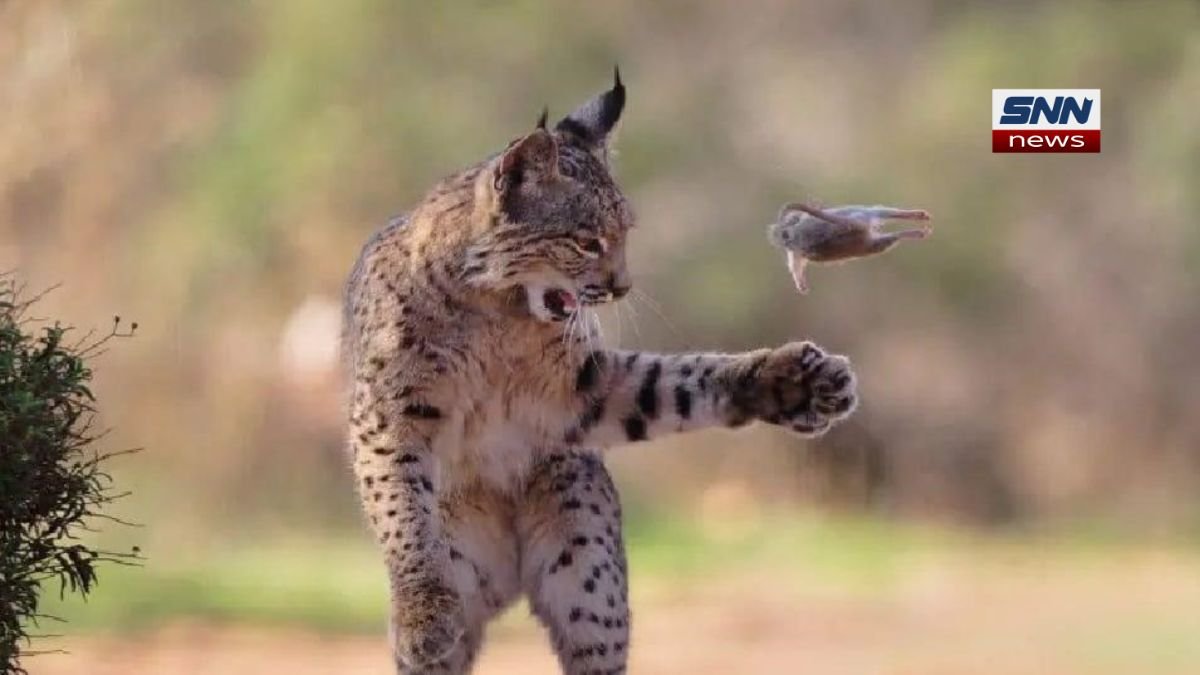
A striking wildlife image titled Flying Rodent has won the public vote in the prestigious Wildlife Photographer of the Year competition.
The photograph was taken by Austrian photographer Josef Stefan in a remote region of Spain after days of patient observation and careful positioning.
The award-winning image captures a rare and dramatic moment: a wild lynx tossing its prey—a small rodent—into the air mid-hunt.
The photograph stood out among thousands of entries due to its timing, composition, and insight into predator behavior in the wild.
A Moment of Precision and Patience
According to competition details, Stefan spent several days hidden in the field, waiting for the right opportunity.
His persistence paid off when a young lynx emerged with its prey.
Instead of immediately killing the rodent, the lynx engaged in what appeared to be playful behavior.
For nearly 20 minutes, the predator repeatedly tossed the rodent into the air and caught it.
This unusual interaction allowed Stefan to capture a perfectly timed frame, showing the rodent suspended mid-air while the lynx remained focused beneath it.
The image reflects not only technical skill but also a deep understanding of animal behavior.
Wildlife experts note that such actions may be part of hunting practice or instinctive play, particularly in younger predators.
About the Wildlife Photographer of the Year Competition
The Natural History Museum in London organizes the Wildlife Photographer of the Year competition annually.
It is widely regarded as one of the most respected global platforms for wildlife photography.
The competition receives tens of thousands of entries each year from photographers across the world. Submissions are judged based on:
- Creativity and originality
- Technical excellence
- Ethical standards in wildlife photography
- Storytelling and emotional impact
- Flying
The public vote category allows audiences worldwide to select their favorite image from a shortlist curated by expert judges.
Stefan’s Flying Rodent image received the highest number of votes, highlighting its strong appeal among viewers.
Rare Glimpse into Lynx Behavior
The lynx featured in the photograph is believed to be an Iberian lynx, one of the rarest wild cats in the world.
Native to the Iberian Peninsula, this species has faced significant threats due to habitat loss, declining prey populations, and human activity.
Capturing such a moment is particularly significant because:
- Iberian lynxes are elusive and difficult to observe in the wild
- Their population has only recently begun to recover after conservation efforts
- Behavioral interactions like this are rarely documented in detail
- Flying
Wildlife specialists emphasize that images like Stefan’s can contribute to scientific understanding and public awareness of endangered species.
The Role of Patience in Wildlife Photography
Stefan’s success highlights the importance of patience and preparation in wildlife photography.
Unlike studio or urban photography, capturing animals in their natural habitat requires:
- Extended periods of waiting in concealed locations
- Knowledge of animal movement patterns
- Respect for the environment and minimal disturbance
- Ability to react quickly to unpredictable moments
- Flying
In interviews associated with the competition, photographers often stress that such images are the result of days—or even weeks—of effort, rather than a single lucky shot.
Public Engagement and Global Impact
The public vote category plays a key role in connecting audiences with wildlife stories.
By allowing viewers to choose their favorite image, the competition increases awareness about biodiversity and conservation issues.
The widespread attention given to Flying Rodent demonstrates how powerful imagery can:
- Spark curiosity about wildlife behavior
- Encourage discussions about conservation
- Highlight the importance of protecting natural habitats
- Flying
Digital platforms and social media further amplify these messages, bringing remote wildlife encounters to a global audience.
Conservation Context: Protecting Predator Species
Predators like the Iberian lynx play a critical role in maintaining ecological balance.
They help regulate prey populations and contribute to healthy ecosystems. However, many predator species remain under threat due to:
- Habitat fragmentation
- Illegal hunting and poaching
- Decline in prey species
- Climate-related changes
- Flying
Conservation programs in Spain and Portugal have made significant progress in increasing lynx populations.
These efforts include habitat restoration, breeding programs, and stricter protection measures.
Images like Stefan’s reinforce the value of these initiatives by showcasing the beauty and importance of these animals in the wild.
Ethical Wildlife Photography Standards
The Wildlife Photographer of the Year competition maintains strict ethical guidelines. Photographers must ensure that their work does not harm animals or disrupt natural behavior.
Key ethical principles include:
- No baiting or staging of wildlife interactions
- Maintaining a safe distance from animals
- Avoiding habitat damage
- Full transparency about how images are captured
- Flying
There is no indication that Stefan violated any of these standards. His image is considered a genuine representation of natural behavior, captured without interference.
Why the Image Resonated with Audiences
Several factors contributed to the popularity of Flying Rodent among voters:
- Dynamic action: The mid-air motion creates a sense of energy and drama
- Unique perspective: Rare behavior rarely seen by the public
- Emotional impact: A blend of intensity and curiosity
- Technical precision: Perfect timing and composition
- Flying
The photograph tells a complete story in a single frame, making it accessible even to viewers with no background in wildlife photography.
Conclusion
The success of Flying Rodent in the Wildlife Photographer of the Year public vote highlights the enduring appeal of authentic wildlife storytelling.
Josef Stefan’s dedication and patience resulted in a powerful image that captures both the unpredictability and beauty of nature.
Beyond its artistic value, the photograph serves as a reminder of the importance of conservation and the need to protect endangered species like the Iberian lynx.
As global audiences continue to engage with such imagery, competitions like this play a crucial role in raising awareness and inspiring action for wildlife preservation.
Discover more breathtaking flying moments in wildlife photography through the Wildlife Photographer of the Year and explore rare species like the Iberian lynx in action.
About The Author