
By Riffat Kausar
SNN News Finland
North Korea Has Changed Its Nuclear Launch Rules and the World Should Pay Attention
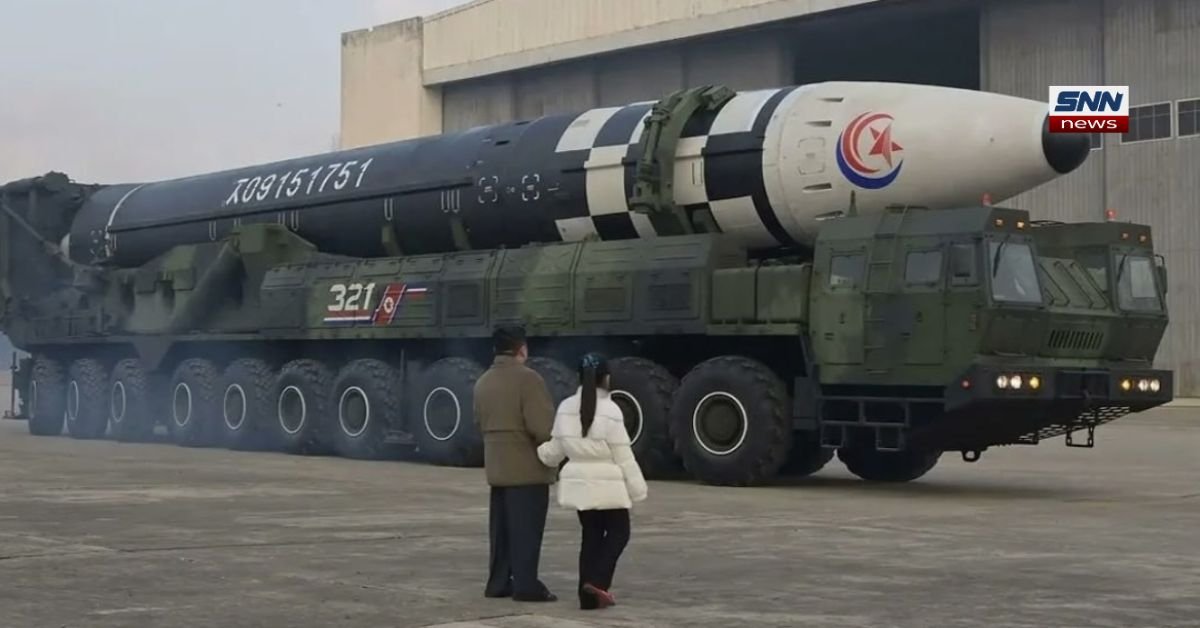
North Korea has quietly made one of the most significant changes to its nuclear weapons policy in years.
The country has amended its national constitution to allow nuclear weapons to be launched automatically without any direct order if its top leadership is killed or loses control of the military.
The change was reported by South Korea’s state news agency Yonhap, citing intelligence gathered by South Korean security services.
This is not a drill. This is a constitutional change with real consequences for global security.
What Has Actually Changed
Previously, launching a nuclear weapon in North Korea required a direct command from Kim Jong Un or a designated authority within the country’s military chain of command.
Under the new constitutional amendment, that requirement has been removed in specific circumstances. If Kim Jong Un is assassinated, if the country’s leadership structure is destroyed, or if command and control over the military is lost, nuclear weapons would now launch automatically.
In simple terms: North Korea has built a system that can fire nuclear weapons even if there is no one left alive to give the order.
This type of system is sometimes called a “dead hand” or automatic retaliatory strike mechanism. It is designed to guarantee nuclear retaliation even in the event of a devastating first strike against the country’s leadership.
Why North Korea Made This Change Now
The Middle East Connection
South Korean intelligence sources indicate that the timing of this constitutional amendment is directly linked to recent events in the Middle East specifically military strikes that targeted senior leadership figures in Iran.
The reported reasoning is straightforward: North Korea’s leadership observed how strikes on command structures were used as a military strategy in the Middle East conflict.
Pyongyang appears to have concluded that its own leadership could face a similar threat and moved to close what it perceived as a vulnerability.
Kim Jong Un’s Survival Strategy
For Kim Jong Un, personal survival and regime continuity are inseparable from North Korea’s nuclear posture. The country has invested decades and enormous resources into building a nuclear arsenal.
The new amendment ensures that arsenal remains a credible threat even in a worst-case scenario for the regime.
The message to adversaries is deliberate and calculated: killing Kim Jong Un does not end North Korea’s nuclear threat. It triggers it.
What This Means for Regional and Global Security
Escalation Risk Increases
Military and security analysts have long warned that automated nuclear systems carry serious risks.
Unlike human-controlled launch procedures which allow for last-minute verification, communication, and the possibility of standing down automated systems leave little room for error or de-escalation.
A miscalculation, a false alarm, or a cyberattack on North Korea’s command systems could, under this new framework, theoretically trigger a nuclear launch without any human decision being made.
Key concerns raised by this development include:
- Reduced decision-making time for all parties in a crisis
- Higher risk of accidental or miscalculated launch during military tensions
- Increased pressure on South Korea, Japan, and United States military planning
- Diplomatic complications for any future negotiations on North Korean denuclearisation
Impact on South Korea and Japan
Both South Korea and Japan sit within range of North Korean missiles. For both governments, this constitutional change represents a direct and immediate security concern.
It also places additional pressure on the United States, which maintains significant military presence and mutual defence commitments across the region.
North Korea’s Nuclear Programme: Brief Background
North Korea has been developing nuclear weapons since the 1980s and conducted its first successful nuclear test in 2006. Since then, the programme has expanded significantly under Kim Jong Un’s leadership, which began in 2011.
The country is estimated to possess between 40 and 50 nuclear warheads, with ongoing development of ballistic missiles capable of reaching targets across the region and potentially the continental United States.
North Korea has repeatedly refused international calls to abandon its nuclear programme, describing it as an essential guarantee of the regime’s survival.
The new constitutional amendment is entirely consistent with that long-standing position but represents a significant and dangerous escalation in how that guarantee is structured.
Key facts about North Korea’s nuclear capability:
- First nuclear test conducted in 2006
- Estimated 40–50 nuclear warheads currently in possession
- Ballistic missiles capable of reaching South Korea, Japan, Guam, and potentially the US mainland
- Multiple UN Security Council sanctions imposed all rejected by Pyongyang
- No active denuclearisation negotiations currently underway
International Response
As of publication, no formal response has been issued by the governments of the United States, South Korea, or Japan specifically addressing the constitutional amendment.
The United Nations and major Western governments have not yet commented publicly on the reported change.
South Korean intelligence services, whose reporting formed the basis of the Yonhap disclosure, are considered among the most informed and reliable sources on internal North Korean developments, given the two countries’ shared history and ongoing monitoring relationship.
The Bigger Picture
North Korea’s decision to constitutionally embed automatic nuclear retaliation into its legal framework is a deliberate and strategic move.
It reflects Pyongyang’s reading of the current global security environment one in which leadership targeting has become an observable feature of modern conflict.
It also sends a clear signal to Washington, Seoul, and Tokyo: the calculus of military action against North Korea’s leadership has fundamentally changed.
For a world already navigating conflict in Ukraine and the Middle East, this development adds another layer of nuclear risk that the international community cannot afford to ignore.
Learn how North Korea’s growing nuclear threat is reshaping security policy across Asia and beyond.
About The Author