
By Shumaila Aslam
Scandinavian News Finland
Bureau Chief Pakistan
Former US President Shares Details of Communication With Chinese Leader
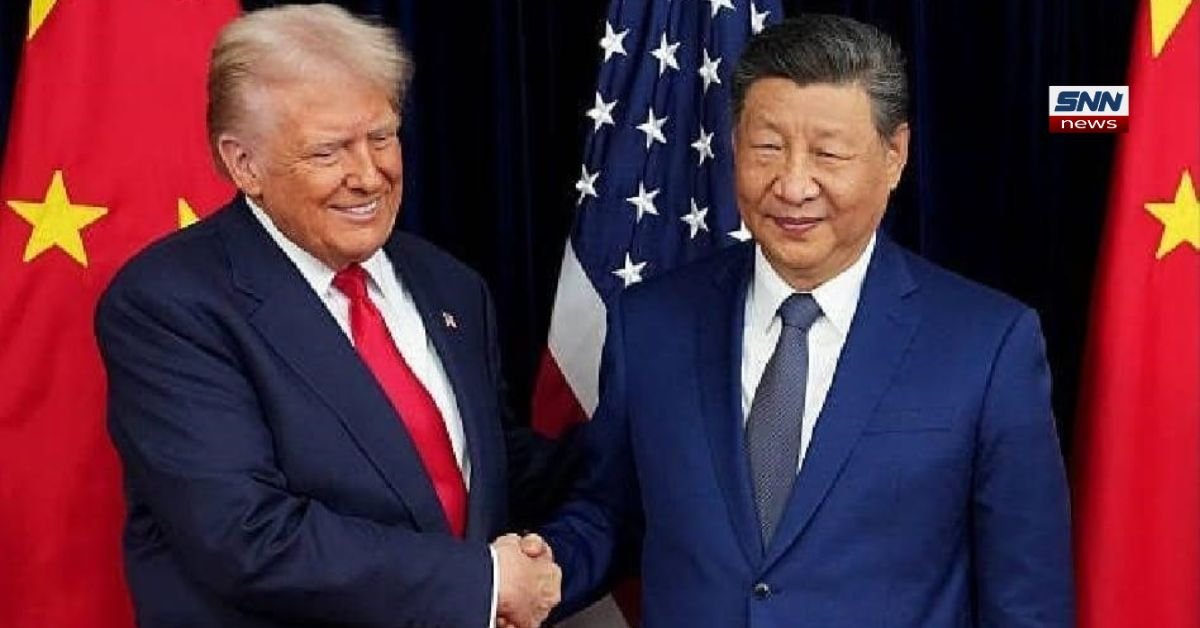
Former US President Donald Trump has claimed that Chinese President Xi Jinping assured him that China is not supplying weapons to Iran, following a direct exchange of letters between the two leaders.
Speaking in an interview with Fox Business, Trump said he had heard reports suggesting that China might be providing military equipment to Iran. In response, he said he personally contacted Xi Jinping to raise the issue and request clarification.
According to Trump, Xi Jinping responded in writing, stating that China is not involved in supplying weapons to Iran. The statement, if accurate, would touch on one of the most sensitive geopolitical concerns involving the United States, China, and the Middle East.
The comments have drawn attention because they relate to ongoing global tensions over Iran’s military capabilities, China’s foreign policy role, and US-China diplomatic relations.
What Trump Claimed About His Conversation With Xi Jinping
During the interview, Trump explained that he acted after hearing concerns about possible Chinese military support to Iran. He said he decided to raise the issue directly with China’s leadership.
Trump stated:
- He heard reports that China was providing weapons to Iran
- He wrote a letter to Xi Jinping asking for clarification
- Xi Jinping allegedly replied that China is not doing so
- Xi Jinping
He added that while dealing with China has “never been easy,” he maintains a positive personal relationship with Xi.
However, Trump did not provide the letter itself, and no official documentation has been made public by either side.
China’s Position and Strategic Relationship With Iran
China and Iran have maintained long-standing diplomatic and economic ties, especially in areas such as energy trade, infrastructure development, and regional cooperation.
Beijing is one of Iran’s key trading partners, particularly in oil imports. Both countries have also participated in strategic cooperation agreements in recent years.
However, China has consistently stated that it supports diplomatic solutions and opposes the spread of weapons in conflict regions. It has also called for stability in the Middle East, especially amid rising tensions involving Iran, Israel, and the United States.
Key areas of China-Iran cooperation include:
- Oil and energy trade agreements
- Infrastructure development projects
- Economic partnerships under long-term cooperation plans
- Diplomatic coordination in international forums
- Xi Jinping
Despite this, Western governments have frequently raised concerns about indirect support networks or dual-use technologies that could have military applications.
Why Iran Remains a Global Security Concern
Iran remains at the center of multiple geopolitical disputes involving nuclear development, regional influence, and military capability.
The United States and several allied countries have long accused Iran of expanding its missile program and supporting armed groups in the Middle East. Iran denies these allegations, saying its defense program is strictly for national security.
Any suggestion of foreign military supply to Iran, especially from a major global power like China, would significantly increase international tensions.
Key global concerns include:
- Iran’s nuclear program monitoring
- Regional conflicts involving proxy groups
- Missile development capabilities
- Sanctions and economic pressure from Western countries
- Security dynamics in the Gulf region
- Xi Jinping
US-China Relations Add Context to the Statement
The remarks also come against the backdrop of ongoing tensions between Washington and Beijing. Relations between the two powers have been strained over trade disputes, technology competition, military presence in the Asia-Pacific region, and diplomatic disagreements.
Any discussion involving Iran further complicates this relationship, as the Middle East remains a critical region for global security and energy stability.
Trump emphasized that despite difficulties in dealing with China, he believes personal communication between leaders remains important in preventing misunderstandings.
Diplomatic Communication Through Letters
Trump’s reference to exchanging letters highlights a traditional but still relevant form of communication between world leaders.
While modern diplomacy often relies on summits, phone calls, and multilateral meetings, written communication is still used for sensitive or formal messages.
If confirmed, this exchange would reflect:
- Direct leader-to-leader communication
- Attempted de-escalation of potential misinformation
- Diplomatic clarification outside public channels
- Xi Jinping
However, without official confirmation from Beijing, the content of such communication cannot be independently verified.
Reactions and Verification Challenges
As of now, there has been no public response from Chinese authorities confirming or denying Trump’s claim. This is not unusual in diplomatic matters, where private communications are rarely disclosed.
International analysts caution that statements made in media interviews may not always include full diplomatic context or verification.
Experts also note that:
- Governments rarely publish private correspondence between leaders
- Claims involving arms transfers are often highly sensitive
- Verification requires official statements or intelligence confirmation
- Xi Jinping
Because of this, the situation remains based on Trump’s account alone.
Global Impact of the Statement
Even without official confirmation, such statements can influence international discussions, especially around:
- US foreign policy toward China and Iran
- Middle East security dynamics
- Global arms control debates
- Market and political reactions to geopolitical risk
- Xi Jinping
Financial and diplomatic observers often watch these developments closely because tensions between major powers can have wider economic and security consequences.
Broader Geopolitical Background
The relationship between the United States, China, and Iran is part of a complex global system involving energy security, military alliances, and regional influence.
In recent years:
- The US has maintained sanctions on Iran
- China has expanded trade influence in the Middle East
- Iran has deepened regional partnerships outside Western alliances
- Global powers continue competing for strategic influence
Within this context, even unverified claims can become part of broader diplomatic narratives.
Conclusion
Donald Trump’s claim that Xi Jinping denied China is supplying weapons to Iran adds a new layer to already sensitive global relations. While the statement reflects an attempt at direct communication between two major world leaders, it remains unverified by official sources.
The issue highlights ongoing concerns about Middle East security, US-China diplomatic tensions, and the importance of communication in preventing international misunderstandings.
As global powers continue to navigate complex alliances and rivalries, such statements are likely to remain closely watched by governments, analysts, and international observers.
US China relations update, Trump foreign policy statements, Iran weapons concerns, Xi Jinping diplomatic communication, Middle East security news
About The Author