

By Hammad Kahlun
Scandinavian news Finland
German Space Ambition Advances as ESA Moon Mission Targets 2028
Germany is moving closer to making space history as it could become the first European country to send an astronaut to the Moon.
The announcement was made by Germany’s Minister for Research and Space, Dorothee Bär, highlighting progress achieved through negotiations with the European Space Agency (ESA).
If confirmed, this would mark a major milestone for Germany UK space cooperation within Europe’s broader scientific and technological ambitions.
The planned crewed lunar mission is currently expected no earlier than 2028.
The development places Germany ahead of other major European space players, including France and Italy, in securing a potential astronaut seat for the mission.
Germany Leads ESA Negotiations for Moon Mission Seat
According to official statements, Germany has made strong progress in securing astronaut participation through its role in ESA discussions.
The country reportedly outpaced France and Italy in negotiations related to crew assignments for upcoming lunar exploration programs.
While the final decision has not yet been confirmed, Germany’s position in the mission planning phase is now significantly strengthened.
This marks one of the most important advancements in European human spaceflight in recent years, especially as global space competition continues to grow between the United States, China, and other emerging space nations.
Who Could Become the First German on the Moon?
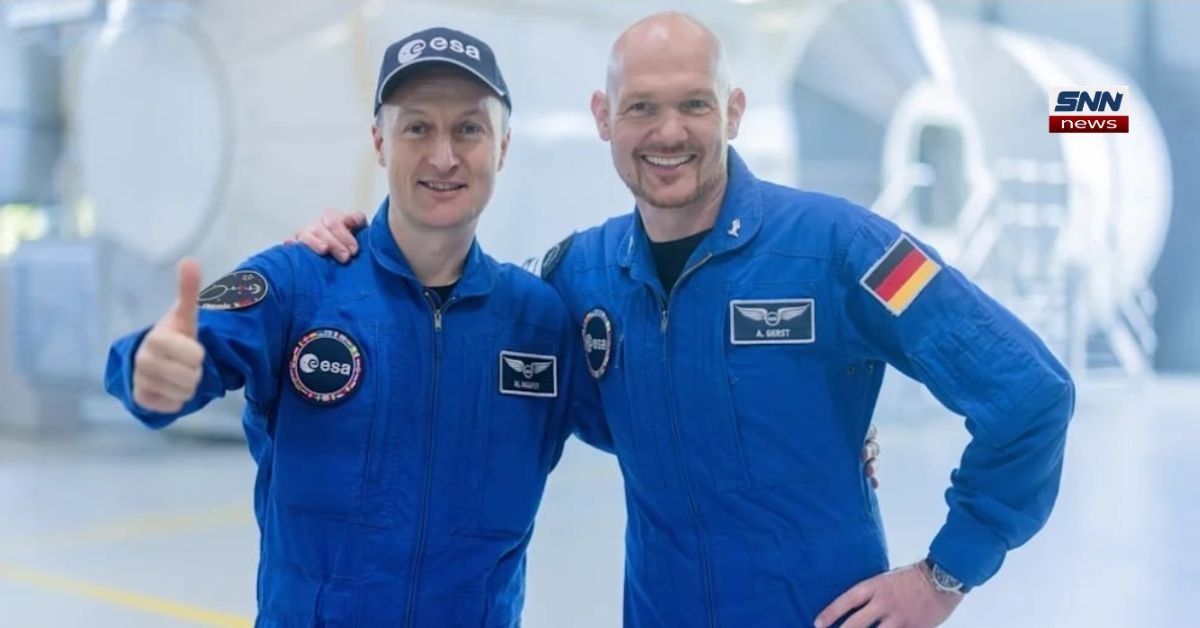
Although no astronaut has been officially selected, two experienced German astronauts are considered leading candidates for the mission:
Alexander Gerst
Alexander Gerst is a veteran astronaut known for multiple missions aboard the International Space Station (ISS). He has also served as commander of the ISS, making him one of Europe’s most experienced space travelers.
Matthias Maurer
Matthias Maurer is another highly trained ESA astronaut who has already completed a long-duration mission aboard the ISS, contributing to scientific experiments and European space research programs.
Both astronauts bring significant technical experience, making them strong candidates for a future lunar landing mission.
However, ESA has not officially confirmed which astronaut will be selected for the historic flight.
ESA Moon Mission Planned for 2028 or Later
The European Space Agency is currently working on long-term plans for human lunar exploration. The mission timeline suggests a possible launch no earlier than 2028, depending on technical readiness and international cooperation.
The program is expected to involve:
- Advanced spacecraft development
- Lunar landing system testing
- International astronaut training
- Deep space navigation systems
- Safety and survival experiments in lunar conditions
The mission is part of a broader global effort to return humans to the Moon for scientific research and future exploration bases.
Why This Mission Matters for Europe and Germany UK Space Strategy
The potential selection of a German astronaut reflects Europe’s growing focus on space independence and technological leadership.
For Germany UK and other European partners, space exploration is increasingly tied to science, defense technology, and innovation policy.
Key importance of the mission includes:
Strengthening European Space Presence
Europe aims to remain competitive in global space exploration alongside NASA and China’s space program.
Advancing Scientific Research
Lunar missions provide opportunities for studying:
- Moon geology
- Radiation effects on humans
- Long-term space habitation
- Resource utilization possibilities
Boosting Technology Development
Space programs often drive innovation in:
- Rocket engineering
- Robotics
- Communication systems
- Artificial intelligence applications
Enhancing International Cooperation
ESA works closely with agencies such as NASA, increasing Europe’s role in global space missions.
Background: Europe’s Human Spaceflight Program
The European Space Agency has long participated in international space missions but has not independently sent humans to the Moon. Instead, European astronauts have primarily served aboard the ISS in low Earth orbit.
Countries like Germany, France, Italy, and the United Kingdom play key roles in ESA funding and research contributions. Germany, in particular, is one of the largest contributors to European space programs.
The new lunar mission plan signals a shift from orbital missions to deep space exploration.
Global Space Race Intensifies
The announcement comes at a time when space exploration is becoming increasingly competitive:
- The United States is preparing Artemis missions for lunar return
- China is expanding its lunar and Mars exploration programs
- Private companies are developing reusable spacecraft technologies
In this context, Europe’s participation in lunar exploration is seen as essential for maintaining global scientific influence.
Public and Scientific Impact
If successful, a German astronaut landing on the Moon would represent a historic achievement for Europe. It would also inspire new generations to pursue careers in science, engineering, and space technology.
Potential impacts include:
- Increased funding for STEM education
- Expansion of ESA research programs
- Stronger public interest in space exploration
- New industrial partnerships in aerospace technology
What Happens Next
In the coming years, ESA is expected to finalize:
- Astronaut selection for the mission
- Technical design of lunar spacecraft
- Training programs for deep space travel
- Collaboration agreements with international partners
While no final crew decision has been made, Germany’s position in negotiations suggests it is now a leading contender for representation in the historic mission.
The final announcement will be closely watched across Europe, especially by Germany UK space communities and global aerospace experts.
Germany Moon mission ESA 2028 European space exploration astronaut selection Germany UK space program update
About The Author