
By Hammad Kahlun
Scandinavian news Finland
When a U.S. fighter Hidden jet crew ejects over hostile territory, survival depends not only on training but also on advanced military technology.
In a recent scenario involving a U.S. F-15E crew ejecting over Iran, the pilots were not isolated after landing.
Instead, they relied on a secure communication system that allowed them to remain hidden while staying connected to rescue teams.
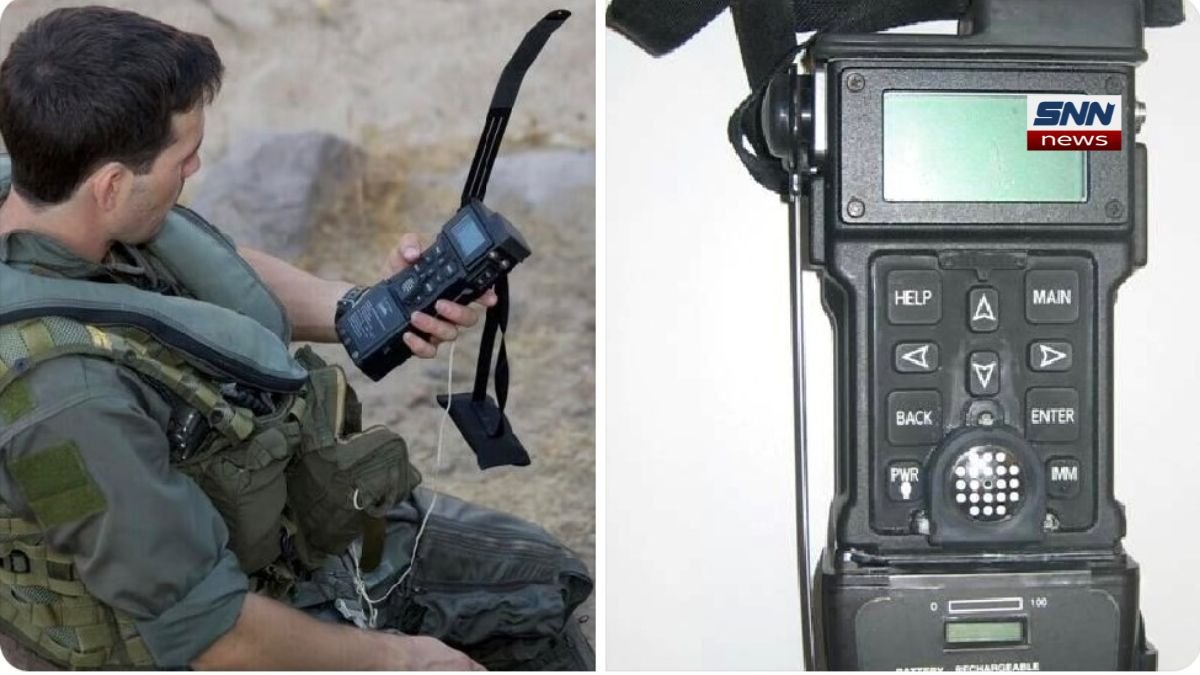
This system, known as the Combat Survivor Evader Locator (CSEL), plays a critical role in modern combat search and rescue (CSAR) missions.
Designed to operate silently and securely, it enables downed pilots to transmit their location and status without exposing themselves to enemy detection.
What Is the CSEL System?
Built to withstand extreme conditions, it is typically attached to a pilot’s survival vest and activates automatically after ejection.
Unlike traditional communication tools, CSEL does not rely on continuous voice transmission. Instead, it uses encrypted digital signals to share essential information with rescue teams.
Key Features of CSEL:
- Encrypted Communication: Sends secure, coded messages that cannot be easily intercepted
- Burst Transmission: Transmits short data bursts instead of continuous signals
- Frequency-Hopping Technology: Changes frequencies rapidly to avoid detection
- Satellite Connectivity: Links directly to military satellites for global coverage
- Low Probability of Intercept: Appears as background noise to enemy systems
- Hidden
These features make CSEL a vital tool for pilots operating in high-risk environments.
How the System Works in Real Situations
When a pilot ejects from an aircraft, time becomes critical. The immediate priority is to avoid capture while signaling for rescue.
CSEL is designed to activate quickly and begin transmitting data without requiring complex input.
Instead of speaking over a radio—which can be intercepted and traced—the pilot uses the device to send pre-set messages such as:
- Injured
- Safe
- Enemy nearby
- Require immediate extraction
- Hidden
These messages are sent in encrypted bursts to military satellites, which then relay the information to command centers and rescue teams.
Silent but Connected
One of the most important advantages of CSEL is its ability to keep the pilot silent. Voice communication can reveal a pilot’s position through signal triangulation.
In contrast, CSEL’s burst transmissions are brief and difficult to detect.
This allows the pilot to remain concealed, even in areas heavily monitored by enemy forces.
Role of Satellites in Rescue Operations
Once the device transmits data, military satellites receive and forward the information in real time.
This enables rescue coordination teams to:
- Track the pilot’s exact location
- Monitor changes in status
- Plan safe extraction routes
- Avoid enemy-controlled zones
- Hidden
The use of satellites ensures that even in remote or hostile regions, the pilot remains connected to a global rescue network.
Transition to Extraction Phase
As rescue teams move closer to the pilot’s location, the communication strategy changes. At this stage, precision becomes more important than concealment.
CSEL can switch to a different mode that allows rescue aircraft—such as helicopters or special operations planes—to locate the pilot with high accuracy. This may involve:
- Directional signals
- Homing beacons
- Secure identification protocols
- Hidden
This final phase ensures that the rescue operation is completed quickly and safely.
Why Traditional Radios Are No Longer Enough
In earlier conflicts, downed pilots relied heavily on voice radios. While effective at the time, these systems had significant drawbacks:
- Easy to intercept by enemy forces
- Signals could be traced and triangulated
- Continuous transmission increased exposure risk
- Hidden
Modern warfare requires more secure and discreet communication methods. CSEL addresses these challenges by replacing voice communication with encrypted digital signals.
Broader Impact on Military Operations
The introduction of systems like CSEL has significantly improved survival rates in combat situations. It reflects a broader shift toward technology-driven warfare, where information security is as important as physical protection.
Benefits for Military Strategy:
- Enhanced pilot survivability
- Faster and more efficient rescue missions
- Reduced risk of enemy interception
- Improved coordination across multiple units
These advantages make CSEL an essential component of modern military operations.
Context: Combat Search and Rescue (CSAR)
They require coordination between air, ground, and intelligence units, often under extreme conditions.
The success of such missions depends on accurate, real-time information. Systems like CSEL provide that information while minimizing risk to the individual on the ground.
In high-threat environments, even a small communication error can lead to detection. This is why secure, low-visibility systems are now standard in advanced air forces.
Public and Strategic Relevance
While the details of military technology are often classified, the existence of systems like CSEL highlights the level of preparation involved in modern defense operations.
For the public, it underscores the importance of:
- Investing in advanced defense technology
- Protecting military personnel in hostile zones
- Maintaining strategic advantages in electronic warfare
- Hidden
It also reflects ongoing efforts to reduce casualties and improve mission outcomes.
Conclusion
The experience of downed U.S. pilots over hostile territory demonstrates how modern technology has transformed survival and rescue operations.
The Combat Survivor Evader Locator system allows pilots to remain hidden while staying connected to a secure rescue network.
By combining encrypted communication, satellite connectivity, and low-detection signals, CSEL ensures that even in the most dangerous, pilots are not alone.
Instead, they are digitally linked to a coordinated system designed to bring them home safely.
Learn how military technology keeps pilots hidden while ensuring they stay connected to rescue operations.
About The Author