
Hammad Kahlun
Scandinavian news Finland
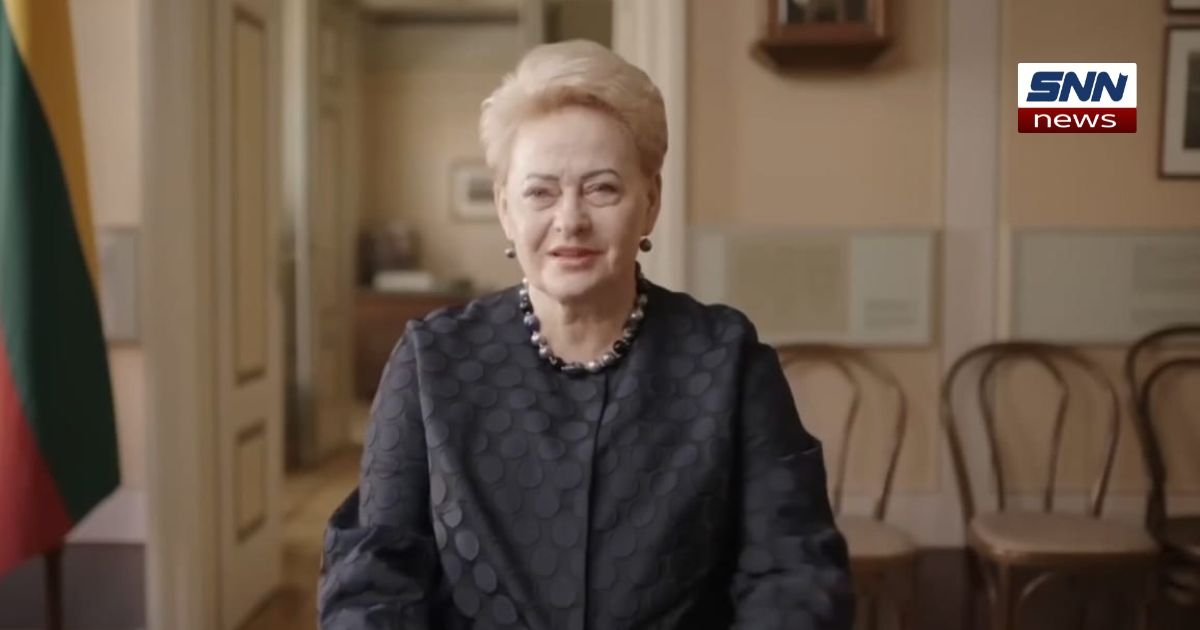
Lithuania’s push for energy independence traces back to a single confrontation in Helsinki, according to former President Dalia Grybauskaitė.
In a recent interview, she said a 2010 meeting with Russian President Vladimir Putin convinced her the country had to break free of Russian gas a decision that reshaped energy supply across the Baltic region.
The Helsinki Meeting
The meeting was officially about natural gas pricing. At the time, Lithuania was paying an estimated 30–40% more for Russian gas than Germany, despite sitting roughly 2,000 kilometers closer to the source.
Grybauskaitė described the encounter as one-sided. She said Putin presented her with a list of expectations, and it became clear to her the meeting was really about submission, not negotiation.
She characterized Moscow’s posture toward neighboring states in stark terms: countries either aligned with Russia’s demands or were treated as adversaries, with little room in between.
Independent reporting on Grybauskaitė’s tenure has previously described the same Helsinki meeting as tense, noting she later told aides Putin issued demands and used harsh language during the exchange details that are consistent with, though not identical to, her more recent account.
Building the Independence Terminal
Rather than accommodate Moscow, Lithuania fast-tracked plans for a liquefied natural gas (LNG) import terminal at the port of Klaipėda, becoming one of the first countries in the region to pursue the approach.
The floating storage and regasification unit, called Independence, went into service in late 2014.
According to public records, the project received approval back in 2010, and a supply deal between Lithuania’s Litgas and Norway’s Statoil was finalized in 2014 a timeline consistent with Grybauskaitė’s version of events.
Grybauskaitė said the terminal was deliberately built larger than Lithuania’s own needs, so it could also support neighboring Latvia and Estonia.
She credited the facility with ending Gazprom’s monopoly over Lithuanian gas supply.
Key Facts
- 2010: Grybauskaitė met Putin in Helsinki over Russian gas pricing.
- Lithuania was reportedly paying 30–40% more for gas than Germany at the time.
- The Klaipėda LNG terminal, Independence, became operational in late 2014.
- The terminal was built with capacity beyond Lithuania’s own needs to help Latvia and Estonia.
- Lithuania now supports U.S. LNG flows to markets including Finland and Ukraine.
FAQs:
What triggered Lithuania’s push for energy independence?
Grybauskaitė says a 2010 meeting with Putin in Helsinki, over gas pricing, convinced her Lithuania needed to end its reliance on Russian supply.
What is the Klaipėda LNG terminal?
It’s a floating LNG import facility named Independence, operational since late 2014, that lets Lithuania import gas by ship rather than relying solely on Russian pipelines.
Did the terminal help other Baltic states?
Grybauskaitė says it was built with extra capacity specifically to support Latvia and Estonia.
Is Lithuania still connected to U.S. LNG supply chains?
Yes — Lithuania now serves as a transit point for U.S. LNG reaching Baltic and Eastern European markets.
Has this account of the Helsinki meeting been reported before?
Yes, earlier reporting on Grybauskaitė’s presidency has referenced the same 2010 Helsinki meeting with Putin, describing it as tense, though specific quotes vary by source and date.
A Decade of Lithuania Energy Independence
Marking roughly ten years since the terminal opened, Grybauskaitė called it Lithuania’s most important strategic move, citing both economic and political benefits.
She said Russia worked hard, including through pressure on some Lithuanian politicians, to try to derail the project, though she did not name individuals.
Her broader point, she said, is that a state without control over its energy supply cannot claim real independence.
Today, Lithuania functions as an entry point for U.S. LNG shipments reaching markets from Finland to Ukraine.
About The Author