
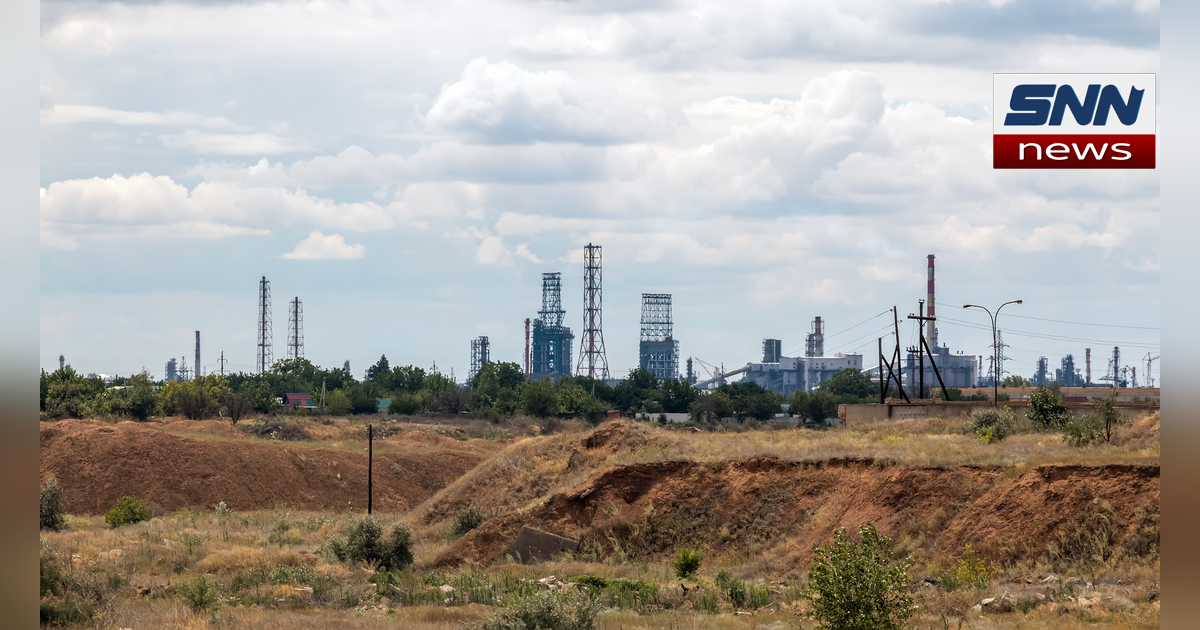
Ukraine’s General Staff said its forces struck the Volgograd refinery, one of Russia’s largest oil processing plants, starting a fire, while Russia’s defence ministry claimed its air defences destroyed 1,198 Ukrainian fixed-wing drones between 8pm on 12 November and 8am on 13 November — one of the largest overnight attacks reported on Russian territory since the full-scale invasion.
Ukraine has confirmed the strike on the refinery; the Russian interception figure has not been independently verified. Moscow said the drones were downed over 16 Russian regions, the Moscow region, occupied Crimea and the Black Sea.
Volgograd refinery: what we know
The story has drawn public discussion, and this report sets out what Volgograd refinery means in practice and what is confirmed. The details rest on official and attributable sources, and anything unconfirmed is marked as such.
What each side says
Kyiv’s account focuses on the target: an oil facility that feeds Russia’s fuel supply, hit in a campaign that Ukrainian officials describe as aimed at the energy infrastructure sustaining the war effort. Ukrainian officials have said the site had been struck before.
Moscow’s account focuses on the scale of the attack and on its air defences. The figure — 1,198 drones in twelve hours — would make it one of the biggest single waves of the war, and it is consistent with Ukraine’s stated strategy of saturating Russian air defences with cheap long-range drones.
Neither claim can be reconciled from open sources: the refinery strike is confirmed by the attacking side, while the interception total is claimed by the defending side.
The wider diplomatic picture
The strike wave comes as US-led talks on ending the war widen beyond Ukraine. Discussions have moved on to European security arrangements — an agenda that now touches countries that are not parties to the fighting, including questions about NATO membership and allied deployments.
That expansion is the reason this story is being followed closely in Helsinki: Russia has reportedly raised demands affecting Finland and the Baltic states, and Finland’s government has rejected any negotiation over its alliance arrangements.
Why the oil strikes matter
Ukraine’s long-range drone campaign targets refineries, depots and terminals. Each successful strike reduces refinery throughput, which shows up in domestic fuel shortages and in reduced export revenue — a pressure point that works slowly rather than dramatically.
At the same time, the war’s energy dimension has global effects: with the Strait of Hormuz disrupted and Brent trading near 96 dollars a barrel, any additional hit to Russian refining or exports feeds into the same tight market.
Read also: Russia reportedly demands Finland leave NATO.
What has not been confirmed
The number of drones launched and downed, the damage inside the Volgograd refinery, whether production has been halted, and casualty figures have not been independently confirmed. Neither side’s figures have been verified by neutral monitors.
Photo: Mike1979 Russia / Wikimedia Commons, CC BY-SA 3.0.
Key facts
- Ukraine: General Staff says the Volgograd refinery was struck and caught fire
- Russia: defence ministry claims 1,198 drones downed overnight, over 16 regions plus Moscow region, Crimea and the Black Sea
- Scale: one of the largest reported overnight drone attacks of the war
- Talks: US-led negotiations have widened to European security arrangements
- Market context: Brent near 96 dollars a barrel amid Hormuz disruption
- Unconfirmed: interception totals, refinery damage, production status, casualties
Frequently asked questions
What did Ukraine hit?
Ukraine’s General Staff said it struck the Volgograd refinery, one of Russia’s largest, and that a fire started.
How many drones were involved?
Russia’s defence ministry claims it downed 1,198 Ukrainian drones between 8pm on 12 November and 8am on 13 November. That figure has not been independently verified.
Why does this matter for Europe?
Because the talks that followed now extend to European security arrangements, including questions about NATO membership and allied deployments in countries such as Finland and the Baltics.
What is the effect on oil markets?
Strikes on Russian refining reduce throughput and export capacity, adding pressure to a market already tight because of disruption in the Strait of Hormuz, with Brent near 96 dollars.
Have the claims been verified?
No. The refinery strike is confirmed by Ukraine; the interception figures come from Russia. Neither has been independently verified.
About The Author