
Akkuyu nuclear power plant —
By Riffat Kausar
SNN News Finland
The Akkuyu nuclear power plant, Turkey’s largest single energy investment, has entered its most sensitive phase yet, with the first of four Russian-built reactors moving through pre-start-up tests and aiming to supply electricity to the grid by the end of 2026.
The plant on Turkey’s Mediterranean coast is being built and will be operated by Rosatom, Russia’s state nuclear corporation, under a build-own-operate model set out in an intergovernmental agreement signed by Ankara and Moscow in 2010. That agreement fixed the ownership structure, the financing arrangements and the terms for selling the electricity the plant produces.
Four reactors, one tenth of Turkey’s electricity
Akkuyu is designed around four VVER-1200 pressurised water reactors, each with a capacity of about 1.2 gigawatts, for a combined total of roughly 4,800 megawatts. When all four units are running, the plant is expected to meet about ten per cent of Turkey’s electricity demand a substantial share for a country that has depended heavily on imported gas and coal.
Under the 2010 agreement, Turkey has the right to acquire up to 49 per cent of the project, but Ankara has not exercised that option. The result is that Turkey’s first nuclear power station is being developed without Turkish state ownership in the project company, an unusual arrangement among countries building their first reactors.
The project has been estimated at around 20 billion US dollars. Turkey’s energy ministry has said Russia provided additional financing of roughly nine billion dollars to keep construction moving, reflecting the scale of the capital involved and the pressure to bring the first unit online.
Where the construction stands
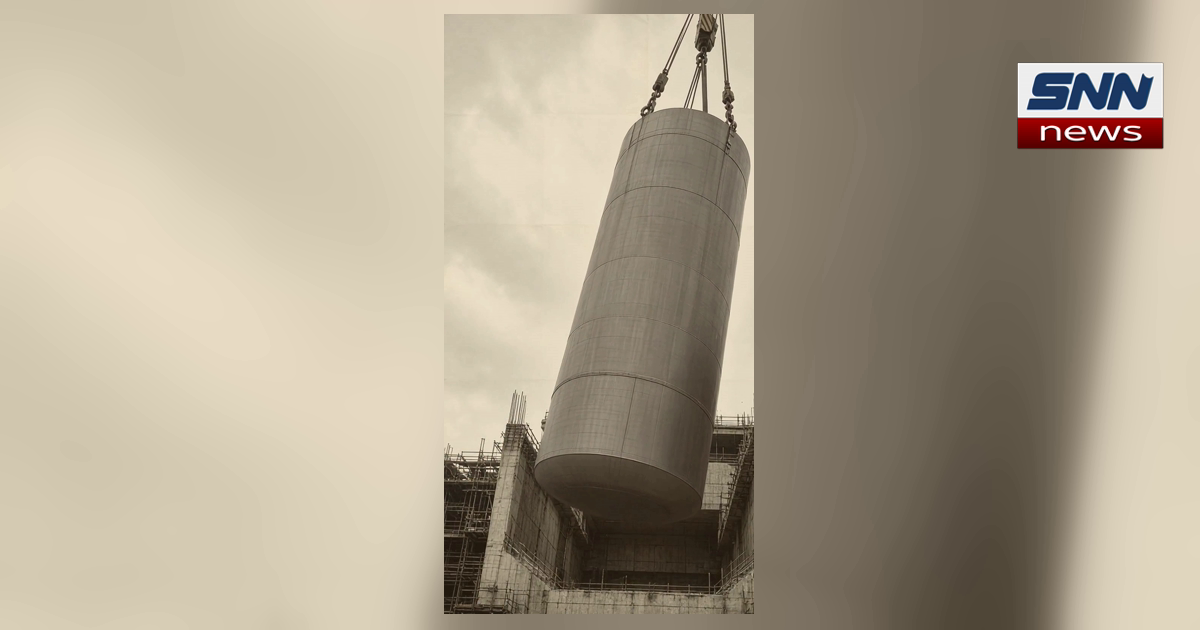
Building work began in April 2018 in Mersin province. By 2026, Rosatom was reporting that unit one had reached the commissioning stage: fuel loading and start-up were scheduled for autumn 2026, cold hydraulic tests were completed in October, and hot functional tests were next in the sequence before nuclear fuel is loaded.
Those tests are the point at which a reactor is checked as a complete system — pumps, pressure vessels, cooling circuits and safety systems — before it is allowed to go critical. Failure at this stage is rare but consequential, and the schedule has slipped repeatedly since the original target dates.
Akkuyu nuclear power plant: key facts
Key facts
- Akkuyu sits in Mersin province on Turkey’s Mediterranean coast; construction began in April 2018.
- Four VVER-1200 reactors are planned, with a combined capacity of about 4,800 megawatts.
- Full operation is expected to cover about ten per cent of Turkey’s electricity needs.
- The 2010 Turkey-Russia agreement set ownership, financing and electricity sales terms.
- Rosatom controls the project under a build-own-operate model; Turkey has not taken up its option for up to 49 per cent.
- Unit one aims to supply the grid by the end of 2026, after fuel loading and start-up tests.
FAQs:
Who owns the Akkuyu nuclear power plant?
The project company is controlled by Rosatom, Russia’s state nuclear corporation, under a build-own-operate arrangement. Turkey holds a right to acquire up to 49 per cent but has not exercised it.
When will Akkuyu start producing electricity?
The target is for the first unit to reach the grid by the end of 2026. Cold hydraulic tests were completed in October 2026 and hot functional testing came next, ahead of fuel loading.
How much of Turkey’s electricity will it supply?
Once all four reactors operate, the plant is expected to cover about a tenth of national electricity demand.
Why does the financing structure attract attention?
Because a foreign state-owned company finances, owns and operates a strategic power asset, which is unusual for a country’s first nuclear plant and creates long-term dependency questions.
What happened to the similar project planned in Finland?
Rosatom’s proposed plant at Hanhikivi in Pyhäjoki was cancelled in 2022, which left Akkuyu as the main working example of the model.
Why the model matters beyond Turkey
Akkuyu is one of the first foreign projects Rosatom has built using the build-own-operate structure, in which the Russian company finances, owns and runs the plant while the host country buys the output. That model was also proposed for Finland, at Hanhikivi in Pyhäjoki, before the project was cancelled in 2022.
The cancellation in Finland means Akkuyu is now the clearest live example of whether a host country can depend on a foreign state-owned operator for baseload electricity.
For Turkey the trade-off is straightforward: the plant reduces exposure to imported fuel prices and adds firm, low-carbon capacity, while tying a strategic asset to a supplier whose relationship with Ankara has been volatile. Other European states have pursued the same goal of cutting dependence on imported power by very different means, as Lithuania’s energy break with Moscow showed.
Turkey has also signalled that it wants a second nuclear plant and further reactor deals, and has been reshaping its nuclear policy as it looks for partners beyond Russia, alongside wider attempts at strategic diversification such as its push for the Middle Corridor rail link with Azerbaijan. Any expansion would still depend on the first unit at Akkuyu proving it can operate reliably.
Turkey’s Akkuyu Nuclear Power Plant is moving closer to generating its first electricity, marking a major milestone in the country’s efforts to expand nuclear energy capacity and strengthen its energy security.
About The Author