
Reza Pahlavi Freedom Prize —
By Shumaila Aslam
Bureau Chief Pakistan
SNN News Finland
Reza Pahlavi, the exiled son of Iran’s last shah, accepted the Friedrich Naumann Foundation’s 2026 Freedom Prize in Frankfurt on Saturday, in a ceremony that for the first time in the award’s two-decade history honoured a nation rather than an individual.
The ceremony
The prize was presented at St. Paul’s Church, the Frankfurt building where Germany’s first national assembly met in 1848 — a venue the foundation uses for the award, and one that carries its own meaning for a ceremony about democratic aspiration. Pahlavi received the prize in trust on behalf of the Iranian people, according to the foundation’s citation, which recognised Iranians’ “determination” in their fight for political change.
The Friedrich Naumann Foundation for Freedom, founded in 1958 and associated with Germany’s liberal political tradition, has given the prize for around two decades. Its decision to direct the 2026 award at a population rather than a person is unusual in the history of political prizes, and it places the foundation’s name behind the protest movement that has convulsed Iran.
His message ahead of the event was direct: “Our fight will go on until victory,” he said. In previous statements he has framed his role as representative rather than claimant — a position that matters in a diaspora where support for a return to monarchy is far from universal.
The crowds in Frankfurt
Iranians travelled to Frankfurt from across Europe for the ceremony, with supporters filling the area around the church. Reports put the number at tens of thousands; organisers’ and supporters’ figures for such gatherings are traditionally generous, and SNN Finland has not independently verified the crowd size.
The gathering follows a year in which Iran’s internal crisis and the war with the United States have pushed the country’s politics back into the centre of international attention. Air strikes on Iranian territory, a naval blockade of Iranian ports and negotiations over a settlement have all unfolded in the months since the latest wave of protests — a sequence that has given the diaspora’s politics new weight in European capitals.
What it means politically
Prizes do not change governments. But they do two things that matter. They provide a platform: a speech at a Frankfurt church, distributed by a German foundation with offices across the world, reaches audiences that Iranian state media cannot control. And they confer legitimacy on a particular set of representatives — a question that is contested inside the Iranian opposition, where republicans, monarchists and civil-society groups disagree about who speaks for the movement.
The Naumann Foundation’s choice does not resolve that argument, but it does take a side in it, by naming Pahlavi as the trustee of an award given to the Iranian people. For Tehran, which treats the exiled prince as a figurehead of foreign-backed opposition, the ceremony is another entry in the file it has built against the diaspora. For European governments balancing sanctions, energy interests and a war next door, the event is one more signal that the Iranian question is now domestic politics in Europe, not only foreign policy.
What is not established
The size of the crowd in Frankfurt has not been independently confirmed, and figures circulating come from supporters and from reporting on the event. The foundation’s citation and its reasoning have been published by the foundation itself. No official Iranian reaction to the ceremony had been reported at the time of writing, and SNN Finland has not verified claims about attendance from inside Iran or about any coordination between organisers in different countries.
Reza pahlavi freedom prize: key facts
Key facts
- Reza Pahlavi Freedom Prize: what is confirmed so far, and what remains open
- What: Reza Pahlavi accepted the Friedrich Naumann Foundation’s 2026 Freedom Prize in Frankfurt on Saturday, 7 November 2026
- Where: St. Paul’s Church (Paulskirche), the building where Germany’s 1848 national assembly met
- Why it is unusual: for the first time in the prize’s two-decade history it honoured a nation — the people of Iran — rather than an individual
- How it was accepted: Pahlavi took the award “in trust” on behalf of the Iranian people, according to the foundation
- His message: “Our fight will go on until victory,” he said ahead of the ceremony
- The gathering: Iranians travelled to Frankfurt from across Europe for the event; crowd estimates in the tens of thousands come from supporters and reporting and have not been independently confirmed
- The foundation: the Friedrich Naumann Foundation for Freedom, founded in 1958, is associated with Germany’s liberal political tradition
FAQs:
Who is Reza Pahlavi?
The exiled son of Iran’s last shah and the most prominent monarchist figure in the Iranian diaspora. He presents himself as a representative of the opposition rather than as a claimant to a restored throne.
What is the Freedom Prize?
An award given by the Friedrich Naumann Foundation for Freedom, a German foundation linked to liberal politics, to figures and organisations it associates with the defence of freedom.
Why did the prize go to a nation?
The foundation directed the 2026 award at the Iranian people rather than an individual — the first time in about two decades of the prize — and asked Pahlavi to accept it in trust on their behalf.
Was there any reaction from Tehran?
No official Iranian reaction to the Frankfurt ceremony had been reported at the time of writing.
Does the diaspora support Pahlavi?
Part of it does, strongly. But the opposition includes republicans and civil-society groups who reject a return to monarchy, and the question of who represents the movement remains contested.
Why it matters
Iran’s opposition has spent four decades divided, exiled and watched by security services. This week it had a stage, a German institution’s endorsement and tens of thousands of people on the streets of a European financial capital.
Whether that translates into political effect inside Iran is a different question, and one that the people who filled the square outside St. Paul’s Church cannot answer from Frankfurt.
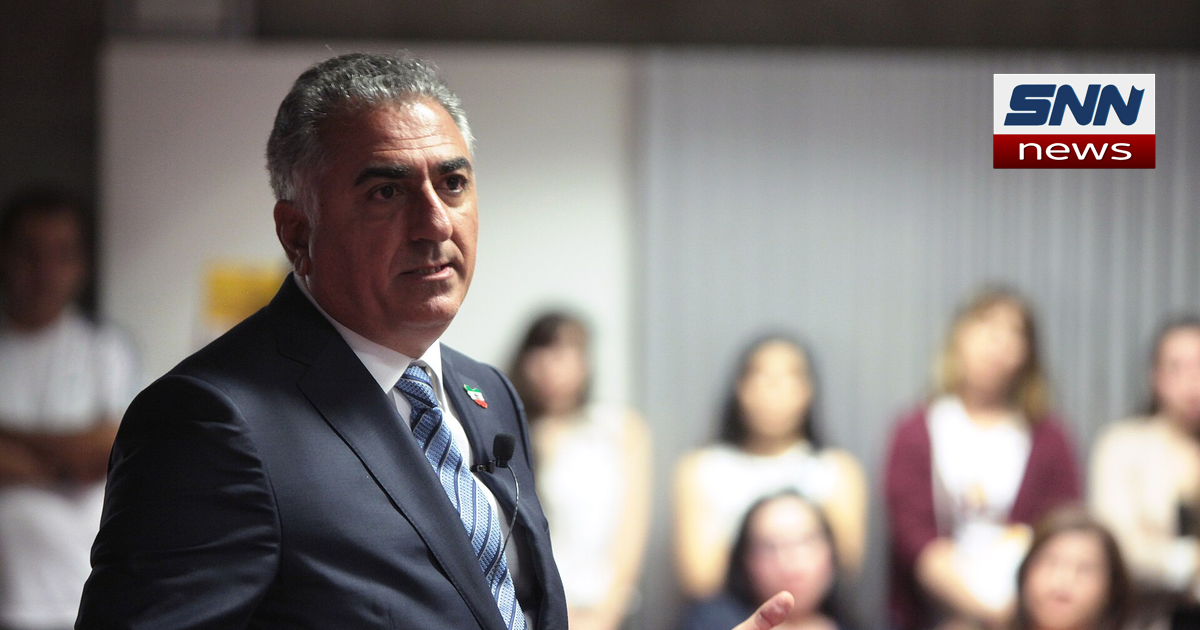
Photo: Gage Skidmore / Wikimedia Commons, CC BY-SA 2.0. Graphic: SNN News Finland. Verified by Scandinavian News Agency Finland.
SNN Finland has covered the war and its diplomacy in detail, including this report and this one.
Frequently asked questions
Who is Reza Pahlavi?
The exiled son of Iran’s last shah and the most prominent monarchist figure in the Iranian diaspora. He presents himself as a representative of the opposition rather than as a claimant to a restored throne.
What is the Freedom Prize?
An award given by the Friedrich Naumann Foundation for Freedom, a German foundation linked to liberal politics, to figures and organisations it associates with the defence of freedom.
Why did the prize go to a nation?
The foundation directed the 2026 award at the Iranian people rather than an individual — the first time in about two decades of the prize — and asked Pahlavi to accept it in trust on their behalf.
Was there any reaction from Tehran?
No official Iranian reaction to the Frankfurt ceremony had been reported at the time of writing.
Does the diaspora support Pahlavi?
Part of it does, strongly. But the opposition includes republicans and civil-society groups who reject a return to monarchy, and the question of who represents the movement remains contested.
About The Author