
Marwan Barghouti —
By Muhammad Zia Mohiuddin
SNN News
This is an analysis piece. The assessments below are the author’s; the events and statements it rests on are attributed to the parties involved.
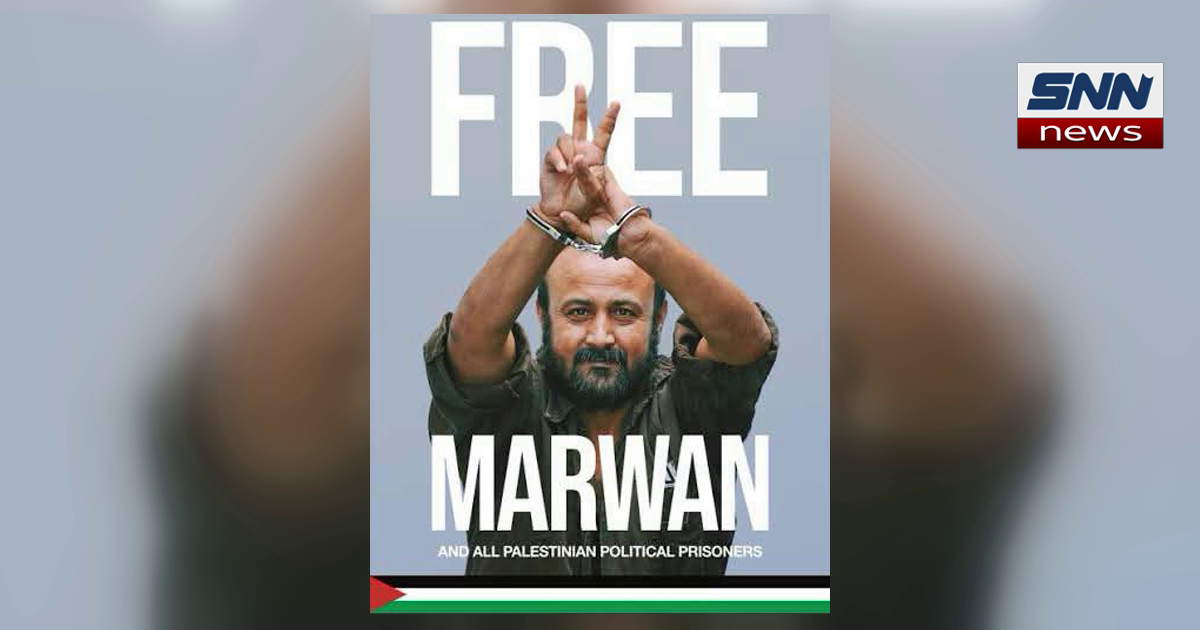
The question of Marwan Barghouti’s release is bigger than one prisoner; it reflects the future of Palestinian political leadership. For more than two decades, Barghouti has remained behind Israeli prison walls, yet his name continues to shape Palestinian politics and international debate in ways that few free politicians manage.
Barghouti was arrested by Israel in 2002 during the Second Intifada, at a time when suicide bombings and shooting attacks had killed hundreds of Israelis and Israel’s military response had killed far more Palestinians. Israeli authorities stated that he directed deadly attacks.
In 2004 he was convicted of involvement in attacks that killed five people and sentenced to five life sentences plus 40 years. He refused to defend himself in the trial, and he has remained in custody since, held in maximum security facilities. Israel’s position is that his convictions justify his imprisonment, and that a prisoner serving five life sentences is not a political bargaining chip.
Marwan barghouti
Why his name keeps returning
Supporters present Barghouti as a potential unifying figure. He was elected to the Palestinian Legislative Council in 1996 and built relationships with Israeli counterparts in the late 1990s, before the second intifada closed that space.
He comes from Fatah, the movement that dominates the Palestinian Authority, but polls have long suggested he appeals beyond factional lines in a way that the current leadership, unelected since the 2006 legislative vote, does not.
His family launched an international campaign for his release in December 2025, saying they feared he could die in prison. In 2026 more than twenty actors, including Benedict Cumberbatch, Mark Ruffalo, Cate Blanchett, Tilda Swinton and Ian McKellen, signed an appeal for his release.
In July 2026, Arabic-language reports said Barghouti had told his lawyer he intends to run in a Palestinian presidential election from prison and would not withdraw if a vote were held. He is also due to publish a collection of prison writings, with an introduction by his wife, Fadwa Barghouti, who has led much of the campaign work.
Those claims about mistreatment are serious. The Free Marwan campaign says he has been assaulted in prison, and his family has said he was left bleeding after being shot in the leg by a guard and denied medical treatment.
Palestinian official bodies have condemned what they called continuing attacks on him, and rights campaigners have pressed for the release of Palestinian detainees. SNN Finland has not been able to independently verify those accounts, and the Israeli prison service has not confirmed them publicly; they are allegations that rest on the campaign, his family and released prisoners. That distinction matters: a claim of abuse is not the same as a documented finding, and an untested claim in a case this political should be handled with care.
The real argument underneath
Barghouti’s value to the debate is that he forces a question most diplomatic statements avoid: who speaks for Palestinians, and how are they chosen? The Palestinian Authority has not held a parliamentary election since 2006 or a presidential vote since 2005. Any release of Barghouti therefore raises an immediate domestic question whether it opens space for a competitive politics that has been frozen for two decades.
Israel’s side of that calculation has been consistent for years: releasing a man convicted of directing attacks would be read as rewarding violence and would create a rallying figure for the same factions Israel has fought. Critics of long-term detention argue that indefinite imprisonment without a political horizon strengthens the argument that armed “resistance” is the only available channel.
What would actually change
If Barghouti were released, he would return to a Palestinian scene that has changed around him: a weakened PLO, a divided Fatah, displaced populations and a fragmented Gaza, where violence has continued four Palestinians and two Israelis were killed in Nablus during a raid in July 2026. Familiarity with Israeli politics, which once made him useful, may count for less in a region that has moved towards new alignments between Gulf states, Iran, Türkiye and Pakistan, and where gestures such as the arrival of a 500-strong solidarity convoy in Türkiye attract more attention than political programmes.
The growing international campaign for his release has brought renewed attention to Palestinian political representation and the search for a lasting peace. Yet the campaign has also exposed a limit: sympathy from abroad, including from celebrities, does not produce a prisoner’s release. Only a political decision in Israel does.
The real question is not simply who walks out of prison, but whether Palestinians will have a meaningful voice in deciding their political future. Peace cannot be built through diplomatic statements alone; it requires political inclusion, justice and recognition of human dignity.
As long as an unelected leadership on one side and a permanent detention regime on the other stand in for a political process, the argument over one man’s freedom will keep returning because it is really an argument about who gets to decide what Palestine becomes.
Marwan Barghouti remains a significant figure in Palestinian politics, with his imprisonment, political influence and role in discussions about Palestinian leadership continuing to shape debates over freedom, representation and the future of Palestine.
- Marwan Barghouti: what is confirmed so far, and what remains open
About The Author