
US strike Gulf of Oman ship —
By Abida Kahlun
Bureau Chief Helsinki
SNN News Finland
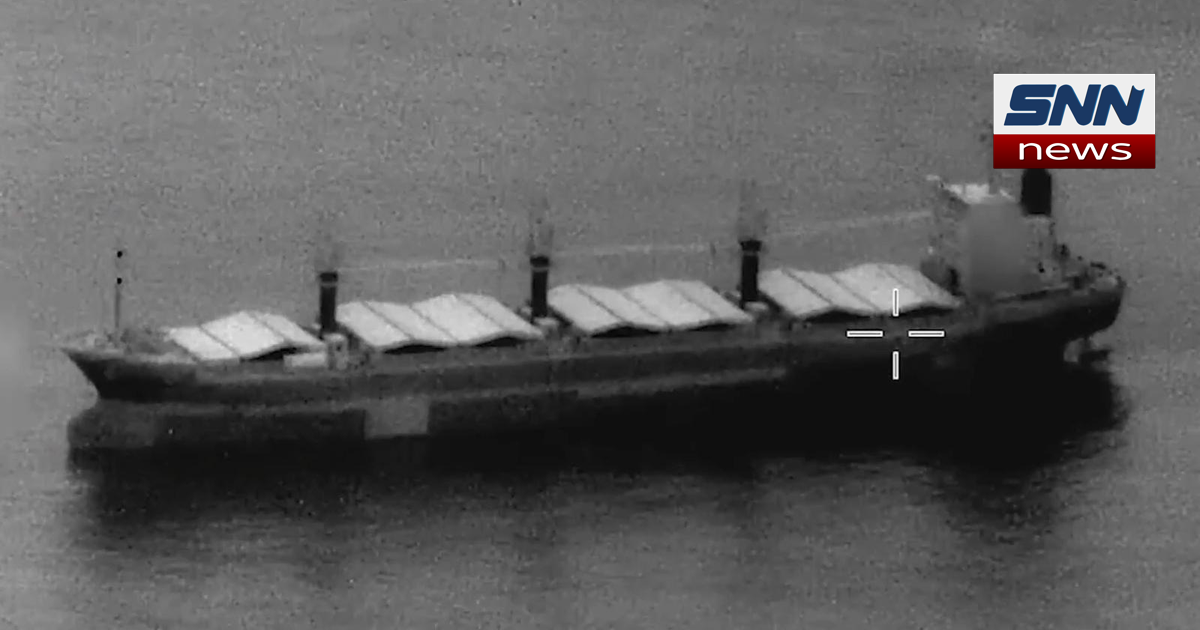
The United States has disabled a commercial cargo ship in the Gulf of Oman, saying the vessel ignored repeated warnings and tried several times to breach the naval blockade the US has imposed on Iran the first time the blockade has been enforced with munitions against a ship flying a third country’s flag.
What US Central Command says
US Central Command said late on Saturday that it had disabled the M/V Huda, a St Kitts and Nevis-flagged vessel, after its civilian crew repeatedly ignored warnings and attempted to violate the blockade.
According to the command, a US military aircraft fired precision munitions at the stern of the ship, disabling it, and the crew had been directed to leave the areas of the vessel that were targeted before the strike. CENTCOM said the ship had departed a port in Iran and then attempted to leave regional waters.
The command’s statement is the primary account of what happened, and it is a claim by one party to the confrontation.
The strike itself, however, was confirmed quickly by maritime authorities: the UK’s maritime security reporting body logged a vessel attacked about eighteen nautical miles off the coast of the United Arab Emirates, and reporting on the scene said the UAE rescued members of the crew a figure of twenty-two crew members has been cited, which SNN Finland has not independently verified.
What it means for the blockade
The US naval blockade of Iranian ports has been the most consequential element of the war for global shipping since it began. Until Saturday, enforcement had involved warnings, interception and boarding. Firing precision munitions at the stern of a flagged cargo ship is a different category of action, and it raises the stakes for every vessel in the region for three reasons.
First, flags. The Huda flies the flag of St Kitts and Nevis, a small Caribbean state with a large ship registry. In maritime law, a blockade is enforced against vessels attempting to breach it regardless of flag, but the flag state, the ship’s owner and its insurers all acquire a legal interest in the incident and none of them were party to the war.
Second, crews. A civilian crew was on board a ship struck by military munitions in one of the world’s busiest shipping corridors. CENTCOM says the crew was told to leave the targeted spaces beforehand; the outcome for the crew is now the central factual question, and casualty reporting has not independently settled it.
Third, insurance and traffic. War-risk premiums in the Gulf of Oman and the Strait of Hormuz have been rising for weeks.
Each enforcement action of this kind an attack on a commercial hull, a report of mines, an intercepted missile feeds directly into the cost of moving oil and goods, which is passed on far beyond the region. A single ship disabled in the Gulf of Oman is a small event in tonnage terms and a large one in market psychology.
The wider war
The strike follows a week of escalation on several fronts. US forces carried out what President Trump described as “minor strikes” on Iran’s Qeshm Island, with Iranian reports saying two missiles hit the island.
Iran says tankers have been damaged by mines in the Strait of Hormuz a claim the international incident record does not match in scale and Iranian media reported a new explosion at Jask Port on Qeshm Island.
Saudi air defences intercepted a Houthi ballistic missile aimed at the Medina region, and a warning was issued for the Yanbu terminal area, the endpoint of the pipeline that lets Saudi Arabia export oil without using the strait. Negotiations aimed at a settlement are said by Qatar and Washington to be continuing; Iran says proposals are under review.
What is not established
The vessel’s cargo, its destination and its ownership have not been confirmed by any party independent of the operation, and CENTCOM’s account of the warnings it issued before firing has not been corroborated by the ship’s operators or flag state.
No independent assessment of damage to the vessel or of injuries among the crew has been published. Whether the Huda was carrying sanctioned goods, Iranian oil or ordinary commercial freight is not established in the public record reviewed by SNN Finland.
The legal basis of the blockade itself is contested: the United States treats it as an enforcement action tied to the war, while Iran and several shipping states regard it as an unlawful interference with navigation.
Us strike gulf of oman ship: key facts
Key facts
- US strike Gulf of Oman ship: what is confirmed so far, and what remains open
- What: US forces disabled the cargo ship M/V Huda, flagged to St Kitts and Nevis, in the Gulf of Oman
- How: CENTCOM says a US military aircraft fired precision munitions at the ship’s stern after the civilian crew ignored repeated warnings and attempted to breach the naval blockade of Iran multiple times
- Before the strike: the command says the crew was directed to leave the areas of the vessel that were targeted
- Where: the UK’s maritime reporting body logged a vessel attacked around eighteen nautical miles off the United Arab Emirates; reporting says the UAE rescued crew members, with a figure of twenty-two cited
- Context: the incident follows US strikes on Qeshm Island, Iranian claims of mine attacks on tankers in the Strait of Hormuz and a Houthi missile intercepted towards the Medina region
- Not established: the ship’s cargo, ownership and destination; casualties among the crew; the warnings issued before the strike; and the legal status of the blockade, which is contested
FAQs:
Was the ship Iranian?
No. The M/V Huda flies the flag of St Kitts and Nevis, a Caribbean flag state. CENTCOM says the vessel had departed a port in Iran and then tried to leave regional waters.
Why was it struck rather than boarded?
CENTCOM says the crew ignored repeated warnings and attempted to breach the blockade several times, and that its aircraft fired precision munitions at the stern to disable the ship rather than sink it.
Was anyone killed?
No casualty figures have been independently confirmed. CENTCOM says the crew was told to leave the targeted spaces before the strike, and reporting cites the UAE rescuing twenty-two crew members, which SNN Finland has not verified.
Is the blockade legal?
It is contested. The United States presents it as an enforcement action tied to the war with Iran; Iran and several shipping states consider it an unlawful interference with navigation. SNN Finland takes no position and reports the claims of the parties.
What happens to shipping now?
War-risk insurance premiums in the Gulf of Oman and the Strait of Hormuz have been climbing for weeks, and enforcement actions against commercial vessels feed directly into freight and oil costs.
Why it matters
A blockade enforced with munitions against a third-country-flagged merchant ship converts a war between states into a risk carried by everyone who sails through the Gulf:
crews from countries with no part in the conflict, owners and insurers exposed without notice, and importers in Asia and Europe who depend on the route.
It is also the kind of event that makes escalation automatic rather than chosen a ship that fails to answer a warning, a crew that cannot evacuate in time, a flag state that decides to respond. The diplomatic track is still open. Every enforcement action narrows it.
Image: supplied. Graphic: SNN News Finland. Verified by Scandinavian News Agency Finland.
SNN Finland has also reported on the wider conflict and its consequences, including this story and this one.
Frequently asked questions
Was the ship Iranian?
No. The M/V Huda flies the flag of St Kitts and Nevis, a Caribbean flag state. CENTCOM says the vessel had departed a port in Iran and then tried to leave regional waters.
Why was it struck rather than boarded?
CENTCOM says the crew ignored repeated warnings and attempted to breach the blockade several times, and that its aircraft fired precision munitions at the stern to disable the ship rather than sink it.
Was anyone killed?
No casualty figures have been independently confirmed. CENTCOM says the crew was told to leave the targeted spaces before the strike, and reporting cites the UAE rescuing twenty-two crew members, which SNN Finland has not verified.
Is the blockade legal?
It is contested. The United States presents it as an enforcement action tied to the war with Iran; Iran and several shipping states consider it an unlawful interference with navigation. SNN Finland takes no position and reports the claims of the parties.
What happens to shipping now?
War-risk insurance premiums in the Gulf of Oman and the Strait of Hormuz have been climbing for weeks, and enforcement actions against commercial vessels feed directly into freight and oil costs.
About The Author